2022 · Tokyo, Japan
Japan conducted a formal ceremony to mark the beginning of the reign of Crown Prince Akishino as the new heir to the nation's throne, further solidifying the line of succession.
October 22, 2019
Emperor Naruhito of Japan formally proclaimed his ascension to the Chrysanthemum Throne in a ceremony attended by dignitaries from around the world.
Tokyo, Japan | Imperial House of Japan
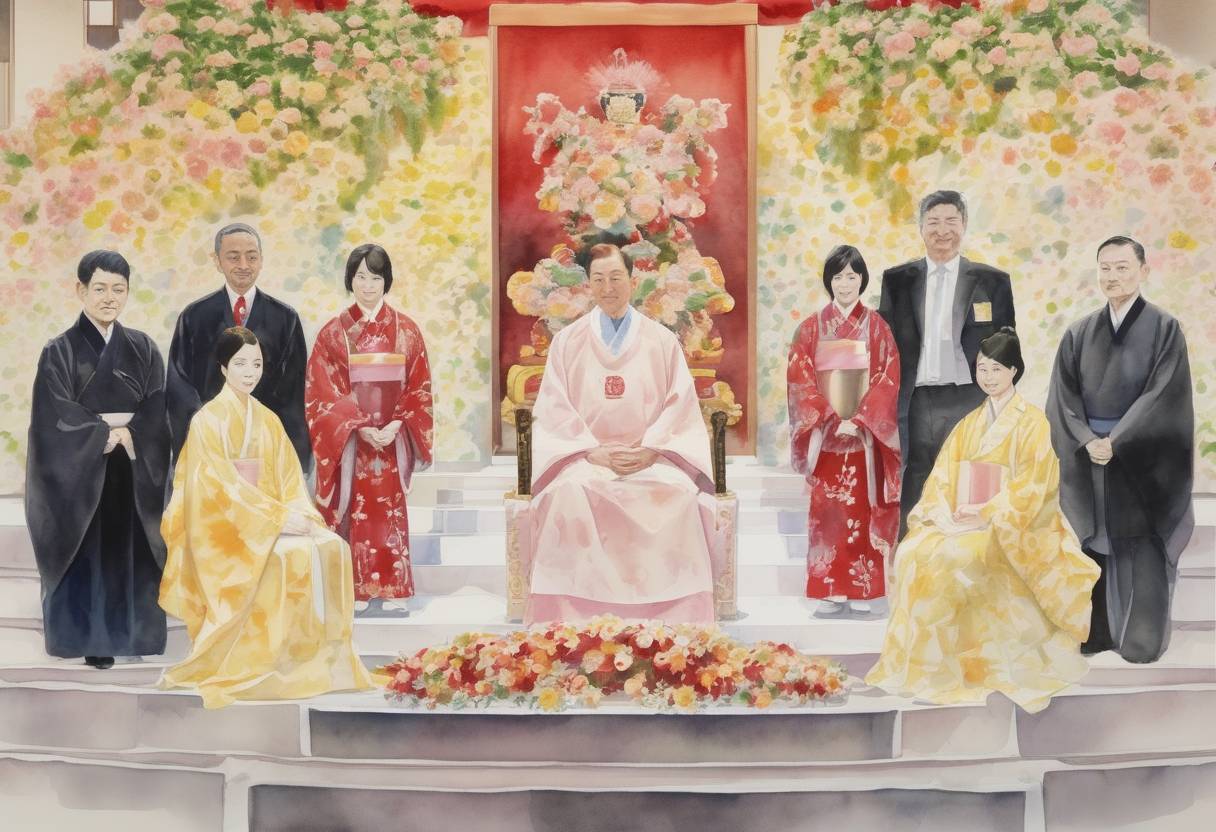
On October 22, 2019, Emperor Naruhito of Japan was formally proclaimed as the nation’s 126th emperor in a grand ceremony known as the “Sokui no Rei.” This event marked a significant moment in Japanese history, as it was a key part of the traditional enthronement rituals associated with the Chrysanthemum Throne, the world’s oldest hereditary monarchy.
Ascension to the Throne: Emperor Naruhito ascended the throne on May 1, 2019, following the abdication of his father, Emperor Akihito, who stepped down due to health concerns. This abdication was the first in over two centuries, as Japanese emperors traditionally serve until death.
Reiwa Era: With Naruhito’s ascension, the Reiwa era began, symbolizing “beautiful harmony.” This era name reflects the hopes for peace and prosperity under Naruhito’s reign.
Location: The proclamation ceremony took place at the Imperial Palace in Tokyo, a site steeped in historical and cultural significance.
Attendees: The event was attended by dignitaries and representatives from over 180 countries, including heads of state, royalty, and government officials, underscoring Japan’s global diplomatic ties.
Traditional Rituals: The ceremony was rich in tradition, featuring ancient court rituals. Emperor Naruhito, dressed in a traditional robe, stood on the Takamikura throne, a 6.5-meter-high structure, symbolizing his authority and the continuity of the imperial lineage.
Empress Masako: Empress Masako, also in traditional attire, played a significant role in the ceremony, reflecting the importance of the imperial couple in Japan’s cultural and ceremonial life.
Cultural Heritage: The ceremony highlighted Japan’s deep respect for its cultural heritage and the continuity of its imperial traditions, which date back over a millennium.
Diplomatic Relations: The presence of international dignitaries emphasized Japan’s role on the world stage and its commitment to fostering international relations.
Public Sentiment: The event was met with widespread public interest and support, reflecting the Japanese people’s respect for the imperial family and their hopes for the new era.
National Celebrations: Following the ceremony, various celebrations and parades were held across Japan, allowing the public to participate in the historic occasion.
Future Prospects: Emperor Naruhito’s reign is anticipated to focus on addressing contemporary issues such as environmental concerns and international cooperation, while maintaining the cultural and historical traditions of the Japanese monarchy.
In summary, the formal proclamation of Emperor Naruhito’s ascension to the Chrysanthemum Throne was a momentous event that blended ancient traditions with modern diplomatic engagement, marking the beginning of a new chapter in Japan’s storied imperial history.
Source: www.japantimes.co.jp