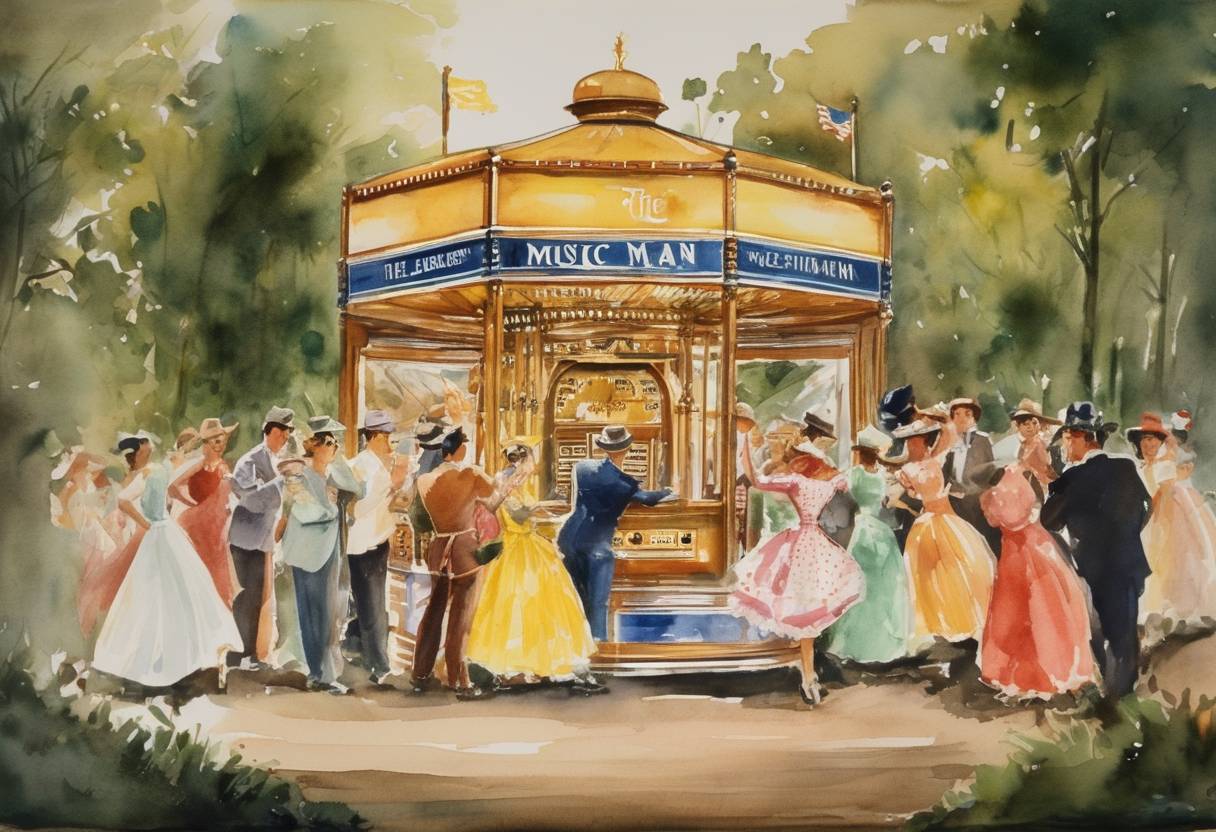
The Music Man: Release as a Major Motion Picture
Background and Origins
“The Music Man,” originally a hit Broadway musical, was created by Meredith Willson, who wrote the book, music, and lyrics. The stage production debuted in 1957 and received critical acclaim for its charming portrayal of small-town life in America, with a focus on a charismatic con artist and band leader, Harold Hill.
Film Adaptation
The popular stage production was adapted into a major motion picture directed by Morton DaCosta, who had also directed the Broadway version. This adaptation preserved the spirit and energy that made the stage production so beloved. While the original note mentions a release on November 23, 1959, it’s important to note that the film adaptation was officially released in 1962. DaCosta’s film utilized many of the original Broadway cast members, including Robert Preston, who reprised his role as the charismatic Harold Hill, leaving a significant mark on the character.
Musical Narrative
The story is set in River City, Iowa, where Professor Harold Hill convinces the townspeople to invest in a boys’ marching band, although he has no musical experience. His plans to skip town with the money are complicated by his developing affection for Marian Paroo, the town’s librarian.
Cultural Significance and Reception
“The Music Man” film was praised for its lively music, engaging characters, and vibrant depiction of early 20th-century Americana. The film adaptation remained faithful to the musical roots of the original play, capturing the essence of Willson’s catchy songs and spirited narrative. It became a classic of the American musical film genre, celebrated for its humorous yet poignant exploration of small-town American life.
Aftermath and Legacy
The film’s success helped solidify “The Music Man” as a staple in the American musical canon, leading to numerous revivals and adaptations over the ensuing decades. Its songs, such as “Seventy-Six Trombones” and “Till There Was You,” became standards, enjoying popularity both within and outside the context of the show. The film further reinforced the original production’s impact on American theater and cinema, illustrating the enduring appeal of musical storytelling.