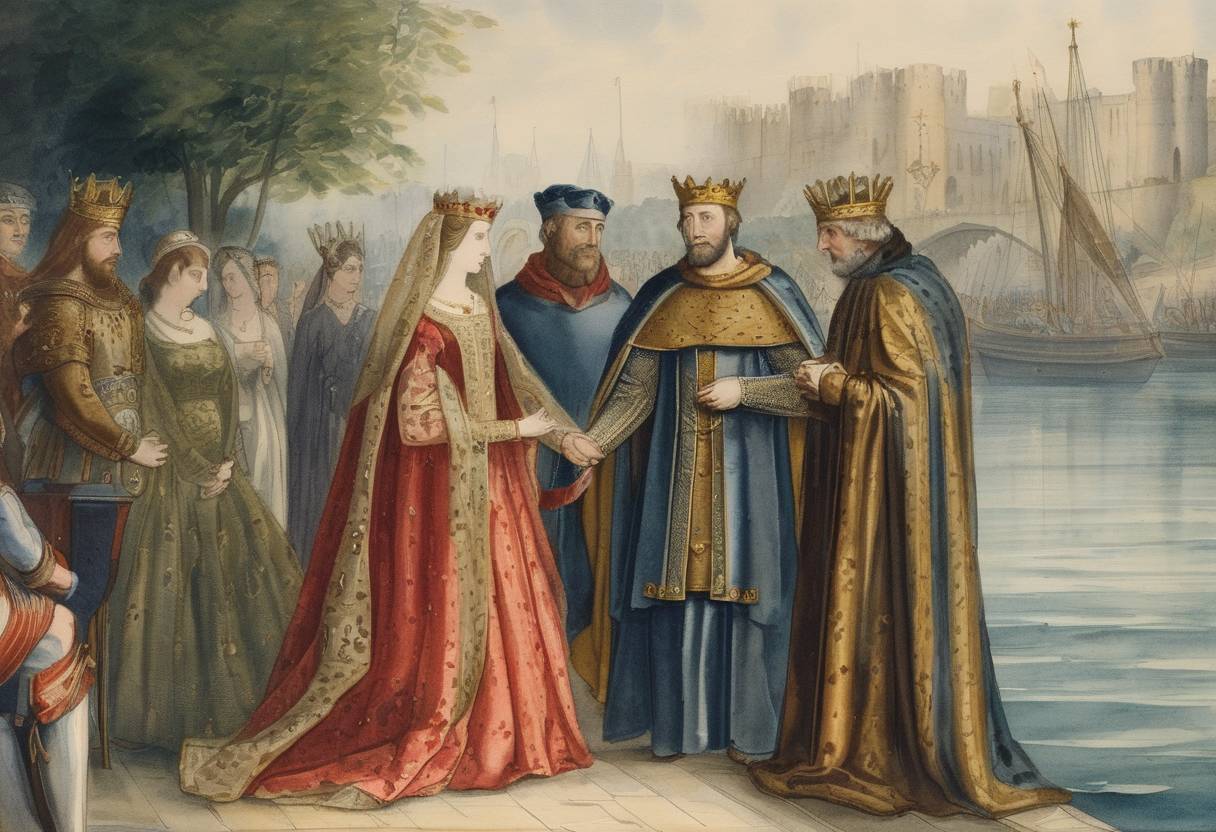
Marriage of Edward II of England and Isabella of France
On April 25, 1308, the marriage between Edward II, King of England, and Isabella of France took place, marking a significant diplomatic alliance during the late medieval period. This union represented not only a personal relationship but also a political strategy aimed at strengthening ties between England and France.
Context and Background
- Edward II: Ascended to the English throne in 1307 following the death of his father, Edward I. His reign was characterized by internal strife and conflicts with the nobility.
- Isabella of France: The daughter of Philip IV of France, also known as Philip the Fair. As a princess of France, her marriage was a crucial element of her father’s diplomatic policy.
The Marriage
- Ceremony: The marriage ceremony took place in Boulogne-sur-Mer, France. The event was attended by an array of nobles, dignitaries, and royal family members from both countries, reflecting the importance of the marriage.
- Alliance Goals: The marriage was part of a treaty to end hostilities and foster peace between England and France, also known as the Treaty of Montreuil (1299). It was intended to consolidate royal prestige and secure political advantages for both kingdoms.
Diplomatic Significance
- Peace Efforts: The union was aimed at solidifying peace after years of sporadic conflict between England and France, particularly over territories in France claimed by the English crown.
- Political Alliances: Strengthened the position of both monarchies by creating familial ties and potential heirs that could claim ancestry and legitimacy across both realms.
Aftermath and Legacy
- Internal Conflicts: Despite the initial hope, Edward II’s reign was marred by political instability, and his relationship with Isabella became complicated, particularly during the latter part of his reign.
- Isabella’s Influence: Known as the “She-Wolf of France,” Isabella would eventually play a significant role in the deposition of Edward II in 1327, illustrating the complex nature of their marriage and its impact on English politics.
- Historical Perspective: The marriage is remembered as a dramatic episode in the broader narrative of Anglo-French relations, exemplifying the intricate interplay of diplomacy, marriage, and power during the medieval period.
The union between Edward II and Isabella of France stands as a reminder of how personal relationships were often intertwined with political agendas in the history of European monarchies.