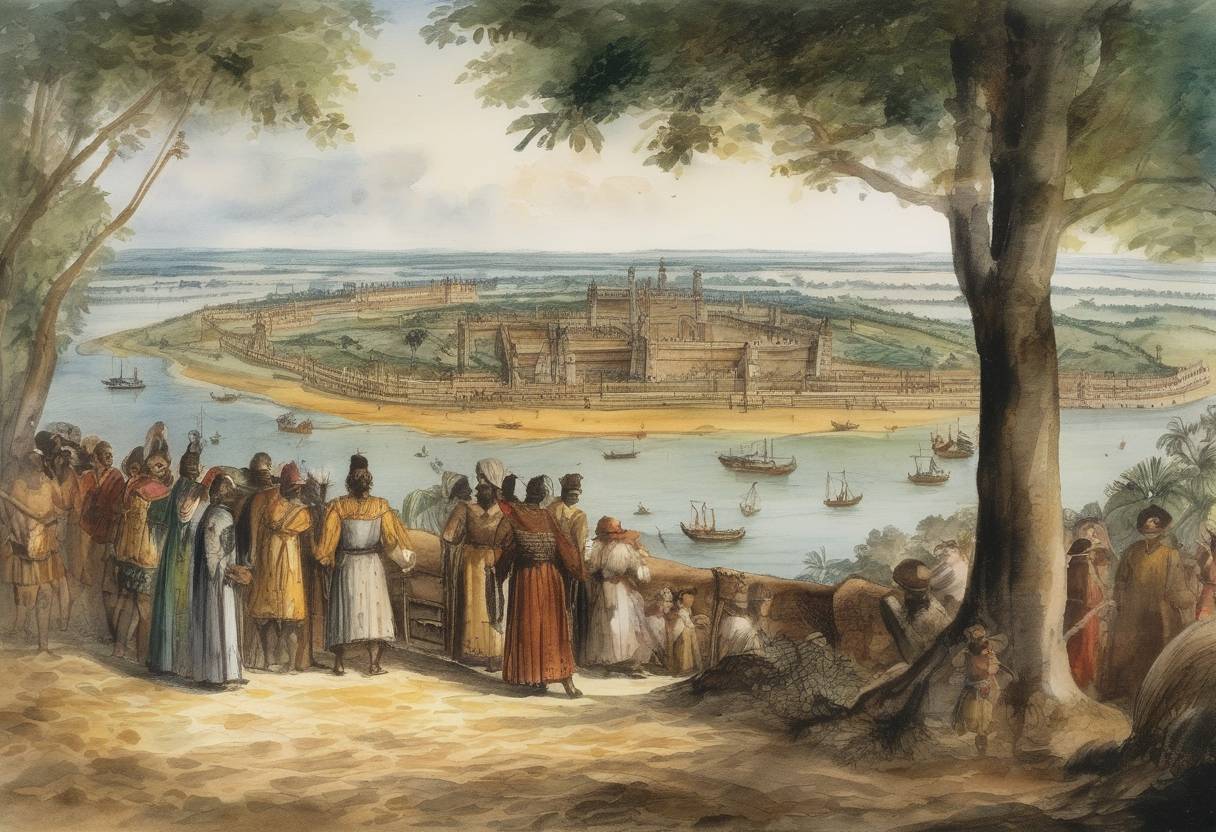
Founding of Belém: January 20, 1616
On January 20, 1616, Portuguese explorer Francisco Caldeira Castelo Branco established the city of Belém in the eastern part of the Amazon basin, playing a pivotal role in the Portuguese colonization efforts in the region. The city, formally known as “Feliz Lusitânia,” was strategically positioned as a colonial foothold on behalf of the Portuguese Crown to consolidate control over the Amazon and counteract French advances on the northeastern coast of South America.
Context and Background
In the early 17th century, the Portuguese Crown was intent on expanding its territories and establishing sovereignty over the vast yet unclaimed regions of the Amazon River basin. This was part of broader efforts to safeguard Portugal’s interests in Brazil against foreign powers, namely the Dutch and French, who were also establishing colonies and trading posts along the South American coast.
Founding Events
- Objective: Francisco Caldeira Castelo Branco was tasked with securing the Amazon delta, thus preventing potential encroachments by other European powers and indigenous uprisings.
- Location: The initial settlement was set up at what is now known as Forte do Presépio, strategically located at the confluence of the Guamá and Pará Rivers, providing a defensive advantage and facilitating future exploration and trade along the Amazon River.
- Establishment: Castelo Branco and his contingent of Portuguese soldiers erected a fort which laid the foundation of Belém. This fortification served as both a military bastion and a nucleus around which the settlement grew.
Significance and Impact
- Colonial Strategy: The establishment of Belém marked the beginning of Portuguese penetration into the Amazon basin, gradually extending their influence deep into the interior.
- Economic and Cultural Center: Over the following centuries, Belém blossomed as a significant economic, cultural, and trade hub, especially during the rubber boom of the late 19th and early 20th centuries.
- Legacy: Today, Belém remains the capital of the Pará state in Brazil and continues to be an essential gateway to the Amazon, reflecting a rich tapestry of indigenous, Portuguese, and other cultural influences.
Conclusion
The founding of Belém on January 20, 1616, was a crucial event that helped to shape the colonial landscape of northern Brazil. It set the stage for Portuguese domination in the Amazon region and provided a strategic outpost that supported Brazil’s territorial integrations well into modern times. The city’s historical significance as a symbol of colonial ambition and a cradle of mixed cultural heritages continues to be felt in its vibrant cultural and economic life.