The Costa Concordia Disaster: January 13, 2012
2012 · Isola del Giglio, Italy
The cruise ship Costa Concordia ran aground off the coast of Isola del Giglio, Italy, resulting in the deaths of 32 people.
January 17, 2012
The Italian cruise ship Costa Concordia began to be officially identified and divided into sections in preparation for its salvage operation after it sank off the coast of Isola del Giglio, Tuscany.
Isola del Giglio, Italy | Costa Crociere
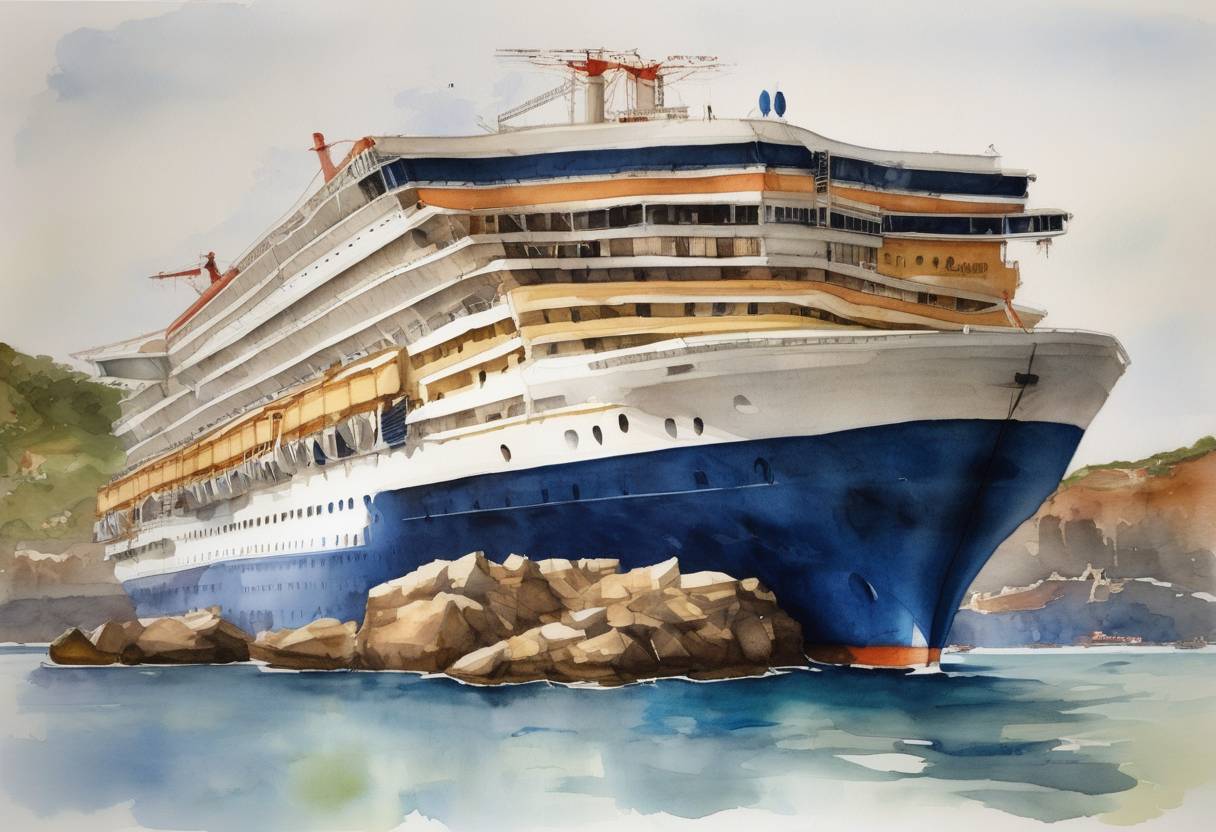
On January 17, 2012, the Italian cruise ship Costa Concordia entered a crucial phase in the aftermath of its tragic capsizing off the coast of Isola del Giglio, Tuscany. This day marked the official commencement of its identification and segmentation in preparation for salvage operations, a complex and unprecedented effort given the size of the vessel.
The Costa Concordia disaster occurred when the ship struck a submerged rock on January 13, 2012, during a closer-to-shore maneuver, leading to the vessel capsizing. The accident resulted in 32 lives lost and serious scrutiny over maritime safety practices. The ship remained partially submerged near the Tuscan island, posing significant environmental and navigational hazards.
The operation required careful planning due to the ship’s massive size, approximately 290 meters long and weighing in excess of 114,000 gross tons. Salvaging the Costa Concordia represented one of the largest and most expensive maritime salvage efforts in history, extending over a period that required innovative engineering solutions.
Identification: This involved detailed surveys and mapping of the ship’s current state to assess damage, stability, and the surrounding ecological impact. Engineers worked to devise a strategy that ensured minimal further damage to the environment.
Sectioning: Plans were laid out to cut the ship into manageable sections. This step was crucial to developing a comprehensive salvage strategy that accounted for logistical and technical challenges.
Engagement of Experts: The day marked the involvement of international experts in maritime salvage, environmental protection, and structural engineering to collaborate on creating a safe and effective recovery plan.
The salvage operation of Costa Concordia set benchmarks for future maritime recovery projects due to its scale and complexity. It highlighted the necessity for rigorous safety measures and procedures in the cruise industry, as well as advancements in salvage technology and environmentally conscious engineering solutions. The project culminated in the successful righting and removal of the ship from the site by July 2014.
Source: www.theguardian.com