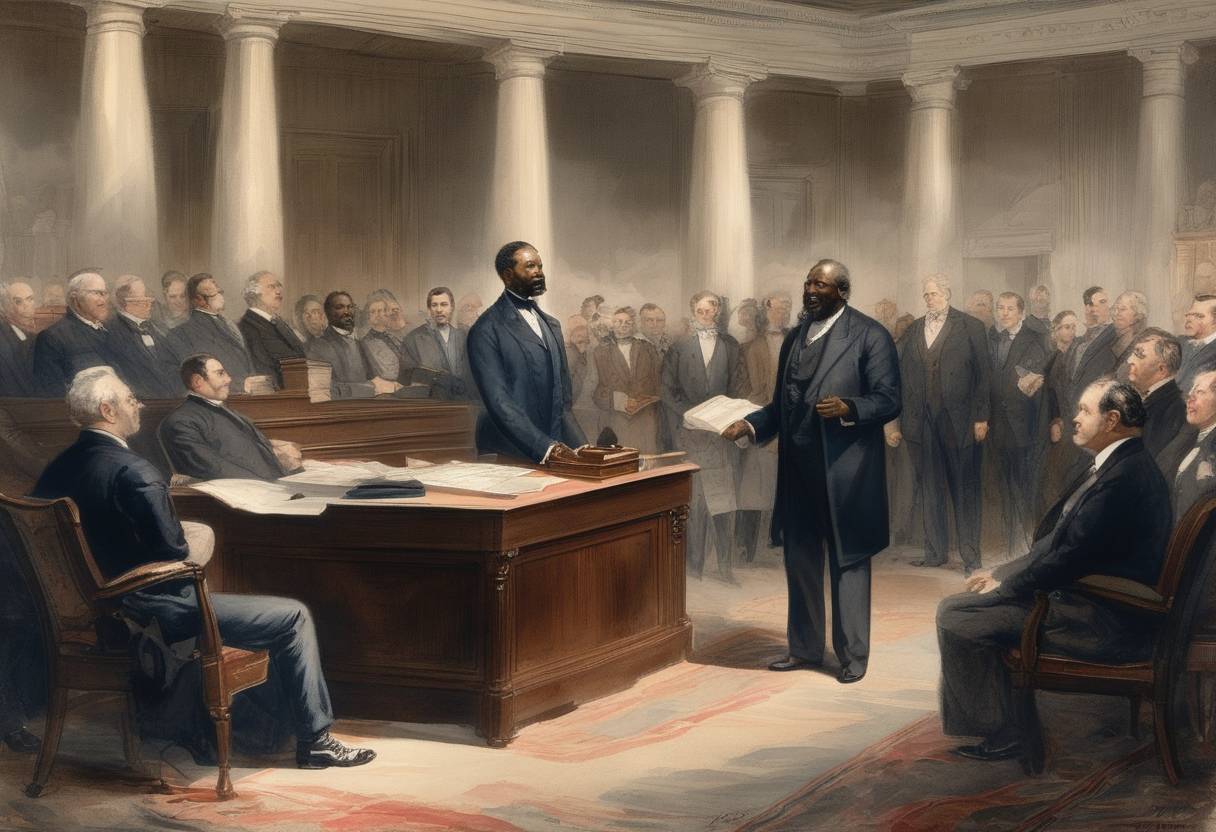
Joseph H. Rainey Sworn into the U.S. House of Representatives
On December 12, 1870, Joseph Hayne Rainey was sworn in as the first African-American to serve in the U.S. House of Representatives. His swearing-in marked a significant milestone in American history during the Reconstruction era, following the Civil War.
Background
Joseph H. Rainey, born on June 21, 1832, in Georgetown, South Carolina, was the son of a freedman and a slave. His father, Edward Rainey, purchased his family’s freedom during the early 1840s and subsequently operated a successful barbering business, which enabled Joseph to access a decent education and continue to work as a barber—a respected profession at the time.
Civil War Period
During the Civil War, Rainey was conscripted by the Confederates to work on fortifications but managed to escape with his wife to Bermuda, a British-controlled territory where slavery was illegal. In Bermuda, they thrived by establishing a series of successful businesses until the end of the war.
Political Career
Rainey returned to the United States after the Civil War and became actively involved in the Republican Party, which was known for its commitment to Reconstruction and civil rights for freed African-Americans. He initially served as a delegate to the South Carolina constitutional convention in 1868 and later joined the South Carolina state senate from 1868 to 1870.
In 1870, Rainey won a seat in the U.S. House of Representatives for South Carolina’s 1st congressional district through a special election, becoming the first African-American to be seated in the House on December 12 of that year.
Congressional Contributions
Rainey’s entry into Congress was part of a broader movement during Reconstruction to expand civil rights and rebuild the Southern states. During his time in office, Rainey was an advocate for civil rights, including the Ku Klux Klan Act of 1871, which aimed to suppress the racial violence and intimidation rampant during the era. He served multiple terms, offering strong support for civil rights legislation and influencing debates on issues of monetary policy and internal improvements.
Legacy
Joseph H. Rainey’s tenure in Congress ran until 1879. As the first African-American to serve in the U.S. House, Rainey paved the way for other black legislators during the Reconstruction era, a period marked by the election of other African-Americans to political office.
Rainey’s commitment to equality and civil rights established a precedent that would inspire future generations committed to public service and civil rights advocacy. His career stands as a reminder of the challenges and triumphs associated with the fight for racial equality in U.S. history.