The Warsaw Uprising: August 1, 1944
1944 · Warsaw, Poland
The Warsaw Uprising began as the Polish resistance Home Army attempted to liberate Warsaw from German occupation during World War II.
October 2, 1944
The Warsaw Uprising officially ends as the remaining Polish resistance in Warsaw surrenders to the German forces.
Warsaw, Poland | Armia Krajowa
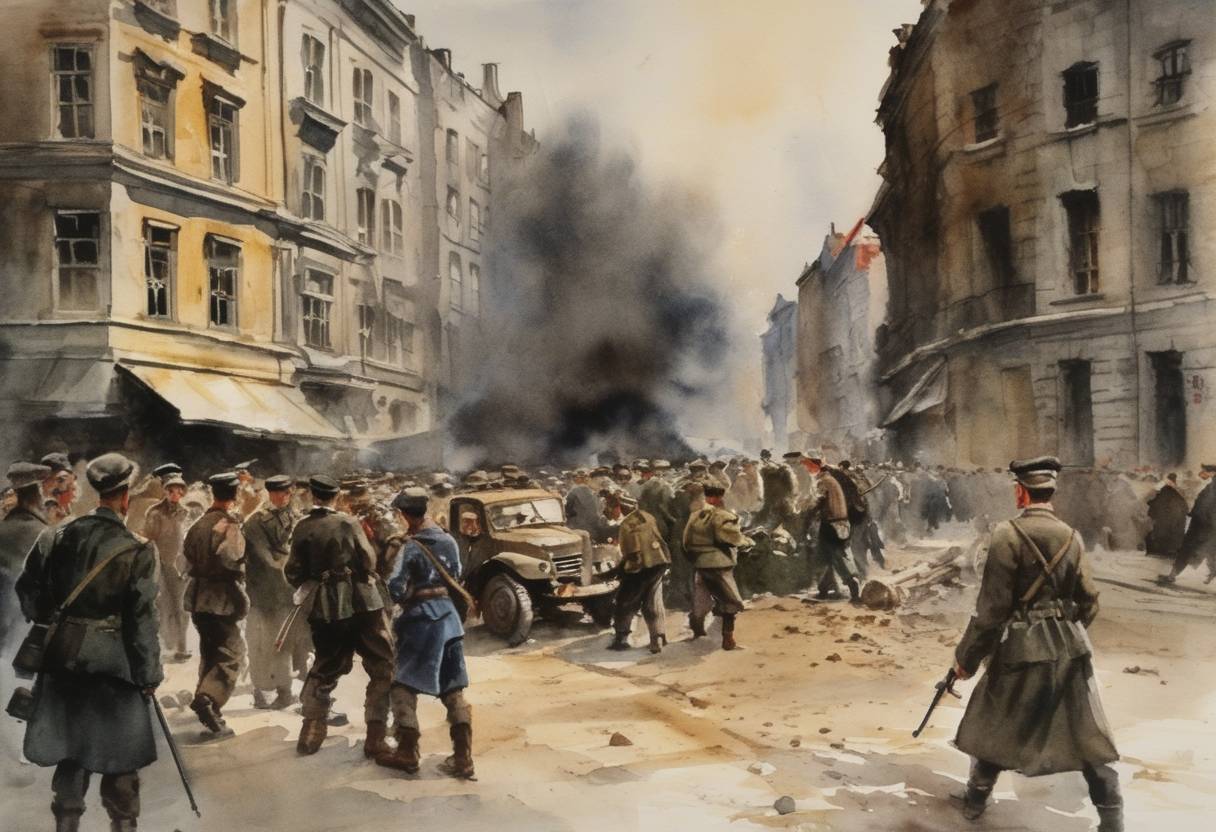
On October 2, 1944, the Warsaw Uprising, one of the most significant acts of resistance during World War II, officially concluded with the surrender of the remaining Polish resistance forces to the German military. This pivotal moment marked the end of a 63-day struggle between the Polish Home Army (Armia Krajowa) and Nazi German forces occupying Warsaw.
The Warsaw Uprising began on August 1, 1944, as part of a nationwide operation, “Operation Tempest,” orchestrated by the Polish resistance. Its primary aim was to liberate Warsaw from German occupation before the Soviet Red Army could take control, hoping to assert Polish sovereignty and establish a post-war government free from Soviet influence.
The uprising was timed to coincide with the Soviet advance toward the Vistula River near Warsaw, but the Red Army halted its offensive shortly after reaching the river, leaving the insurgents without the expected support.
For over two months, the Polish resistance, composed largely of poorly equipped fighters, engaged in intense urban combat against a superior and well-equipped German force. The rebellion was met with brutal reprisals by the German military, including mass executions and the deliberate destruction of the city. Despite their valiant efforts and initial control over substantial parts of Warsaw, the resistance struggled under precarious conditions, enduring widespread shortages of food, water, and medical supplies.
By late September 1944, the situation for the insurgents became untenable. On October 2, under the command of General Tadeusz Bór-Komorowski, the Polish forces officially surrendered. The terms of surrender stipulated the recognition of the Home Army’s soldiers as prisoners of war, sparing them further retaliation under the laws of war. The capitulation led to the expulsion of the remaining civilian population and the systematic destruction of much of the remaining infrastructure of Warsaw by German forces.
The suppression of the Warsaw Uprising resulted in catastrophic human and material losses. Approximately 16,000 members of the Polish resistance and between 150,000 to 200,000 civilians are estimated to have died during the fighting and the subsequent massacre of the city’s populace. The complete obliteration of Warsaw caused irrevocable damage to Polish cultural heritage.
The failure of the uprising had profound implications for Poland’s post-war fate. The lack of Soviet assistance was seen as a political strategy to weaken anti-Soviet Polish factions in anticipation of post-war Communist control over Poland. After the war, the uprising was heavily politicized within Soviet-dominated Eastern Bloc historiography, and its memory became a symbol of national resistance against oppression.
The Warsaw Uprising remains a poignant chapter in Polish history, symbolizing courage and the struggle for freedom against overwhelming odds. It is commemorated annually with events that remember the sacrifices of the insurgents and the civilians of Warsaw. The uprising is also a reminder of the complexities and tragedies inherent in military and political conflicts during World War II.
Source: www.britannica.com