The Battle of Nashville: Conclusion and Aftermath
1864 · Nashville, United States
The Battle of Nashville in the American Civil War ends as the Union defeat the Confederate Army under Lieutenant General John Bell Hood.
August 31, 1864
During the American Civil War, the Battle of Jonesborough began, leading to a significant Union victory that resulted in the fall of Atlanta.
Jonesborough, United States | Union Army
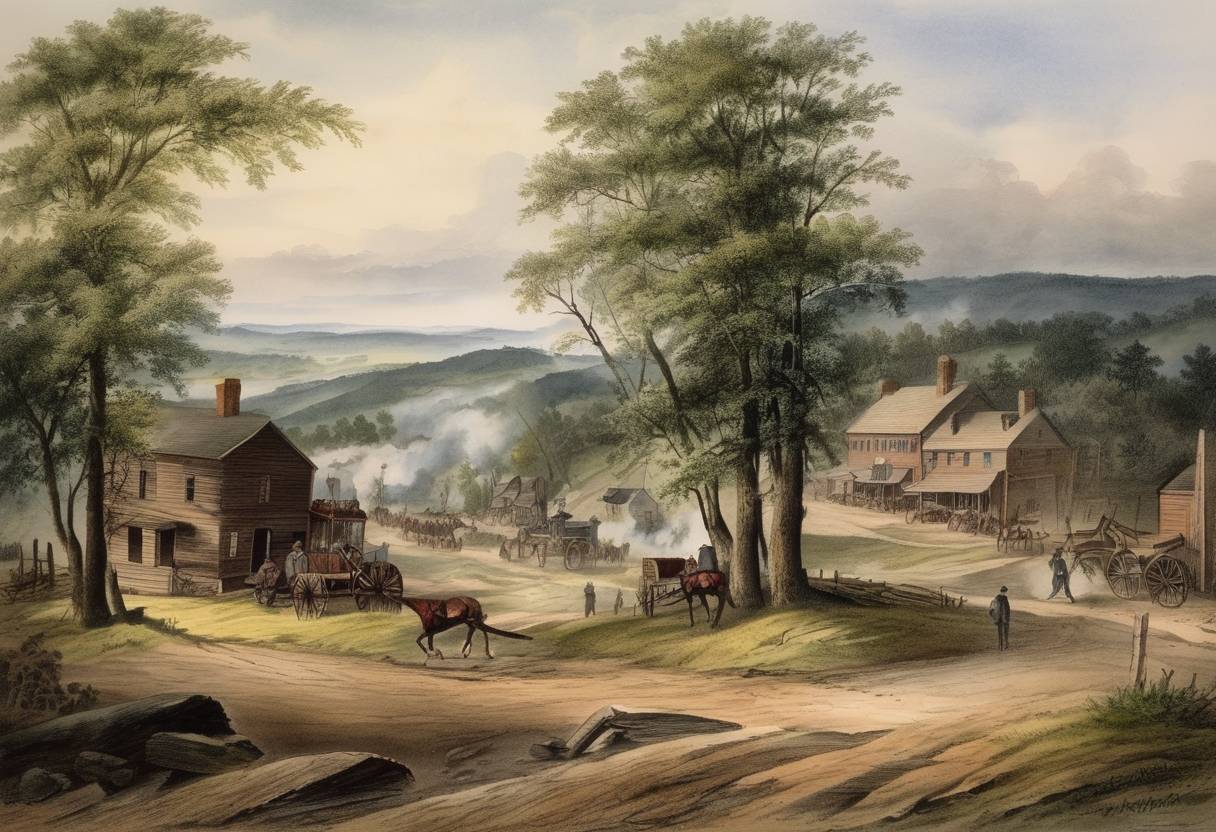
The Battle of Jonesborough, which began on August 31, 1864, was a pivotal encounter during the American Civil War. It was part of the Atlanta Campaign waged by Union forces under the command of Major General William T. Sherman against the Confederate Army of Tennessee, led by General John Bell Hood. This battle was crucial for the Union’s strategic objectives, as capturing Atlanta would disrupt a key Confederate supply line and boost Northern morale.
Union Strategy: In late August 1864, General Sherman focused on severing the railroads supplying Atlanta to force the Confederates out. The Union army aimed to cut off the Macon & Western Railroad, a vital link for Confederate logistics.
Confederate Defense: General Hood, aware of Sherman’s intentions, aimed to defend the rail line south of Atlanta by sending divisions under Lieutenant General William J. Hardee to Jonesborough, Georgia.
Engagement Begins: On August 31, 1864, the battle commenced when Sherman’s forces, comprising the Army of the Tennessee under Major General Oliver O. Howard, engaged Hardee’s Confederate troops. The Union forces launched a series of coordinated attacks, seeking to envelop the smaller Confederate force at Jonesborough.
Union Victory: Despite fierce resistance, the Union forces overwhelmed the Confederate defenses. By September 1, the Union’s tactical and numerical superiority had compelled Hardee to withdraw his forces and abandon the defense of the railroad.
Fall of Atlanta: The Union victory at Jonesborough directly led to the fall of Atlanta. General Hood was forced to evacuate the city, and on September 2, 1864, Union troops entered Atlanta unopposed. This victory was a critical turning point in the Civil War.
Political Impact: The capture of Atlanta was a significant boost for the Union, particularly impacting the U.S. presidential election of 1864 by bolstering Abraham Lincoln’s prospects for reelection.
Military Implications: The loss of Atlanta was a severe blow to Confederate morale and capability, marking a significant shift in the conflict. It set the stage for Sherman’s subsequent “March to the Sea,” further crippling the Confederate war effort.
Legacy: The Battle of Jonesborough, although overshadowed by the larger campaign, remains a defining moment illustrating the effectiveness of Sherman’s military tactics and the strategic importance of controlling infrastructure during wartime.
Source: en.wikipedia.org