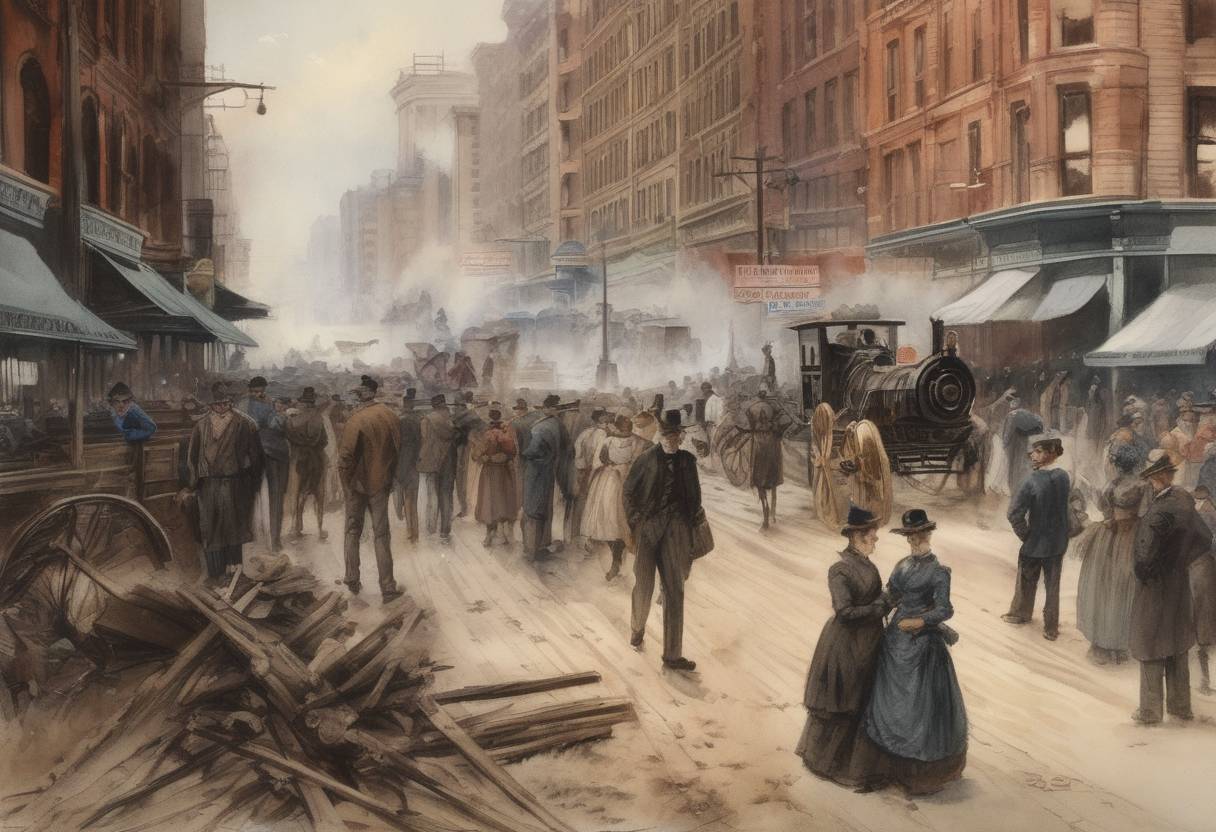
The Haymarket Affair: May 1, 1886
The Haymarket Affair, also known as the Haymarket Riot or Haymarket Incident, was a pivotal event in labor history that began on May 1, 1886, in Chicago, Illinois. This event was part of a larger nationwide movement advocating for an eight-hour workday, a significant demand of the labor movement during the late 19th century.
Context and Background
- Industrial Revolution: By the late 1800s, the Industrial Revolution had transformed the American economy, leading to rapid urbanization and the growth of factories. Workers often faced long hours, low wages, and unsafe working conditions.
- Labor Movement: In response, labor unions began to organize, advocating for better conditions, including the eight-hour workday. The Federation of Organized Trades and Labor Unions, which later became the American Federation of Labor (AFL), set May 1, 1886, as the date for a general strike to demand this reform.
Key Events Leading Up to May 1, 1886
- Preparation for the Strike: Labor leaders across the United States prepared for a massive strike. In Chicago, a stronghold of labor activism, the movement was particularly robust, with organizations like the Knights of Labor and the International Working People’s Association playing key roles.
- Public Support and Tensions: The call for an eight-hour workday garnered significant support from workers but also faced opposition from business owners and some government officials, who feared economic disruption and potential violence.
The Strike and Subsequent Events
- May 1, 1886: On this day, tens of thousands of workers across the United States walked off their jobs in support of the eight-hour workday. In Chicago, the strike was marked by large, peaceful demonstrations.
- May 3, 1886: Violence erupted at the McCormick Harvesting Machine Company plant in Chicago when police fired on striking workers, resulting in several deaths and injuries. This incident heightened tensions and set the stage for further conflict.
- May 4, 1886: A protest rally was organized at Haymarket Square in response to the violence at McCormick. The rally began peacefully, but as police moved to disperse the crowd, an unknown person threw a bomb, killing several police officers and civilians. The police responded with gunfire, leading to additional casualties.
Aftermath and Consequences
- Arrests and Trials: In the wake of the bombing, eight anarchists were arrested and charged with conspiracy, despite a lack of evidence linking them directly to the bombing. The trial was widely criticized for its unfairness, and four of the accused were executed in 1887.
- Impact on the Labor Movement: The Haymarket Affair had a profound impact on the labor movement. It led to increased public fear of anarchism and radicalism, but also galvanized labor activists worldwide, contributing to the establishment of May Day (International Workers’ Day) as a day of labor solidarity.
- Legacy: The event highlighted the struggle for workers’ rights and the tensions between labor and capital, issues that continued to shape labor relations in the United States and beyond.
The Haymarket Affair remains a significant chapter in the history of labor rights, symbolizing both the potential for social change and the challenges faced by those advocating for workers’ rights.