April 29, 1975

Operation Frequent Wind, the evacuation of American civilians and 'at-risk' Vietnamese from Saigon, begins as the Vietnam War draws to a close.


Saigon, Vietnam | United States Armed Forces
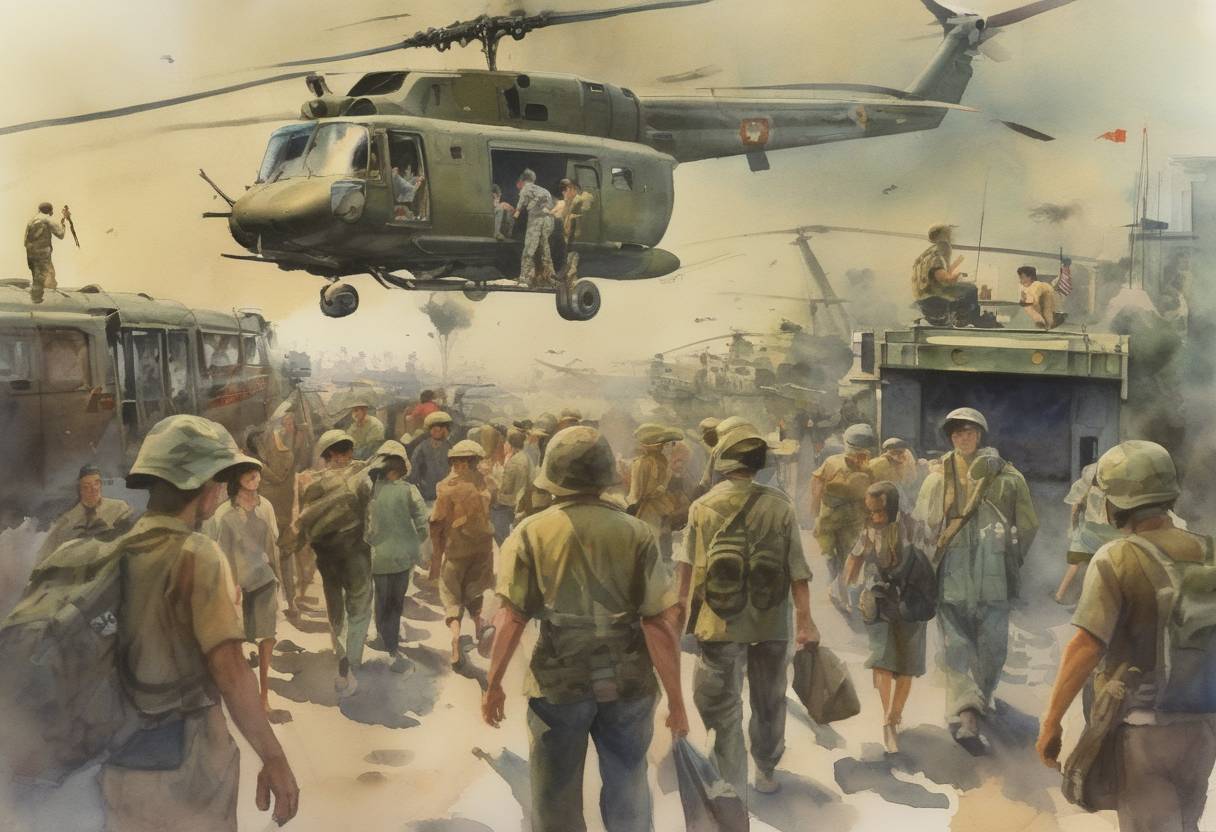
Watercolor painting based depiction of Operation Frequent Wind, the evacuation of American civilians and 'at-risk' Vietnamese from Saigon, begins as the Vietnam War draws to a close. (1975)

Operation Frequent Wind

Date: April 29, 1975

Context:
Operation Frequent Wind was the final phase in the evacuation of American civilians and “at-risk” Vietnamese from Saigon, marking the end of U.S. involvement in the Vietnam War. This operation was a response to the rapid advancement of North Vietnamese forces towards Saigon, the capital of South Vietnam.

Background:
The Vietnam War, which began in the late 1950s, was a prolonged conflict between communist North Vietnam, supported by its communist allies, and the government of South Vietnam, backed by the United States and other anti-communist countries. By 1975, the North Vietnamese Army (NVA) had gained significant ground, and the fall of Saigon was imminent.

Key Events Leading Up to the Evacuation:

  • Paris Peace Accords (1973): These accords were intended to establish peace in Vietnam and end the war. However, fighting continued despite the agreement.
  • North Vietnamese Offensive (1975): In March 1975, the NVA launched a major offensive, quickly capturing key cities and provinces in South Vietnam.
  • Collapse of South Vietnamese Resistance: By late April, South Vietnamese defenses were crumbling, and the U.S. government decided to evacuate its personnel and allies.

Operation Frequent Wind:

  • Initiation: The operation began on April 29, 1975, as North Vietnamese forces closed in on Saigon.
  • Execution: The evacuation was primarily conducted by helicopter, with U.S. Marine Corps and Air Force helicopters flying from aircraft carriers stationed off the coast of Vietnam.
  • Evacuation Sites: Key evacuation points included the U.S. Embassy in Saigon and the DAO (Defense Attaché Office) compound at Tan Son Nhut Air Base.
  • Signal: The operation was signaled by the playing of “White Christmas” on American radio, a pre-arranged code to begin the evacuation.

Outcome:

  • Evacuees: Approximately 7,000 people, including American citizens, South Vietnamese civilians, and third-country nationals, were evacuated over two days.
  • End of Operation: The operation concluded on April 30, 1975, as North Vietnamese forces entered Saigon, marking the official end of the Vietnam War.

Aftermath and Significance:

  • Fall of Saigon: The capture of Saigon by North Vietnamese forces led to the reunification of Vietnam under communist control.
  • Humanitarian Impact: The evacuation highlighted the plight of Vietnamese refugees, many of whom fled the country in the ensuing years.
  • Legacy: Operation Frequent Wind remains one of the largest helicopter evacuations in history and symbolizes the chaotic end of U.S. involvement in Vietnam.

Operation Frequent Wind is remembered for its dramatic and urgent nature, encapsulating the final moments of a deeply divisive and impactful conflict in American and Vietnamese history.