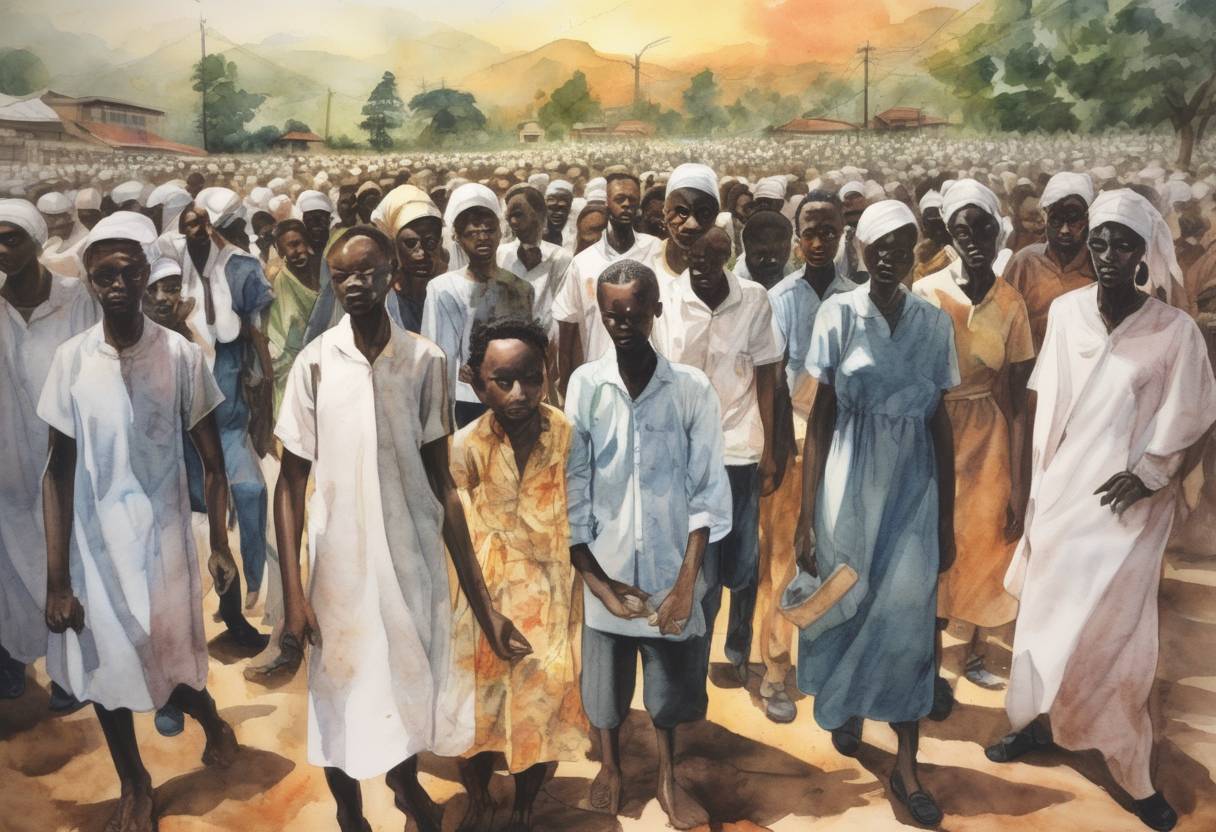
The Rwandan Genocide Begins - April 7, 1994
Background
The Rwandan Genocide was a catastrophic event that unfolded in the small East African nation of Rwanda, beginning on April 7, 1994. This genocide was the result of longstanding ethnic tensions between the Hutu majority and the Tutsi minority, exacerbated by a history of colonial rule and socio-political dynamics.
Historical Context
- Colonial Legacy: Under Belgian colonial rule, ethnic identities were rigidly defined, with Tutsis often favored over Hutus in administrative roles. This sowed seeds of resentment and division.
- Post-Independence Tensions: After gaining independence in 1962, Rwanda experienced cycles of ethnic violence and political instability, with power predominantly held by Hutu leaders.
- Civil War: In 1990, the Rwandan Patriotic Front (RPF), a Tutsi-led rebel group, invaded Rwanda from Uganda, leading to a civil war. A peace agreement, the Arusha Accords, was signed in 1993, but tensions remained high.
Key Events on April 7, 1994
- Trigger Event: On April 6, 1994, the plane carrying Rwandan President Juvénal Habyarimana, a Hutu, was shot down, killing everyone on board. This incident served as the immediate catalyst for the genocide.
- Outbreak of Violence: Within hours of the plane crash, Hutu extremists, including members of the Interahamwe militia and elements of the Rwandan military, began systematically targeting Tutsi civilians and moderate Hutus.
- Government Involvement: The interim government, formed by hardline Hutu leaders, orchestrated and facilitated the mass killings, using state resources and media to incite violence.
The Genocide
- Scale and Duration: Over the next 100 days, an estimated 800,000 to 1,000,000 Tutsis and moderate Hutus were brutally murdered.
- Methods: The genocide was characterized by widespread use of machetes, clubs, and firearms. Many victims were killed in their homes, churches, and community centers.
- International Response: The international community largely failed to intervene. The United Nations had a peacekeeping force in Rwanda, but it was severely limited in mandate and manpower.
Aftermath and Consequences
- End of the Genocide: The genocide ended in July 1994 when the RPF captured Kigali, the capital, and established a new government.
- Humanitarian Crisis: The aftermath saw a massive humanitarian crisis, with millions of Rwandans displaced internally and as refugees in neighboring countries.
- Justice and Reconciliation: Efforts to bring perpetrators to justice included the establishment of the International Criminal Tribunal for Rwanda (ICTR) and local Gacaca courts.
- Long-term Impact: The genocide left deep scars on Rwandan society but also led to significant political and social changes, including efforts towards reconciliation and economic development.
Broader Historical Significance
The Rwandan Genocide is a stark reminder of the destructive power of ethnic hatred and the consequences of international inaction. It has since become a critical case study in discussions about genocide prevention, international law, and humanitarian intervention. The events of 1994 continue to influence Rwanda’s political landscape and its approach to ethnic relations and governance.