The End of a Political Era: The Liberal Democratic Party's Loss in 1993
1993 · Tokyo, Japan
The Liberal Democratic Party of Japan lost a 38-year hold on national leadership.
March 20, 1995
The Tokyo subway sarin attack was carried out by the Aum Shinrikyo cult, resulting in 13 deaths and thousands of injuries, highlighting the threat of domestic terrorism.
Tokyo, Japan | Aum Shinrikyo
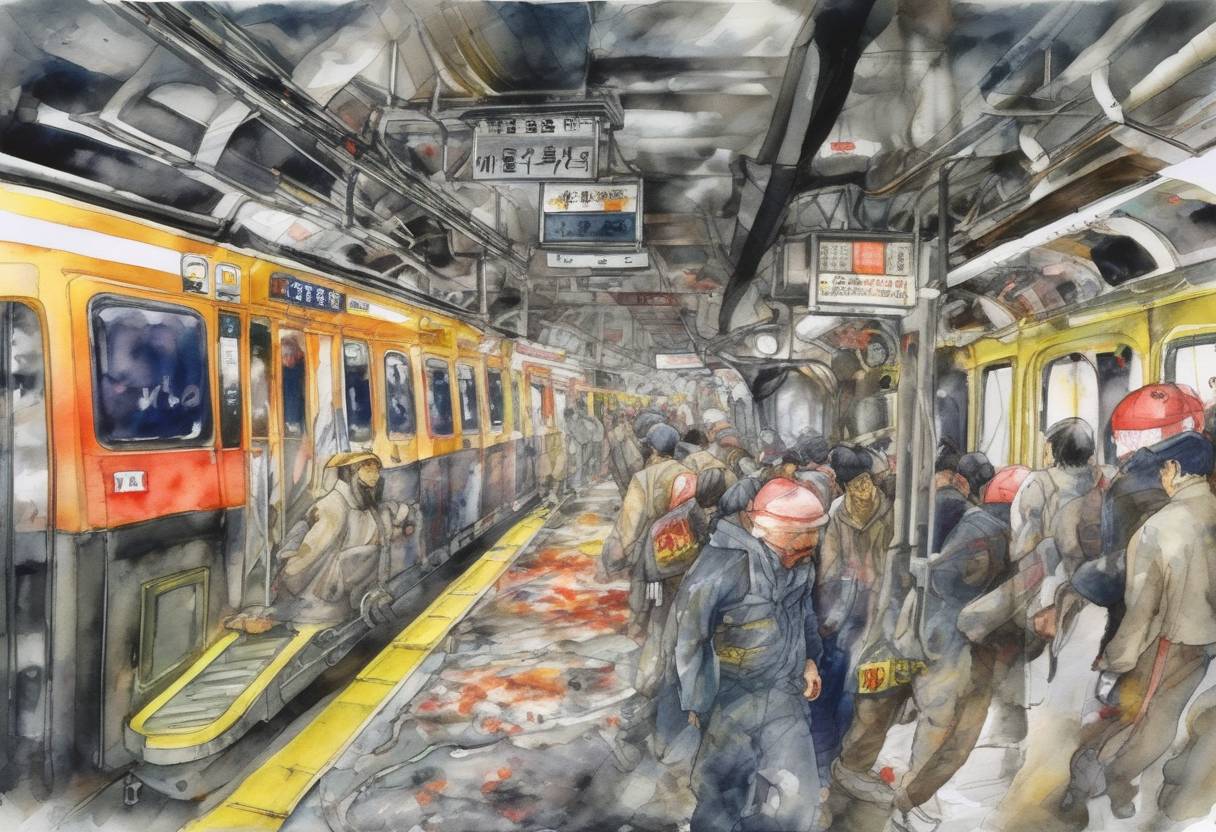
On March 20, 1995, a coordinated domestic terrorist attack was carried out on the Tokyo subway system by members of the Aum Shinrikyo cult. This event marked one of the most severe acts of domestic terrorism in Japan’s history, resulting in 13 deaths and injuring over 5,000 people.
Aum Shinrikyo, meaning “Supreme Truth,” was a religious cult founded by Shoko Asahara in 1984. The group combined elements of Buddhism, Hinduism, and apocalyptic Christian prophecies, and it gained a significant following in Japan during the late 1980s and early 1990s. Asahara, who claimed to be a messianic figure, led the cult with a vision of an impending apocalypse, which he believed could be hastened by acts of violence.
On the morning of March 20, 1995, five members of Aum Shinrikyo boarded trains on three different lines of the Tokyo subway system during rush hour. Each member carried a plastic bag filled with liquid sarin, a potent nerve agent, wrapped in newspaper. Armed with umbrellas with sharpened tips, they punctured the bags, allowing the sarin to evaporate into the train cars and stations.
The attack resulted in immediate chaos and confusion. Victims experienced symptoms such as blurred vision, difficulty breathing, and convulsions. Emergency services were overwhelmed by the scale of the incident, and hospitals across Tokyo were inundated with patients suffering from sarin exposure.
The Tokyo subway sarin attack had profound implications:
In the aftermath, Japanese authorities conducted extensive investigations, leading to the arrest of Shoko Asahara and other key members of Aum Shinrikyo. Asahara was later convicted and sentenced to death, along with several other cult leaders. The group was declared a terrorist organization, and its activities were severely curtailed.
The Tokyo subway sarin attack remains a stark reminder of the potential for domestic groups to carry out large-scale acts of terrorism. It underscored the need for vigilance and preparedness against unconventional threats and prompted a reevaluation of security protocols worldwide.
In conclusion, the events of March 20, 1995, continue to resonate as a pivotal moment in the history of terrorism, illustrating the devastating impact of chemical weapons and the importance of international cooperation in combating terrorism.
Source: en.wikipedia.org