Premiere of "Rigoletto" by Giuseppe Verdi
1851 · Venice, Italy
The opera 'Rigoletto' by Giuseppe Verdi premieres at La Fenice, Venice.
March 11, 1851
The first performance of Giuseppe Verdi's opera 'Rigoletto' took place in Venice.
Venice, Italy | La Fenice
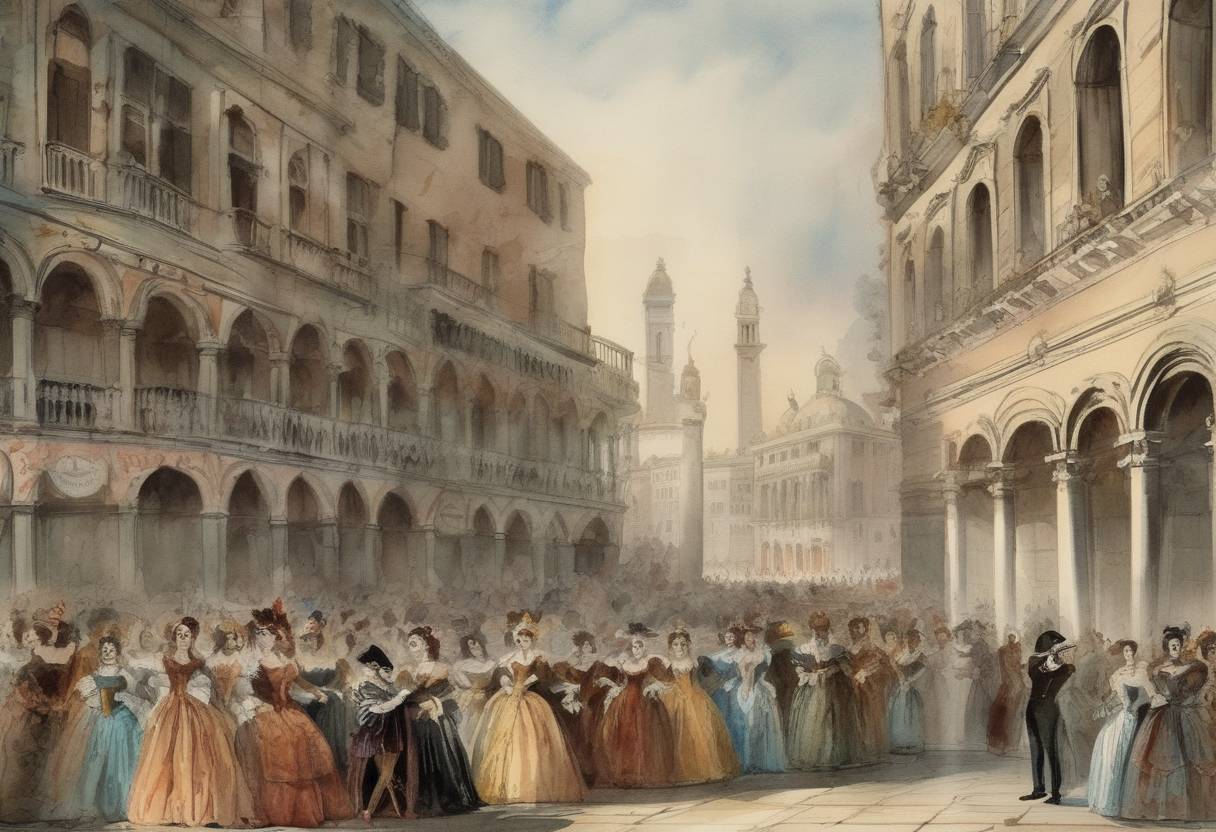
On March 11, 1851, the world witnessed the first performance of Giuseppe Verdi’s opera Rigoletto at the Teatro La Fenice in Venice, Italy. This event marked a significant moment in the history of opera, showcasing Verdi’s genius in composition and his ability to blend powerful drama with exquisite music.
Rigoletto is based on Victor Hugo’s play Le roi s’amuse, which faced censorship issues due to its controversial content. The play depicted a licentious king and his court jester, themes that were considered scandalous at the time. Verdi, along with his librettist Francesco Maria Piave, adapted the story to fit the operatic stage, setting it in a fictionalized version of the Italian court to appease the censors.
The opera tells the tragic story of Rigoletto, a hunchbacked court jester, and his beautiful daughter, Gilda. Rigoletto serves the Duke of Mantua, a notorious womanizer. The plot unfolds with themes of love, betrayal, and revenge, culminating in a tragic ending that highlights the consequences of Rigoletto’s actions and the Duke’s indiscretions.
The premiere of Rigoletto was met with critical acclaim and quickly became one of Verdi’s most popular works. Its success solidified Verdi’s reputation as a master of Italian opera and contributed to his enduring legacy. The opera’s innovative use of character development and dramatic tension influenced the future of operatic storytelling.
Following its debut, Rigoletto was performed across Europe and eventually worldwide, becoming a staple of the operatic repertoire. Its themes and music continue to resonate with audiences, ensuring its place as a timeless masterpiece in the world of opera.
In summary, the first performance of Rigoletto on March 11, 1851, was a pivotal moment in the history of opera, showcasing Verdi’s exceptional talent and his ability to captivate audiences with compelling narratives and unforgettable music.
Source: en.wikipedia.org