Captain George Vancouver Claims Puget Sound for Great Britain
1792 · Puget Sound, United States
Captain George Vancouver claims Puget Sound for Great Britain during his exploration of the Pacific Northwest.
February 2, 1709
Alexander Selkirk, a Scottish sailor, was rescued after being marooned on a desert island, inspiring Daniel Defoe's novel 'Robinson Crusoe'.
Juan Fernández Islands, Chile | British Navy
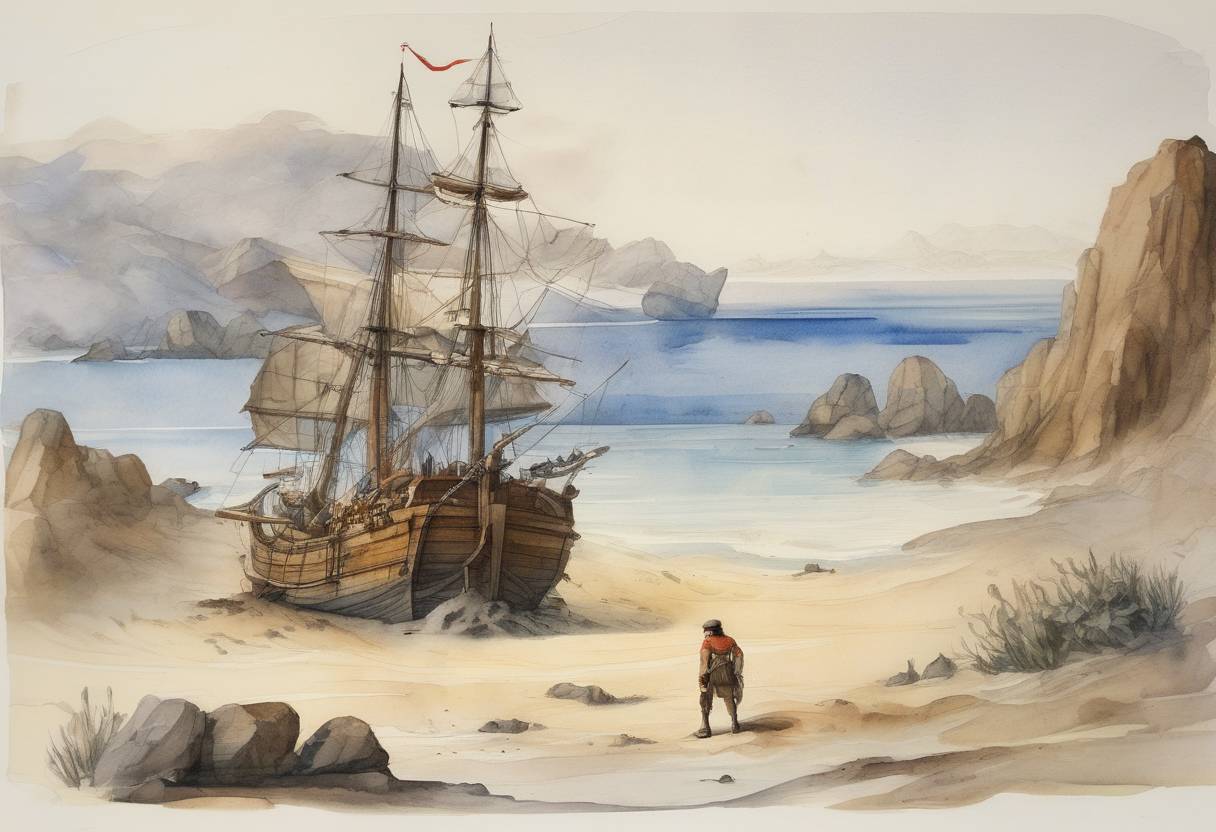
On February 2, 1709, Alexander Selkirk, a Scottish sailor, was rescued after spending over four years marooned on an uninhabited island in the South Pacific. His remarkable survival story later inspired Daniel Defoe’s famous novel, Robinson Crusoe.
Alexander Selkirk was born in 1676 in Lower Largo, Fife, Scotland. He was the seventh son of a shoemaker and developed a passion for the sea early in life. By his late twenties, Selkirk had become an experienced sailor.
In 1703, Selkirk joined an expedition led by the privateer William Dampier. He served as the sailing master on the ship Cinque Ports, which was part of a privateering mission against Spanish interests in the Pacific.
In 1704, while the Cinque Ports was anchored at the Juan Fernández Islands, Selkirk had a dispute with the ship’s captain, Thomas Stradling, over the seaworthiness of the vessel. Fearing for his safety, Selkirk requested to be left on the island of Más a Tierra (now known as Robinson Crusoe Island). He believed the ship would not survive the journey, and his fears were confirmed when the Cinque Ports later sank.
Selkirk survived alone on the island for four years and four months. He adapted to his isolation by hunting goats, building shelters, and reading the Bible for solace. His skills in navigation and survival were crucial to his endurance.
Selkirk was rescued by the privateer ship Duke, commanded by Woodes Rogers, on February 2, 1709. Rogers documented Selkirk’s story in his book A Cruising Voyage Round the World, which contributed to the sailor’s fame.
After his rescue, Selkirk returned to England, where his story captured the public’s imagination. His experiences were widely publicized, and he became a minor celebrity.
Selkirk’s tale of survival inspired Daniel Defoe’s novel Robinson Crusoe, published in 1719. While Defoe’s work is a fictional account, it draws heavily on the themes of isolation, resourcefulness, and human resilience exemplified by Selkirk’s real-life experiences.
Selkirk’s story highlights the challenges and triumphs of human survival in extreme conditions. It also underscores the era’s spirit of exploration and adventure, which was characterized by privateering and maritime exploits. His life serves as a testament to the enduring human spirit and has left a lasting legacy in literature and popular culture.
Source: en.wikipedia.org