President Andrew Jackson's Veto of the Recharter Bill for the Second Bank of the United States
1832 · Washington, D.C., United States
President Andrew Jackson vetoes the bill to recharter the Second Bank of the United States.
May 28, 1830
The Indian Removal Act is signed into law by President Andrew Jackson, authorizing the forced relocation of Native American tribes living east of the Mississippi River to lands west of the river.
Washington, D.C., United States | United States Congress
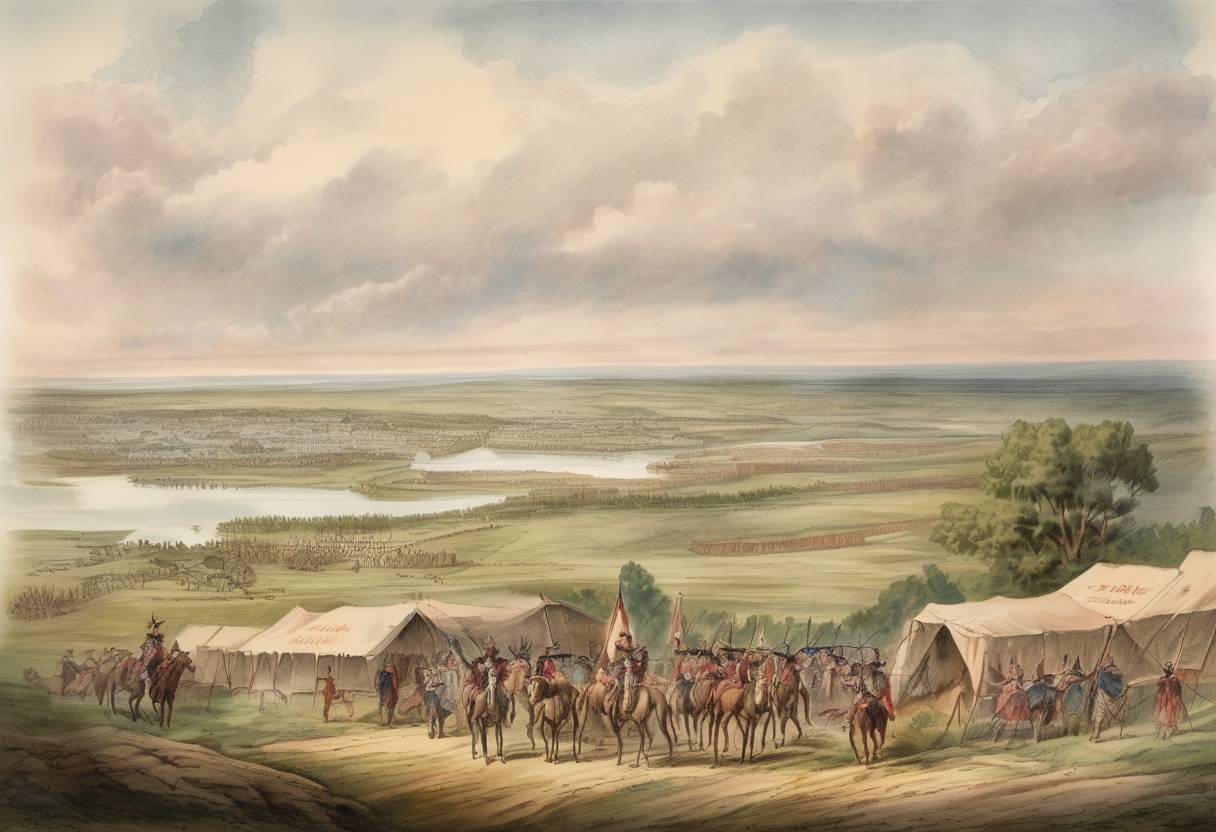
On May 28, 1830, President Andrew Jackson signed the Indian Removal Act into law, a pivotal and controversial piece of legislation in United States history. This act authorized the forced relocation of Native American tribes living east of the Mississippi River to designated “Indian Territory” west of the river, primarily in present-day Oklahoma.
Early 19th Century Expansion: During the early 1800s, the United States was rapidly expanding westward. Settlers and land speculators were eager to acquire land in the southeastern United States, which was inhabited by several Native American tribes, including the Cherokee, Creek, Choctaw, Chickasaw, and Seminole.
Pressure on Native Lands: The growing demand for arable land, particularly for cotton cultivation, increased pressure on the federal government to remove Native Americans from their ancestral lands. Many Americans believed in the concept of “Manifest Destiny,” the idea that the expansion of the U.S. across the American continent was both justified and inevitable.
Andrew Jackson’s Presidency: Andrew Jackson, elected as the seventh President of the United States in 1828, was a strong proponent of Indian removal. He argued that it would be beneficial for both American settlers and Native Americans, whom he claimed would be able to preserve their way of life away from the encroaching settlers.
Negotiation of Treaties: The Indian Removal Act authorized the President to negotiate treaties with Native American tribes, exchanging their lands in the east for lands in the west.
Compensation and Assistance: The act promised compensation for the lands relinquished and assistance in the relocation process, although these promises were often inadequately fulfilled.
Voluntary Relocation: While the act was framed as a voluntary exchange, in practice, it led to the forced removal of tens of thousands of Native Americans.
Trail of Tears: The implementation of the Indian Removal Act led to the infamous “Trail of Tears,” a series of forced relocations of Native American nations from their homelands. The journey was marked by harsh conditions, disease, and death, with thousands of Native Americans perishing along the way.
Legal Challenges: The Cherokee Nation legally challenged the removal policy in the U.S. Supreme Court. In the case of Worcester v. Georgia (1832), the Court ruled in favor of the Cherokee, recognizing them as a sovereign nation. However, President Jackson reportedly ignored the ruling, and the removal continued.
Long-term Impact: The Indian Removal Act had devastating effects on Native American communities, leading to significant loss of life, culture, and land. It also set a precedent for future U.S. policies regarding Native Americans.
The Indian Removal Act of 1830 is a critical event in American history that highlights the complex and often tragic interactions between the U.S. government and Native American tribes. It underscores themes of expansionism, federal authority, and the struggle for Native American rights and sovereignty. The act and its consequences remain a poignant reminder of the costs of American expansion and the enduring impact on Native American communities.
Source: en.wikipedia.org