The Siege of Yorktown: British Surrender on October 19, 1781
1781 · Yorktown, United States
The Siege of Yorktown ends with the British Army's surrender to American and French forces, effectively ending the American Revolutionary War.
March 17, 1776
British forces evacuated Boston during the American Revolutionary War, marking a significant victory for the Continental Army.
Boston, United States | Continental Army
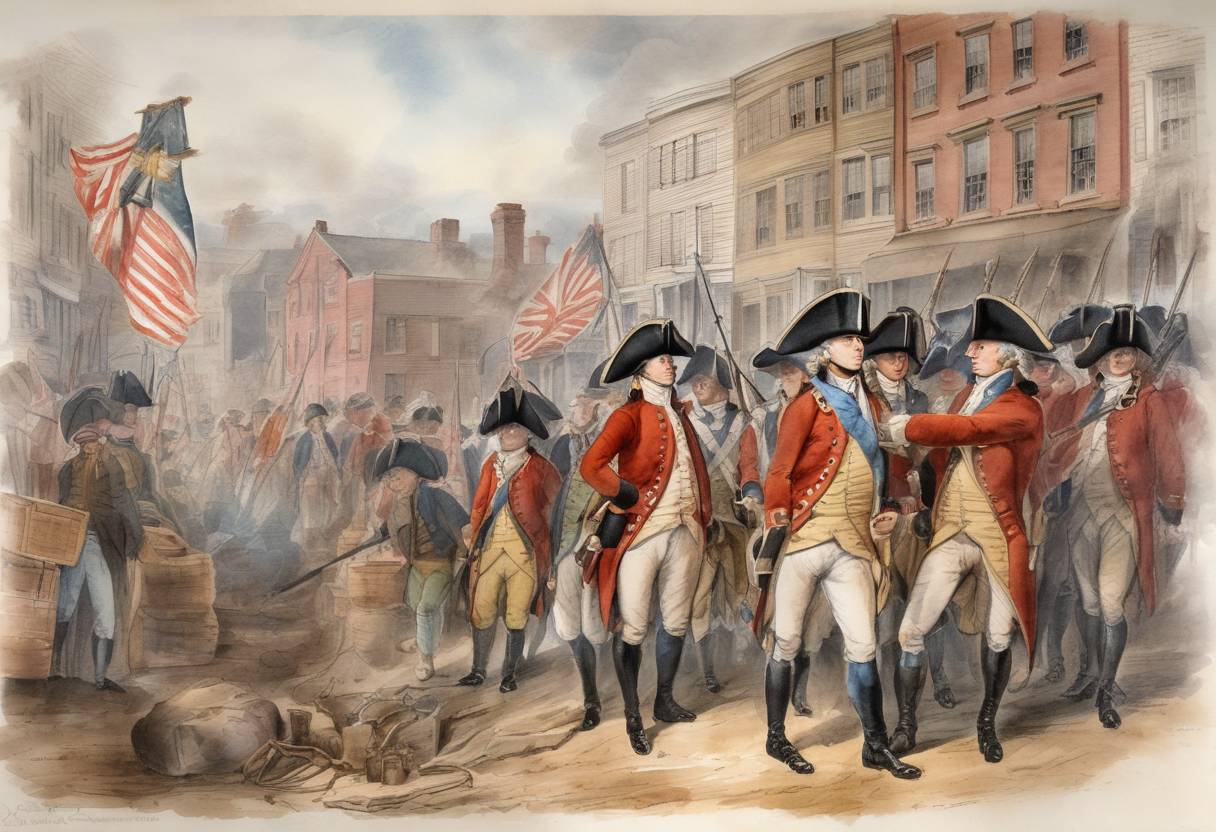
On March 17, 1776, British forces evacuated Boston, marking a pivotal victory for the Continental Army during the American Revolutionary War. This event, known as the Evacuation of Boston, was a significant turning point in the early stages of the conflict, demonstrating the effectiveness of the Continental Army under General George Washington’s leadership.
The Siege of Boston began in April 1775, following the battles of Lexington and Concord. American colonial forces surrounded the city, effectively trapping the British troops under General Thomas Gage. The siege was characterized by a stalemate, with neither side able to gain a decisive advantage.
The situation changed dramatically in early 1776 when Henry Knox, a former bookseller turned artillery officer, orchestrated the transport of heavy artillery from Fort Ticonderoga to Boston. This arduous winter journey, known as the “Noble Train of Artillery,” involved moving 60 tons of cannons and other armaments over 300 miles of difficult terrain.
With the newly acquired artillery, Washington devised a bold plan to fortify Dorchester Heights, a strategic position overlooking Boston and its harbor. On the night of March 4, 1776, under the cover of darkness, Continental forces fortified the heights with cannons and earthworks. By morning, the British found themselves in a precarious position, as the American artillery threatened their ships in the harbor and their positions in the city.
General William Howe, who had replaced Gage as the British commander, recognized the untenable situation. An assault on the American positions was considered, but adverse weather conditions and the formidable American defenses led Howe to abandon the plan. Instead, he opted for evacuation.
On March 17, 1776, British troops, along with Loyalists who feared retribution from the Patriots, began their withdrawal from Boston. The evacuation was conducted in an orderly manner, with the British fleet setting sail for Halifax, Nova Scotia. This marked the end of an 11-month siege and a significant morale boost for the American cause.
The successful evacuation of Boston was a major strategic victory for the Continental Army. It demonstrated the effectiveness of Washington’s leadership and the potential of the American forces to challenge the British military. The event also bolstered support for the revolutionary cause both domestically and internationally.
The British, having lost control of Boston, shifted their focus to New York City, which they captured later in 1776. Meanwhile, the Continental Army gained valuable time to regroup and prepare for future engagements.
In summary, the Evacuation of Boston on March 17, 1776, was a crucial early victory for the American Revolution, showcasing the resolve and ingenuity of the Continental forces and setting the stage for subsequent campaigns in the fight for independence.
Source: en.wikipedia.org