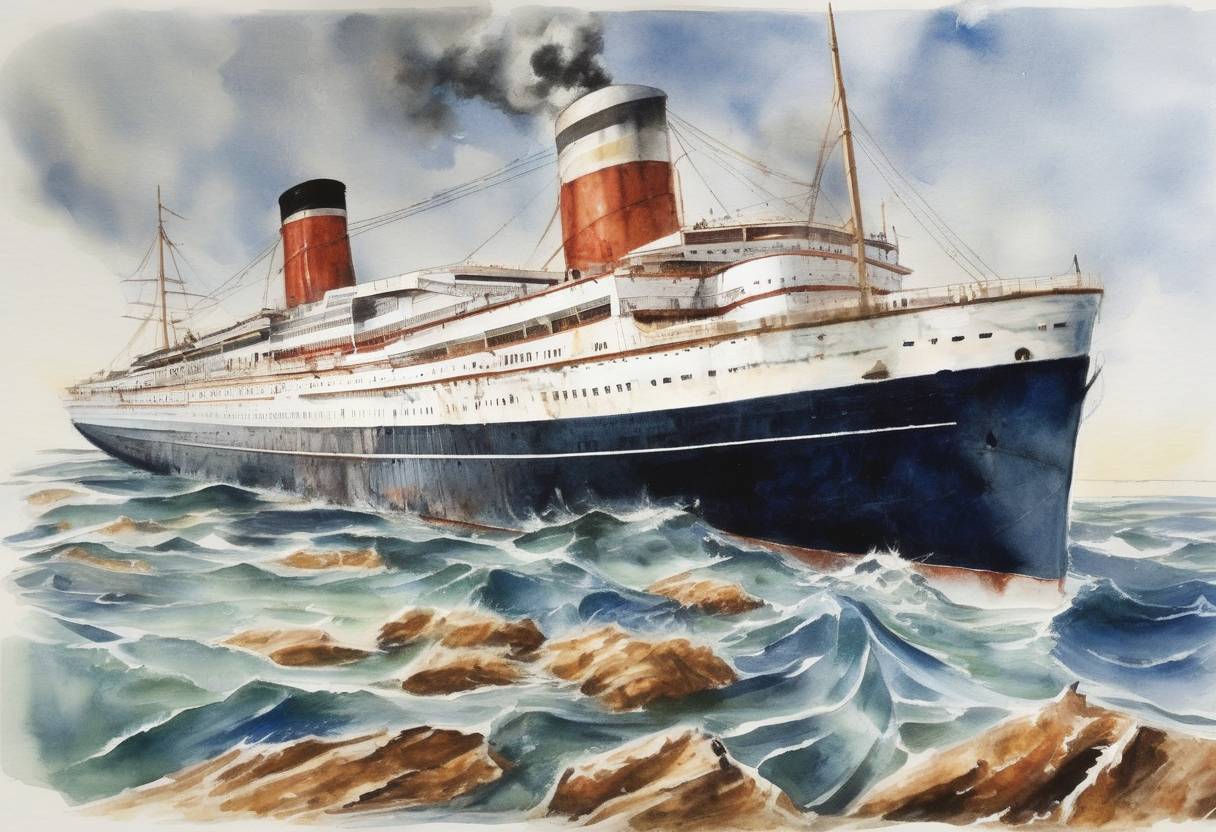
The Collision of SS Andrea Doria and MS Stockholm
On July 25, 1956, a tragic maritime disaster occurred involving the Italian ocean liner SS Andrea Doria and the Swedish passenger liner MS Stockholm. This event took place off the coast of Nantucket, Massachusetts, and resulted in the sinking of the Andrea Doria and the loss of 46 lives.
Background
SS Andrea Doria
- Launched: 1951
- Operator: Italian Line
- Notable Features: The Andrea Doria was celebrated for its luxurious amenities and advanced safety features, including a double hull and multiple watertight compartments.
MS Stockholm
- Launched: 1948
- Operator: Swedish American Line
- Purpose: Primarily used for transatlantic crossings between Europe and North America.
The Collision
Circumstances
- Date and Time: The collision occurred on the night of July 25, 1956.
- Location: Approximately 45 miles south of Nantucket, Massachusetts.
- Weather Conditions: The area was shrouded in dense fog, a common occurrence in the North Atlantic, which significantly reduced visibility.
Events Leading to the Collision
- Both ships were navigating through the fog using radar, a relatively new technology at the time.
- Misinterpretations of radar readings and communication failures between the two ships contributed to the collision.
- The Andrea Doria was en route to New York City from Genoa, Italy, while the Stockholm was heading to Gothenburg, Sweden.
Impact
- The bow of the Stockholm struck the starboard side of the Andrea Doria, creating a large gash in the hull.
- Despite its advanced design, the Andrea Doria began to list severely due to the breach.
Aftermath
Rescue Efforts
- The collision prompted a massive rescue operation involving nearby ships, including the French liner SS Île de France.
- Over 1,600 passengers and crew were successfully evacuated from the Andrea Doria, thanks to the swift response of rescue teams and the ship’s crew.
Casualties
- A total of 46 people lost their lives, most of whom were aboard the Andrea Doria at the time of the collision.
Sinking
- The Andrea Doria remained afloat for approximately 11 hours after the collision, eventually capsizing and sinking on the morning of July 26, 1956.
Historical Significance
- The disaster highlighted the limitations of radar technology and the need for improved maritime safety protocols.
- It led to changes in international maritime regulations, including better training for radar operators and more stringent safety measures for passenger ships.
- The collision remains one of the most infamous maritime disasters of the 20th century, often compared to the sinking of the Titanic in terms of its impact on public consciousness and maritime policy.
The story of the Andrea Doria and Stockholm serves as a poignant reminder of the perils of sea travel and the importance of technological and procedural advancements in ensuring maritime safety.