Persian Gulf War: Kuwait's Liberation on February 27, 1991
1991 · Washington D.C., United States
In the Persian Gulf War, U.S. President George H. W. Bush declared that 'Kuwait is liberated,' leading to a ceasefire the next day with Iraq.
January 12, 1991
The United States Congress authorizes the use of military force to drive Iraq out of Kuwait, leading to the Gulf War.
Washington D.C., United States | United States Congress
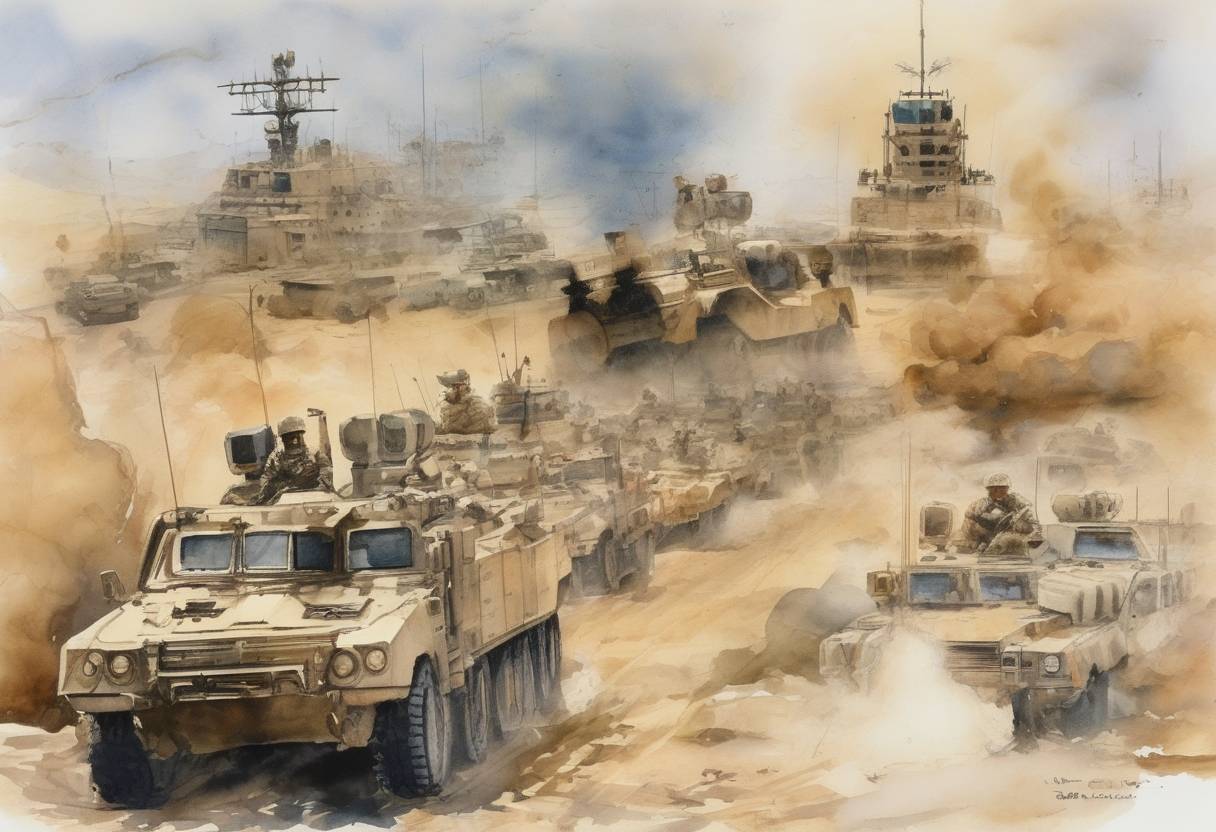
On January 12, 1991, the United States Congress passed a resolution authorizing the use of military force to expel Iraqi forces from Kuwait, marking a pivotal moment in the lead-up to the Gulf War. This decision was a response to Iraq’s invasion and annexation of Kuwait on August 2, 1990, under the leadership of Iraqi President Saddam Hussein.
Invasion of Kuwait: Iraq’s invasion of Kuwait was driven by several factors, including disputes over oil production and debt from the Iran-Iraq War. Saddam Hussein accused Kuwait of overproducing oil, which he claimed was harming Iraq’s economy, and demanded debt forgiveness.
International Response: The invasion was met with widespread international condemnation. The United Nations Security Council swiftly passed Resolution 660, demanding Iraq’s immediate withdrawal from Kuwait. Subsequent resolutions imposed economic sanctions and set a deadline for Iraq to comply.
Coalition Building: The United States, under President George H. W. Bush, led efforts to build a broad international coalition to oppose Iraq’s aggression. This coalition included NATO allies, Arab nations, and other countries, reflecting a significant global consensus against Iraq’s actions.
Debate and Decision: The decision to authorize military force followed intense debate within the U.S. Congress. The resolution, known as the “Authorization for Use of Military Force Against Iraq Resolution,” passed the Senate with a vote of 52-47 and the House of Representatives with a vote of 250-183.
Significance: This authorization was crucial as it provided President Bush with the legal and political backing to initiate military operations against Iraq. It underscored the U.S. commitment to enforcing international law and protecting global oil supplies.
Commencement: Following the expiration of the UN deadline for Iraqi withdrawal on January 15, 1991, the U.S.-led coalition launched Operation Desert Storm on January 17, 1991. This operation began with a massive aerial bombardment campaign aimed at crippling Iraq’s military infrastructure.
Ground Offensive: The ground offensive, which began on February 24, 1991, swiftly liberated Kuwait. Coalition forces achieved their objectives with remarkable speed, and by February 28, 1991, President Bush declared a ceasefire, effectively ending the conflict.
Impact on Iraq: The war significantly weakened Iraq’s military capabilities and infrastructure. However, Saddam Hussein remained in power, leading to further tensions and conflicts in the region.
Regional and Global Effects: The Gulf War had lasting implications for Middle Eastern geopolitics, U.S. foreign policy, and military strategy. It demonstrated the effectiveness of coalition warfare and advanced military technology.
Legacy: The conflict set the stage for future U.S. involvement in the Middle East, including the 2003 Iraq War. It also highlighted the importance of international cooperation in addressing global security challenges.
The authorization of military force on January 12, 1991, was a decisive moment that underscored the international community’s resolve to uphold sovereignty and deter aggression, shaping the geopolitical landscape of the post-Cold War era.
Source: en.wikipedia.org