1957 · Istanbul, Turkey
The Hagia Sophia in Istanbul, Turkey, was designated as a museum by the Republic of Turkey, showcasing its rich history as both a cathedral and mosque.
March 28, 1930
The cities of Constantinople and Angora were officially renamed to Istanbul and Ankara, respectively, as part of the Turkish government's efforts to modernize and nationalize the country.
Istanbul, Turkey | Turkish Government
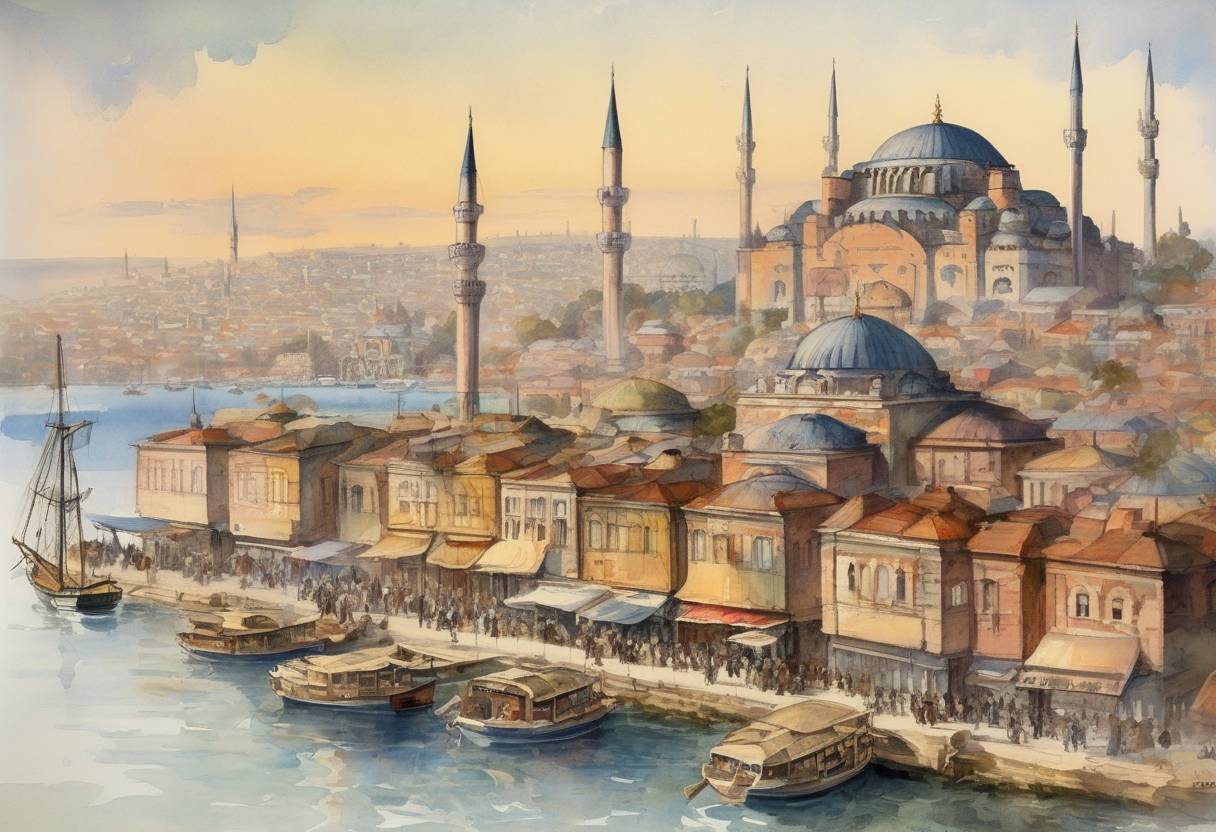
On March 28, 1930, the Turkish government officially renamed the cities of Constantinople and Angora to Istanbul and Ankara, respectively. This change was part of a broader effort by the Republic of Turkey to modernize and nationalize the country following the fall of the Ottoman Empire.
The Fall of the Ottoman Empire: The Ottoman Empire, which had ruled vast territories across Europe, Asia, and Africa, collapsed after World War I. The Treaty of Sèvres and later the Treaty of Lausanne in 1923 marked the end of the Ottoman rule and the establishment of the Republic of Turkey.
Mustafa Kemal Atatürk’s Reforms: Mustafa Kemal Atatürk, the founder and first President of the Republic of Turkey, initiated a series of radical reforms aimed at transforming Turkey into a modern, secular, and national state. These reforms included changes in language, education, legal systems, and cultural practices.
Istanbul: Formerly known as Constantinople, the city had been the capital of the Byzantine Empire and later the Ottoman Empire. The name “Istanbul” had been in colloquial use for centuries, derived from a Greek phrase meaning “to the city” (εἰς τὴν πόλιν, “eis tēn polin”). The official renaming was a symbolic move to assert Turkish identity and break away from the city’s imperial past.
Ankara: Known as Angora in the Western world, Ankara was chosen as the capital of the new Republic of Turkey in 1923, replacing Constantinople. The decision to make Ankara the capital was strategic, as it was more centrally located and less vulnerable to foreign invasion. The renaming to Ankara was part of the nationalization efforts.
National Identity: The renaming of these cities was a crucial step in Atatürk’s vision of fostering a unified national identity. It was part of a larger campaign to replace foreign names and influences with Turkish ones.
Modernization: These changes were emblematic of Turkey’s broader modernization efforts, which included adopting the Latin alphabet, secularizing the state, and promoting industrialization.
Cultural Shift: The renaming also reflected a cultural shift towards Westernization and away from the Ottoman and Islamic traditions that had dominated the region for centuries.
International Recognition: The international community gradually adopted the new names, although some resistance and confusion persisted for years, particularly in Western countries accustomed to the historical names.
Legacy: Today, Istanbul and Ankara are recognized globally by their Turkish names, symbolizing the enduring impact of Atatürk’s reforms on Turkey’s national identity and global standing.
The renaming of Constantinople to Istanbul and Angora to Ankara was a pivotal moment in Turkey’s history, marking a definitive break from its imperial past and a step towards a modern, national future.
Source: en.wikipedia.org