The Inaugural FIFA World Cup Begins - July 13, 1930
1930 · Montevideo, Uruguay
The inaugural FIFA World Cup begins in Montevideo, Uruguay.
July 30, 1930
Uruguay wins the first FIFA World Cup, defeating Argentina 4-2 in the final.
Montevideo, Uruguay | FIFA
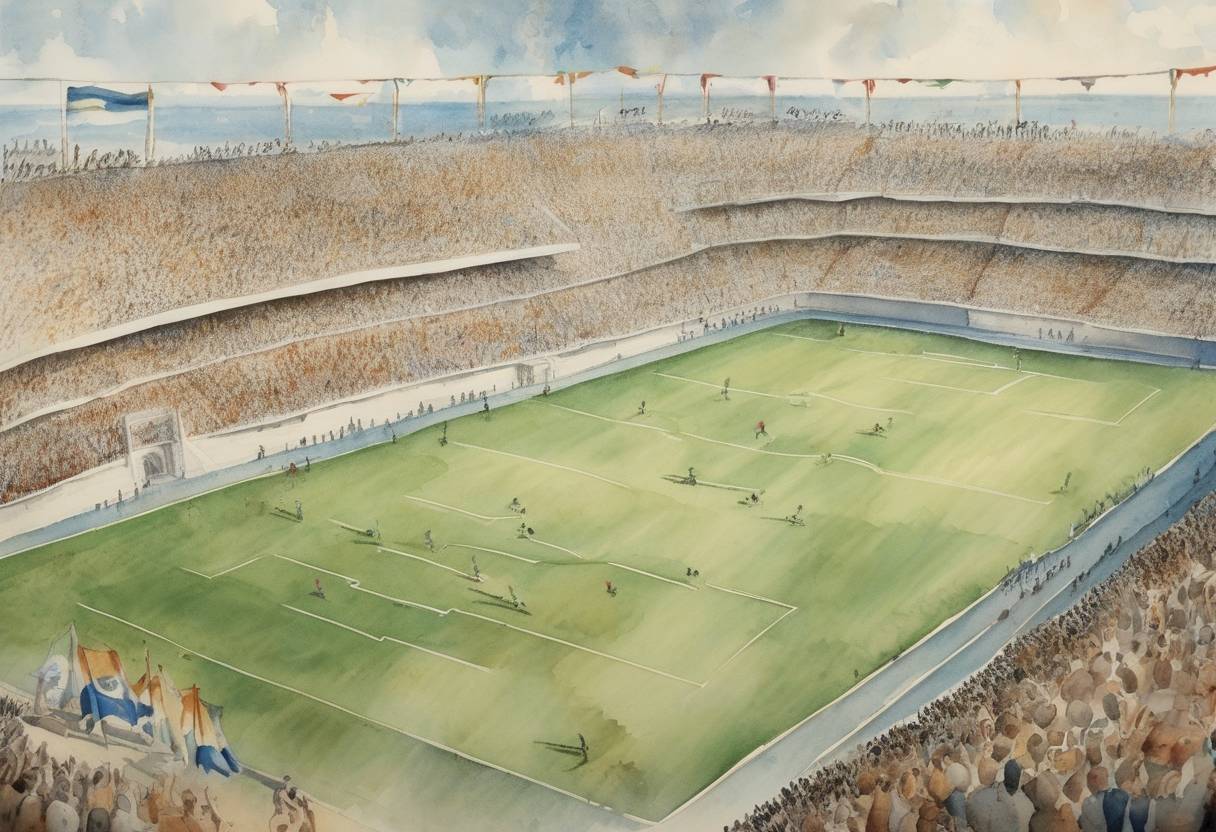
On July 30, 1930, Uruguay triumphed in the inaugural FIFA World Cup, defeating Argentina 4-2 in a thrilling final held in Montevideo, Uruguay. This historic event marked the beginning of what would become the world’s most prestigious football tournament.
FIFA’s Decision: The Fédération Internationale de Football Association (FIFA) decided to organize the first World Cup in 1930, aiming to create an international competition separate from the Olympic Games. Uruguay was chosen as the host nation, partly due to its centenary of independence and its success in the 1924 and 1928 Olympic football tournaments.
Participation: The tournament featured 13 teams, with seven from South America, four from Europe, and two from North America. The European teams faced challenges in traveling to Uruguay due to the economic conditions of the time, but ultimately France, Belgium, Romania, and Yugoslavia participated.
Format: The competition was structured with a group stage followed by knockout rounds. The teams were divided into four groups, with the winners of each group advancing to the semifinals.
Uruguay’s Path: Uruguay topped their group by defeating Peru and Romania. In the semifinals, they faced Yugoslavia, securing a decisive 6-1 victory to advance to the final.
Venue: The final was held at the Estadio Centenario in Montevideo, a stadium built specifically for the World Cup, with a capacity of 90,000 spectators.
Match Highlights:
Celebrations: Uruguay’s victory was celebrated nationwide, solidifying their status as a football powerhouse. The win also contributed to a sense of national pride and unity.
Legacy: The success of the 1930 World Cup laid the foundation for future tournaments, establishing the World Cup as a key event in international sports. Uruguay’s victory remains a significant moment in football history, symbolizing the sport’s global appeal and competitive spirit.
Impact on Football: The tournament showcased the potential of international football competitions, leading to increased interest and participation in subsequent World Cups.
Uruguay’s victory in the first FIFA World Cup is remembered not only for its sporting achievement but also for its role in shaping the future of international football.
Source: en.wikipedia.org