William Caxton and the Printing of Aesop's Fables
1484 · Westminster, England
William Caxton printed his translation of Aesop's Fables, one of the earliest printed books in English.
November 18, 1477
William Caxton produced the first dated printed book in England, 'Dictes or Sayengis of the Philosophres'.
Westminster, England | Caxton's Printing Press
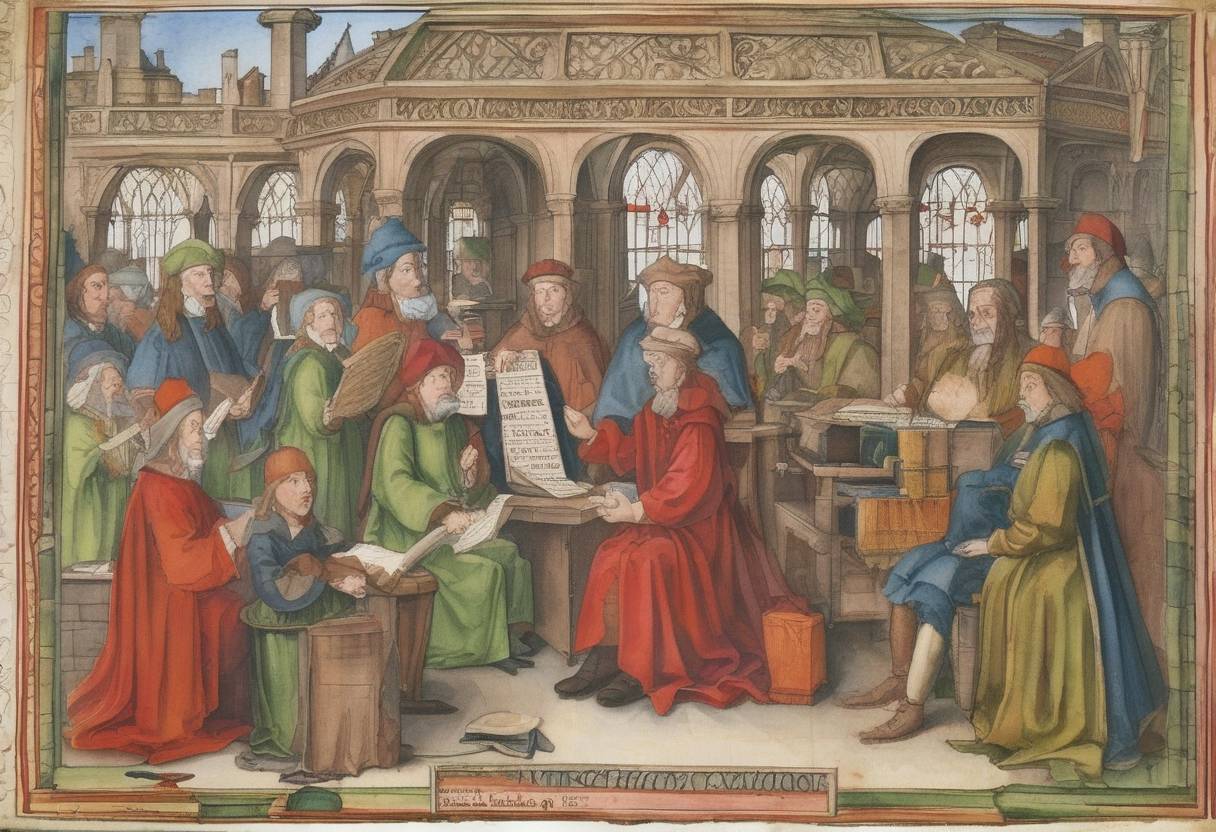
On November 18, 1477, William Caxton, an English merchant, diplomat, and pioneering printer, produced the first dated printed book in England, titled Dictes or Sayengis of the Philosophres. This event marked a significant milestone in the history of English literature and the dissemination of knowledge.
William Caxton: Born around 1422 in Kent, England, Caxton spent much of his early life in the Low Countries, where he was exposed to the burgeoning art of printing. He learned the craft in Cologne and Bruges, where he worked with notable printers and eventually set up his own press.
Introduction of Printing to England: Caxton returned to England around 1476, bringing with him the knowledge and equipment necessary to establish the first printing press in the country. He set up his press at Westminster, near London, which became the center of his printing activities.
Content: The book is a collection of moral and philosophical sayings attributed to ancient philosophers. It was originally translated from French into English by Anthony Woodville, the Earl Rivers, a prominent nobleman and patron of the arts.
Significance: The production of Dictes or Sayengis of the Philosophres was a landmark in English printing for several reasons:
Cultural Shift: The introduction of the printing press in England by Caxton revolutionized the way information was disseminated. It allowed for the mass production of books, making them more accessible to a wider audience and fostering an increase in literacy rates.
Literary Influence: Caxton’s work laid the foundation for the standardization of the English language. By printing texts in English, he helped to stabilize spelling and grammar, contributing to the development of a more uniform written language.
Historical Importance: Caxton’s press produced over 100 different works, including notable titles such as Geoffrey Chaucer’s The Canterbury Tales and Sir Thomas Malory’s Le Morte d’Arthur. His contributions significantly impacted English literature and culture.
In summary, the printing of Dictes or Sayengis of the Philosophres on November 18, 1477, by William Caxton was a pivotal moment in English history, marking the beginning of a new era in the production and consumption of written works.
Source: en.wikipedia.org