The Battle of the Volturnus: January 15, 588
588 · Volturnus River, Italy
The Battle of the Volturnus was fought between the Byzantine Empire and the Lombards, resulting in a Byzantine victory.
June 7, 0555
The Battle of Aratus took place, where Byzantine forces under General Narses defeated the Ostrogoths, contributing to the Byzantine reconquest of Italy.
Aratus, Italy | Byzantine Empire
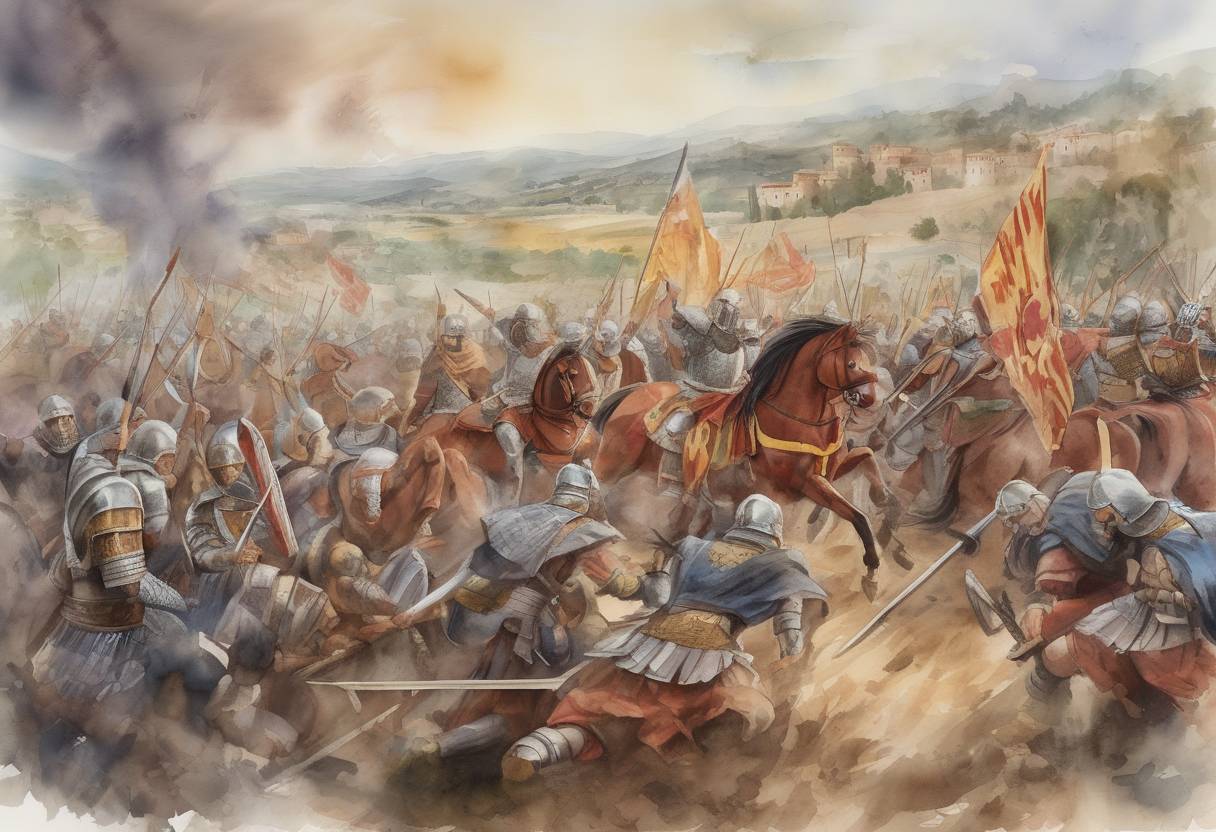
The Battle of Aratus, fought on June 7, 555, was a significant engagement during the Gothic War (535–554), a protracted conflict between the Byzantine Empire and the Ostrogothic Kingdom of Italy. This battle marked a pivotal moment in the Byzantine reconquest of Italy, contributing to the eventual restoration of much of the Western Roman Empire’s former territories under Byzantine control.
The Gothic War was initiated by the Byzantine Emperor Justinian I, who sought to reclaim the Western Roman Empire’s territories lost to various Germanic tribes. The war began in 535 and was characterized by a series of campaigns led by notable Byzantine generals, including Belisarius and later Narses.
By the mid-550s, the Ostrogothic resistance had been significantly weakened, but they continued to pose a threat to Byzantine ambitions in Italy. General Narses, a skilled military strategist and eunuch, was appointed by Justinian to lead the final campaigns against the Ostrogoths.
The Battle of Aratus occurred in the context of Narses’ campaign to consolidate Byzantine control over Italy. Although specific details about the battle’s location and tactics are sparse, it is known that Narses’ forces engaged the Ostrogoths, who were attempting to regroup and resist the Byzantine advance.
Narses employed his typical strategic acumen, utilizing a combination of infantry and cavalry to outmaneuver the Ostrogothic forces. His ability to coordinate different units effectively and exploit the weaknesses of the Ostrogothic army was crucial to the Byzantine victory.
The victory at Aratus further weakened the Ostrogothic hold on Italy and paved the way for the eventual Byzantine reconquest of the peninsula. Following this battle, Narses continued his campaign, culminating in the decisive Battle of Mons Lactarius in 553, which effectively ended Ostrogothic resistance.
The reconquest of Italy was a significant achievement for Justinian’s reign, symbolizing the temporary restoration of Roman imperial authority in the West. However, the prolonged conflict had devastating effects on the Italian peninsula, leading to economic decline and depopulation.
The Byzantine reconquest of Italy, although initially successful, was short-lived. The region soon faced new challenges, including the Lombard invasions, which began in 568. Nevertheless, the efforts of Justinian and his generals like Narses left a lasting legacy on the cultural and political landscape of Italy, influencing the development of the region for centuries to come.
The Battle of Aratus exemplifies the complexities of Justinian’s military campaigns and the broader ambitions of the Byzantine Empire during this period, highlighting the interplay between military strategy and imperial politics in the quest to restore Roman glory.
Source: en.wikipedia.org