Junko Tabei: First Woman to Summit Mount Everest
1975 · Mount Everest, Nepal
Junko Tabei becomes the first woman to reach the summit of Mount Everest.
July 14, 1865
The first ascent of the Matterhorn is completed by Edward Whymper and his party.
Zermatt, Switzerland | Alpine Club
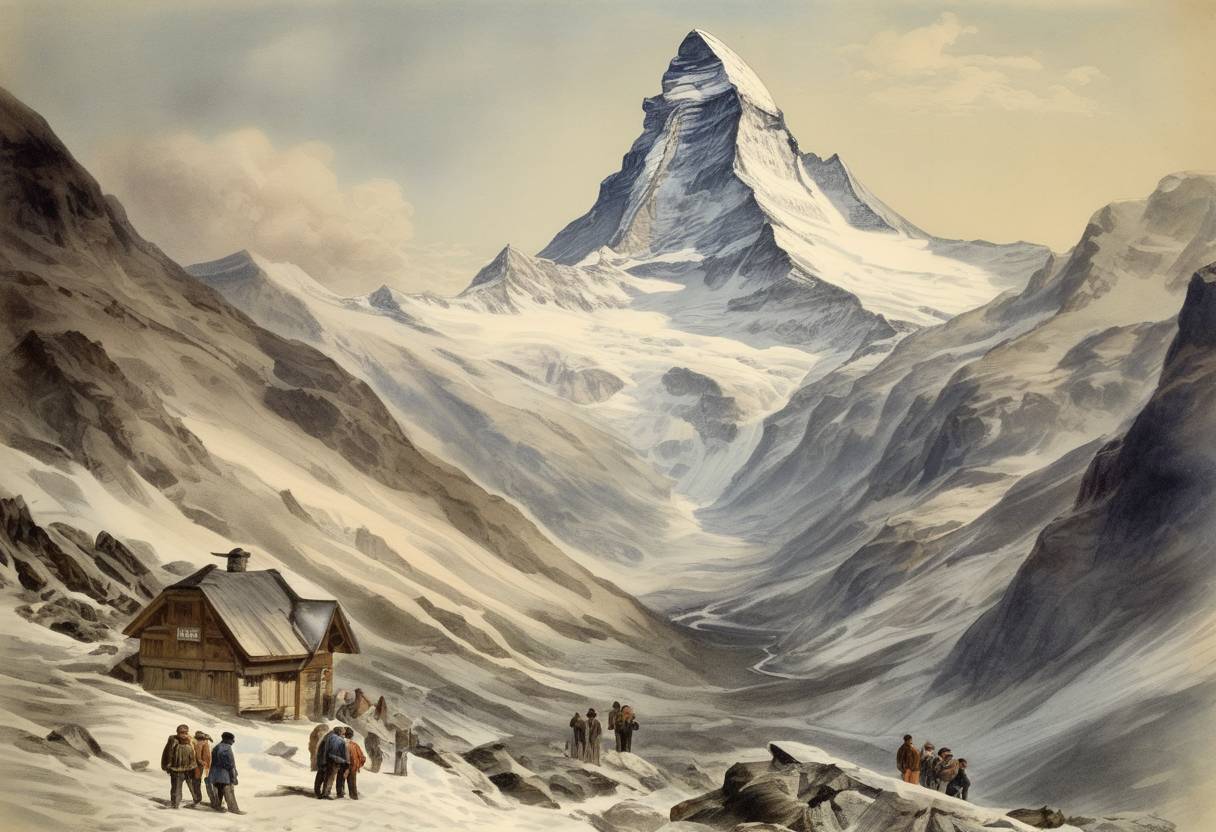
On July 14, 1865, a significant milestone in the history of mountaineering was achieved when Edward Whymper and his party successfully completed the first ascent of the Matterhorn, one of the most iconic peaks in the Alps. This event marked a pivotal moment in the “Golden Age of Alpinism,” a period characterized by numerous first ascents of major Alpine peaks.
The Matterhorn, standing at 4,478 meters (14,692 feet), is located on the border between Switzerland and Italy. Its distinctive pyramid shape and daunting ridges had long captured the imagination of climbers. Prior to Whymper’s successful ascent, the mountain had repelled numerous attempts, earning a reputation as one of the last great unclimbed peaks in the Alps.
Edward Whymper, an English artist and mountaineer, had made several unsuccessful attempts to conquer the Matterhorn before 1865. His determination was fueled by a combination of personal ambition and the competitive spirit of the era, as climbers from various countries vied to achieve first ascents.
Whymper’s successful expedition consisted of a diverse team, including:
The team chose the Hörnli ridge for their ascent, a route that had been considered less challenging than others. On the morning of July 14, they set out from their base camp and, after a grueling climb, reached the summit at approximately 1:40 PM. The achievement was a moment of triumph, marking the culmination of years of effort and planning.
The joy of the successful ascent was overshadowed by tragedy during the descent. As the team made their way down, Douglas Hadow slipped, causing a catastrophic fall that pulled Croz, Hudson, and Douglas with him. The four climbers fell to their deaths, their bodies later recovered on the Matterhorn Glacier. Whymper and the Taugwalders survived, narrowly escaping the same fate.
The first ascent of the Matterhorn was a landmark achievement in the history of mountaineering, symbolizing human perseverance and the spirit of exploration. However, the tragedy that accompanied it also highlighted the inherent dangers of the sport, prompting discussions about safety and responsibility in climbing.
Whymper’s account of the ascent, published in his book Scrambles Amongst the Alps, became a classic of mountaineering literature, inspiring future generations of climbers. The Matterhorn itself remains a symbol of the challenges and allure of high-altitude climbing, continuing to attract adventurers from around the world.
In summary, the first ascent of the Matterhorn on July 14, 1865, stands as a testament to human ambition and the complex interplay of triumph and tragedy in the pursuit of exploration.
Source: en.wikipedia.org