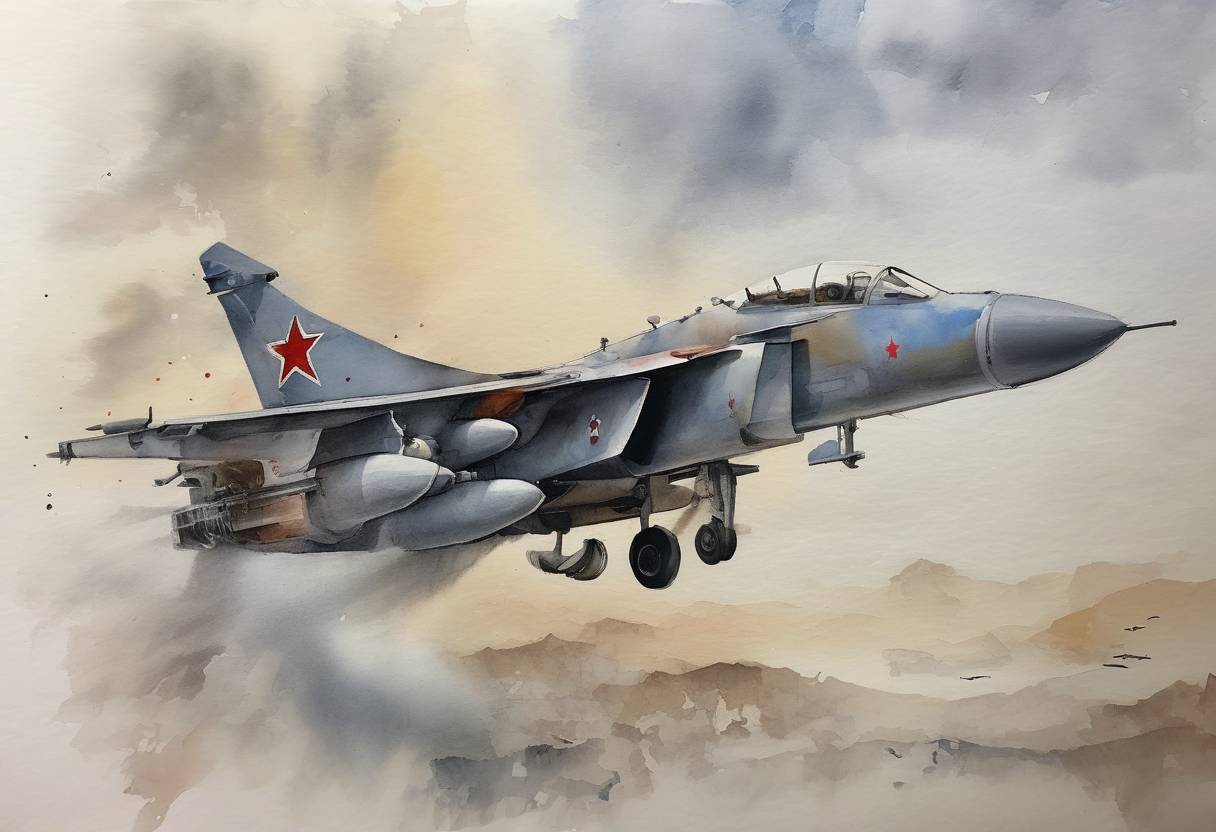
Incident Overview: Turkey Shoots Down Russian Sukhoi Su-24
On November 24, 2015, a significant international incident occurred when Turkey shot down a Russian Sukhoi Su-24 fighter jet near the Syria-Turkey border. This event marked a peak in tensions between Turkey and Russia, two countries with complex geopolitical interests in the Syrian conflict.
Background
- Syrian Civil War Context: By 2015, the Syrian Civil War had drawn in numerous international actors, each with varying interests. Russia, a staunch ally of the Syrian government led by Bashar al-Assad, had been conducting airstrikes in Syria since September 2015, targeting both ISIS and other rebel groups.
- Turkey’s Position: Turkey, a NATO member, opposed Assad’s regime and was concerned about the presence of Kurdish forces near its border, as well as the influx of refugees. Turkey had repeatedly expressed concerns about airspace violations by Russian aircraft.
The Incident
- Violation of Airspace: On the morning of November 24, 2015, Turkish authorities claimed that the Russian Su-24 had violated Turkish airspace despite multiple warnings. According to Turkey, the aircraft was warned ten times over five minutes before being engaged.
- Engagement: The Turkish Air Force, using F-16 fighter jets, shot down the Russian aircraft. The Su-24 crashed in the mountainous region of northern Syria.
- Pilot Casualties: One of the Russian pilots was killed by ground fire after ejecting from the aircraft, while the other was rescued by Russian and Syrian special forces.
- Diplomatic Tensions: The incident led to a severe diplomatic rift between Turkey and Russia. Russia described the downing as a “stab in the back” and accused Turkey of supporting terrorism.
- Economic Sanctions: In response, Russia imposed economic sanctions on Turkey, affecting sectors such as tourism, agriculture, and construction.
- Military Escalation: Russia deployed advanced S-400 air defense systems to its base in Syria and increased its military presence in the region.
Broader Implications
- NATO Involvement: As a NATO member, Turkey’s actions prompted discussions within the alliance about collective defense and the rules of engagement.
- Regional Dynamics: The incident highlighted the complex and often conflicting interests of international actors involved in the Syrian conflict.
- Subsequent Relations: Over time, Turkey and Russia worked to mend their relationship, culminating in a rapprochement that saw increased cooperation in areas like energy and regional security.
Conclusion
The downing of the Russian Su-24 by Turkey was a critical moment in the Syrian conflict, illustrating the volatile nature of international military operations in the region. It underscored the risks of military engagements in contested airspaces and the broader geopolitical tensions that can arise from such incidents.