The Storming of the Bastille: July 14, 1789
1789 · Paris, France
The Storming of the Bastille occurred in Paris, marking a pivotal event in the French Revolution.
June 20, 1789
The Tennis Court Oath is taken by members of the French Third Estate, marking a pivotal event in the early days of the French Revolution.
Versailles, France | French Third Estate
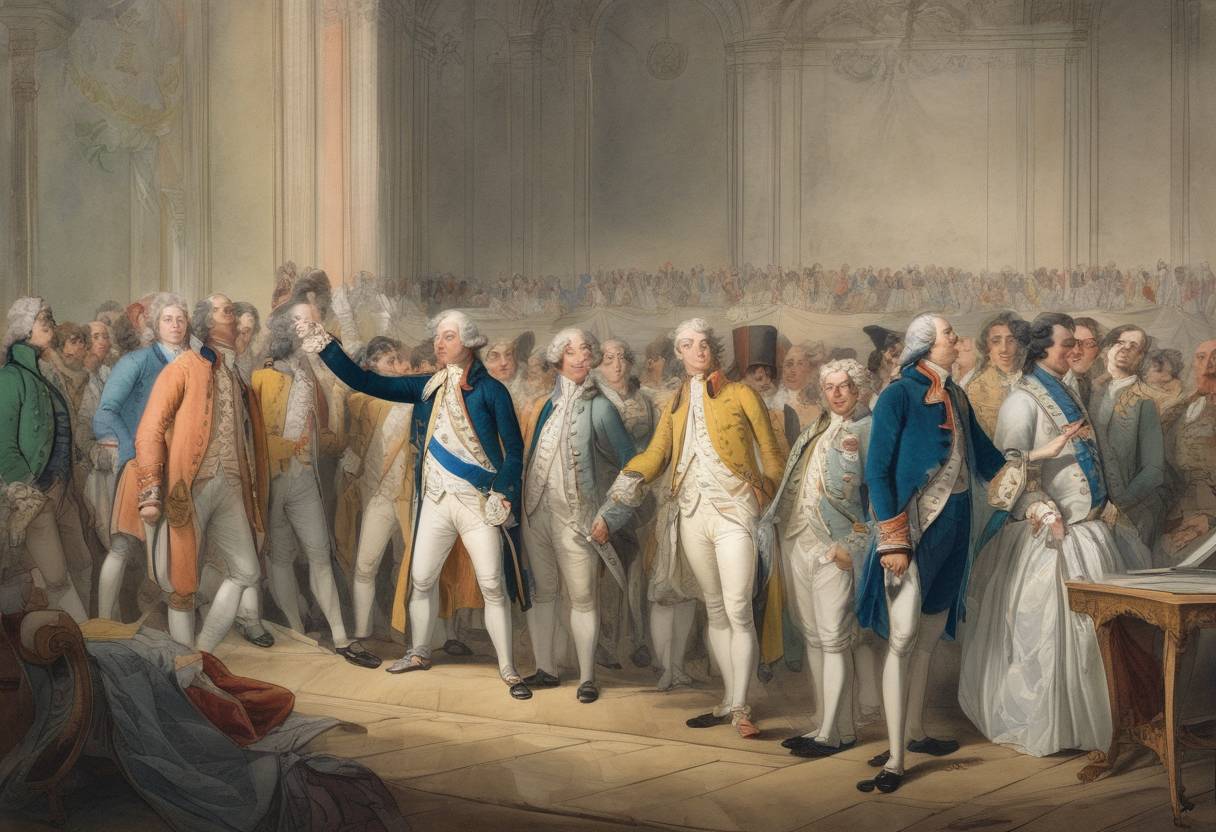
On June 20, 1789, a pivotal event in the early days of the French Revolution unfolded: the Tennis Court Oath. This moment marked a significant step in the transformation of France’s political landscape and the eventual rise of modern democracy.
In the late 18th century, France was grappling with severe financial difficulties, largely due to its involvement in costly wars and the extravagant spending of the monarchy. King Louis XVI, in an attempt to address the fiscal crisis, convened the Estates-General on May 5, 1789. This assembly was a traditional body representing the three estates of French society: the clergy (First Estate), the nobility (Second Estate), and the common people (Third Estate).
The Third Estate, representing the vast majority of the population, was frustrated by the traditional voting system, which allowed each estate one vote, effectively enabling the First and Second Estates to outvote the Third. This led to growing tensions and demands for a more equitable system.
On June 17, 1789, the Third Estate declared itself the National Assembly, asserting its right to represent the people of France. However, just days later, on June 20, they found themselves locked out of their usual meeting place at Versailles. Undeterred, they gathered in a nearby indoor tennis court.
There, 576 members of the Third Estate took a solemn collective oath, known as the Tennis Court Oath, vowing not to disband until they had drafted a new constitution for France. This act of defiance was a direct challenge to the authority of King Louis XVI and symbolized the unity and determination of the Third Estate to bring about political reform.
The Tennis Court Oath was a crucial turning point in the French Revolution. It demonstrated the resolve of the common people to seek a more democratic and just governance structure. The event galvanized support for the National Assembly and set the stage for further revolutionary actions.
In the months following the oath, the National Assembly continued to push for reforms, leading to the abolition of feudal privileges and the drafting of the Declaration of the Rights of Man and of the Citizen. These developments laid the groundwork for the eventual establishment of a constitutional monarchy and, later, the French Republic.
The Tennis Court Oath remains a symbol of collective action and the power of the people to effect change, influencing democratic movements worldwide.
Source: en.wikipedia.org