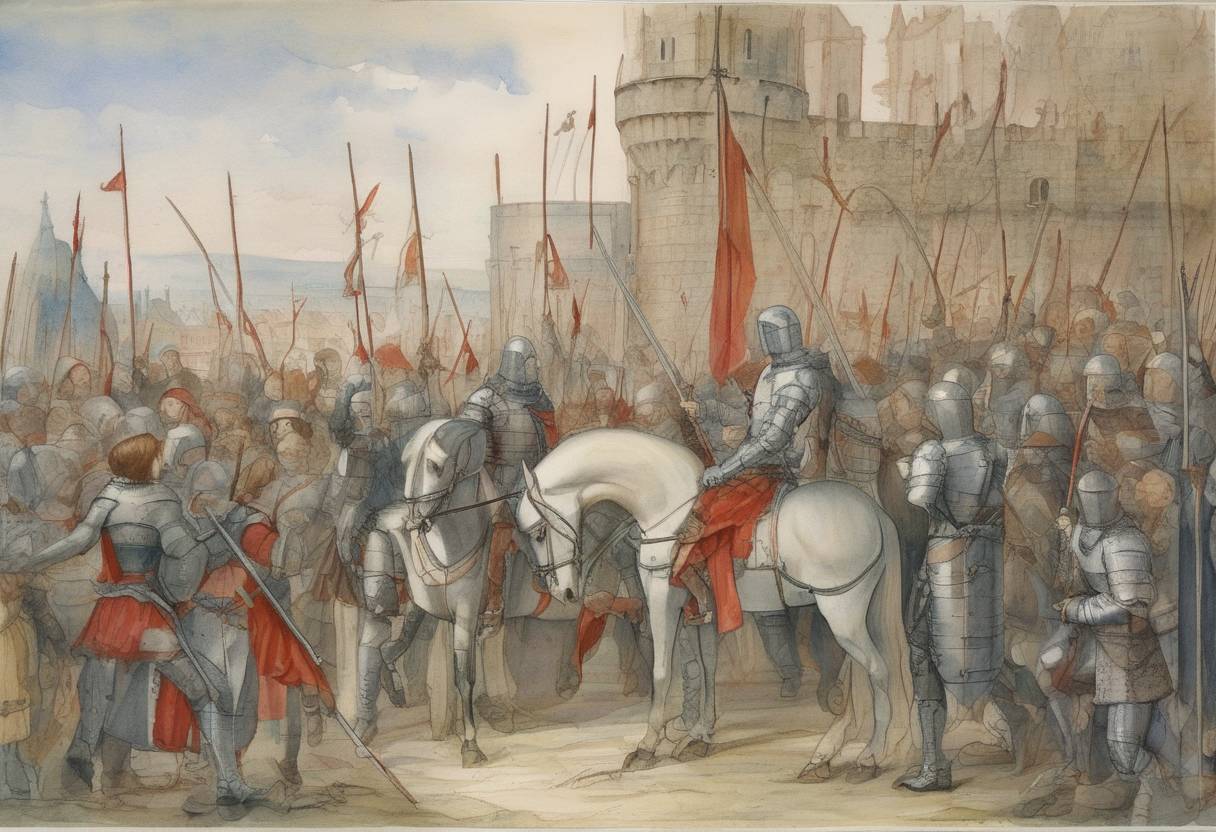
Execution of Gilles de Rais: October 26, 1440
On October 26, 1440, Gilles de Rais, a French nobleman and former military leader, was executed for the heinous crimes of murder, sodomy, and heresy. His execution marked the end of a dark chapter in medieval France, involving the gruesome deaths of numerous children.
Background
Gilles de Rais was born in 1405 into a noble family in the region of Brittany. He inherited vast estates and wealth, which he used to fund a lavish lifestyle. De Rais gained prominence as a military commander during the Hundred Years’ War, notably serving as a companion-in-arms to Joan of Arc. His valor and leadership in battles, such as the Siege of Orléans, earned him the title of Marshal of France.
Descent into Infamy
Following his military career, de Rais retired to his estates, where his behavior became increasingly erratic and extravagant. He squandered his fortune on alchemical experiments, theatrical productions, and other pursuits. It was during this period that he began committing the crimes for which he would later be infamous.
De Rais was accused of abducting, sexually assaulting, and murdering numerous children, primarily boys, from the surrounding areas. The exact number of victims remains unknown, but estimates range from dozens to several hundred. The crimes were characterized by their brutality and depravity, shocking even by the standards of the time.
Arrest and Trial
In 1440, after years of rumors and complaints from local villagers, de Rais was arrested by the Bishop of Nantes and brought to trial. The trial was held under both ecclesiastical and secular jurisdictions, reflecting the severity of the charges. De Rais initially denied the accusations but eventually confessed under the threat of torture.
The trial revealed horrifying details of his crimes, including the methods of abduction and murder. Witnesses, including his accomplices, provided damning testimony. The court found him guilty of murder, sodomy, and heresy.
Execution
On October 26, 1440, Gilles de Rais was executed by hanging and burning in the city of Nantes. His execution was a public spectacle, attended by a large crowd. Before his death, de Rais expressed remorse and sought forgiveness for his sins.
Historical Significance
The case of Gilles de Rais has fascinated historians and the public for centuries. It serves as a grim reminder of the potential for human depravity and the complexities of medieval justice. De Rais’ life and crimes have inspired numerous works of literature and art, often blurring the lines between historical fact and legend.
His association with Joan of Arc adds an additional layer of intrigue, contrasting his fall from grace with her enduring legacy as a saint and national heroine. The trial and execution of Gilles de Rais remain a significant event in the history of medieval France, illustrating the intersection of power, wealth, and moral corruption.