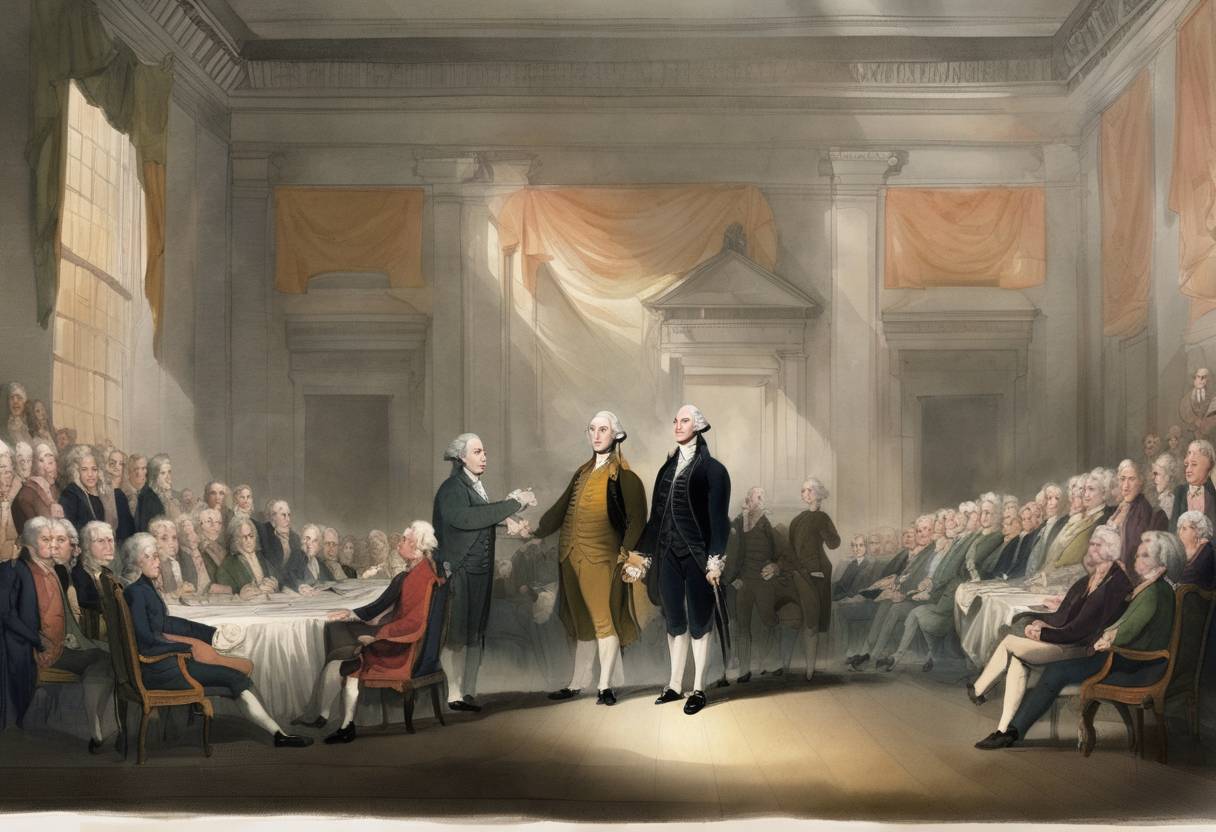
George Washington’s First State of the Union Address
On January 8, 1790, George Washington delivered the first State of the Union address in New York City, which was then the provisional capital of the United States. This event marked a significant moment in the early history of the United States as it established a precedent for future presidents and underscored the importance of communication between the executive branch and Congress.
Context and Background
- Constitutional Requirement: The State of the Union address is mandated by Article II, Section 3 of the U.S. Constitution, which requires the President to periodically give Congress information on the “State of the Union” and recommend measures deemed necessary and expedient.
- New Government Framework: The United States had recently adopted the Constitution in 1789, replacing the Articles of Confederation. This new framework aimed to create a stronger federal government with a balance of powers among the executive, legislative, and judicial branches.
Key Points of the Address
- Economic Policy: Washington emphasized the importance of establishing a sound economic policy, including the need for a stable currency and the promotion of agriculture and manufacturing.
- Defense and Security: He highlighted the necessity of maintaining a well-regulated militia and a strong defense to protect the nation’s sovereignty and interests.
- Foreign Relations: Washington underscored the importance of maintaining peaceful and beneficial relations with foreign nations.
- National Unity: A central theme of the address was the call for national unity and cooperation among the states to ensure the success of the new government.
Significance and Aftermath
- Precedent Setting: Washington’s address set a precedent for future presidents, establishing the State of the Union as an important annual event where the President communicates directly with Congress and, by extension, the American people.
- Policy Influence: The address influenced the legislative agenda of Congress, guiding discussions on economic policy, defense, and other critical issues facing the young nation.
- Symbol of Governance: The event symbolized the functioning of the new constitutional government and the President’s role in shaping national policy.
Broader Historical Impact
- Institutional Development: The State of the Union address has evolved over time, becoming a platform for presidents to outline their legislative priorities and vision for the country.
- Public Engagement: While initially delivered to Congress, the address has become a means for presidents to engage directly with the public, especially with the advent of radio, television, and internet broadcasts.
George Washington’s first State of the Union address laid the groundwork for a tradition that continues to play a vital role in American political life, reflecting the evolving priorities and challenges of the nation.