The Beginning of the Iraq War: March 21, 2003
2003 · Baghdad, Iraq
The United States and coalition forces launched a ground invasion of Iraq, marking the beginning of the Iraq War.
February 23, 1991
In the Gulf War, ground troops cross the Saudi Arabian border and enter Iraq, marking the beginning of the ground phase of Operation Desert Storm.
Kuwait, Iraq | Coalition Forces
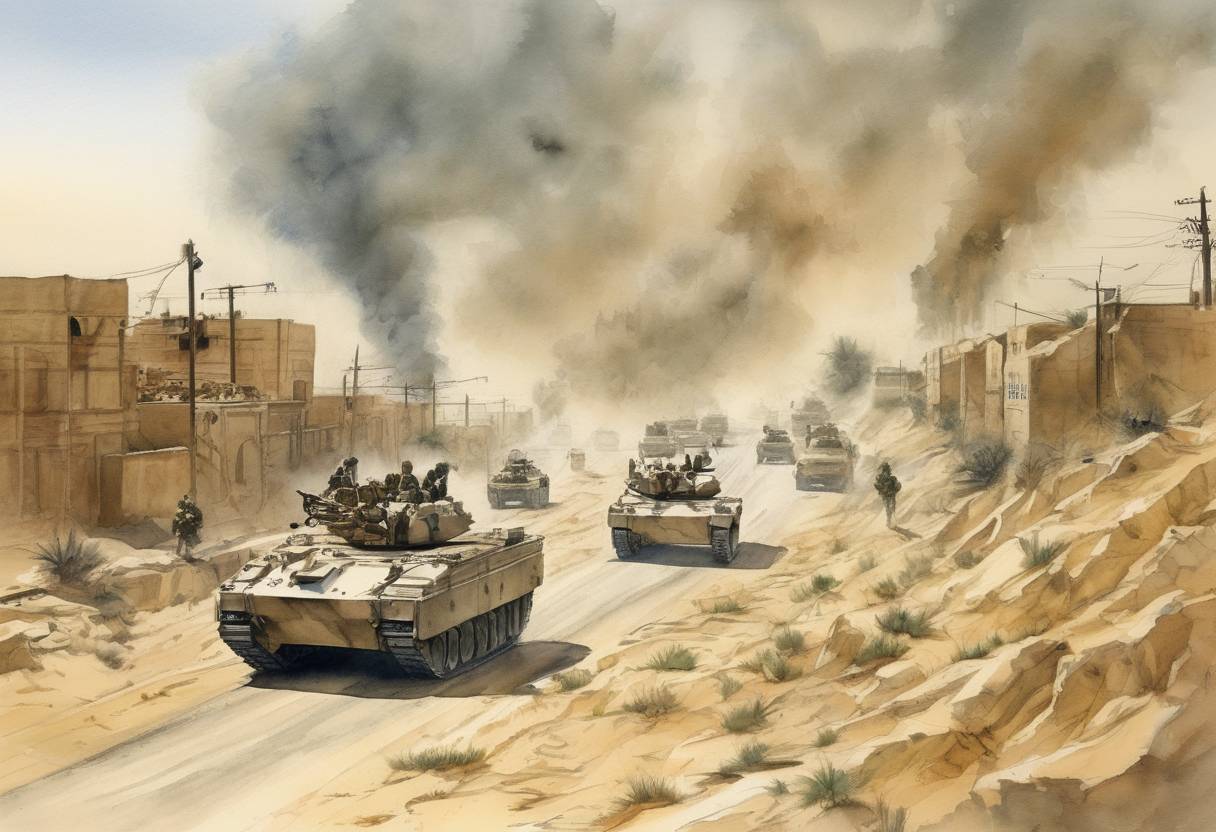
On February 23, 1991, the ground phase of Operation Desert Storm commenced as coalition forces crossed the Saudi Arabian border into Iraq and Kuwait. This marked a pivotal moment in the Gulf War, following a six-week aerial bombardment campaign aimed at weakening Iraqi defenses and infrastructure.
The Gulf War originated from Iraq’s invasion of Kuwait on August 2, 1990. Led by President Saddam Hussein, Iraq’s aggressive move was met with international condemnation and the formation of a coalition force under the United Nations’ mandate. The coalition, spearheaded by the United States and including forces from 34 countries, sought to liberate Kuwait and ensure regional stability.
Before the ground assault, Operation Desert Shield was launched to protect Saudi Arabia and deter further Iraqi aggression. This operation involved the deployment of hundreds of thousands of troops to the region, establishing a formidable military presence.
On January 17, 1991, Operation Desert Storm began with an extensive aerial bombardment. The coalition’s air forces targeted Iraqi command and control centers, communication lines, and military infrastructure. This phase aimed to degrade Iraq’s ability to wage war and soften its defenses in preparation for the ground invasion.
The ground phase, often referred to as the “100-hour war,” was a swift and decisive operation. It began on February 23, 1991, with coalition forces executing a well-coordinated assault:
The ground offensive achieved rapid success, with coalition forces liberating Kuwait City by February 27, 1991. The operation resulted in a decisive victory for the coalition, with minimal casualties compared to Iraqi losses.
The success of the ground phase of Operation Desert Storm underscored the effectiveness of coalition military strategy and marked a turning point in modern warfare, showcasing the integration of advanced technology and multinational cooperation.
Source: en.wikipedia.org