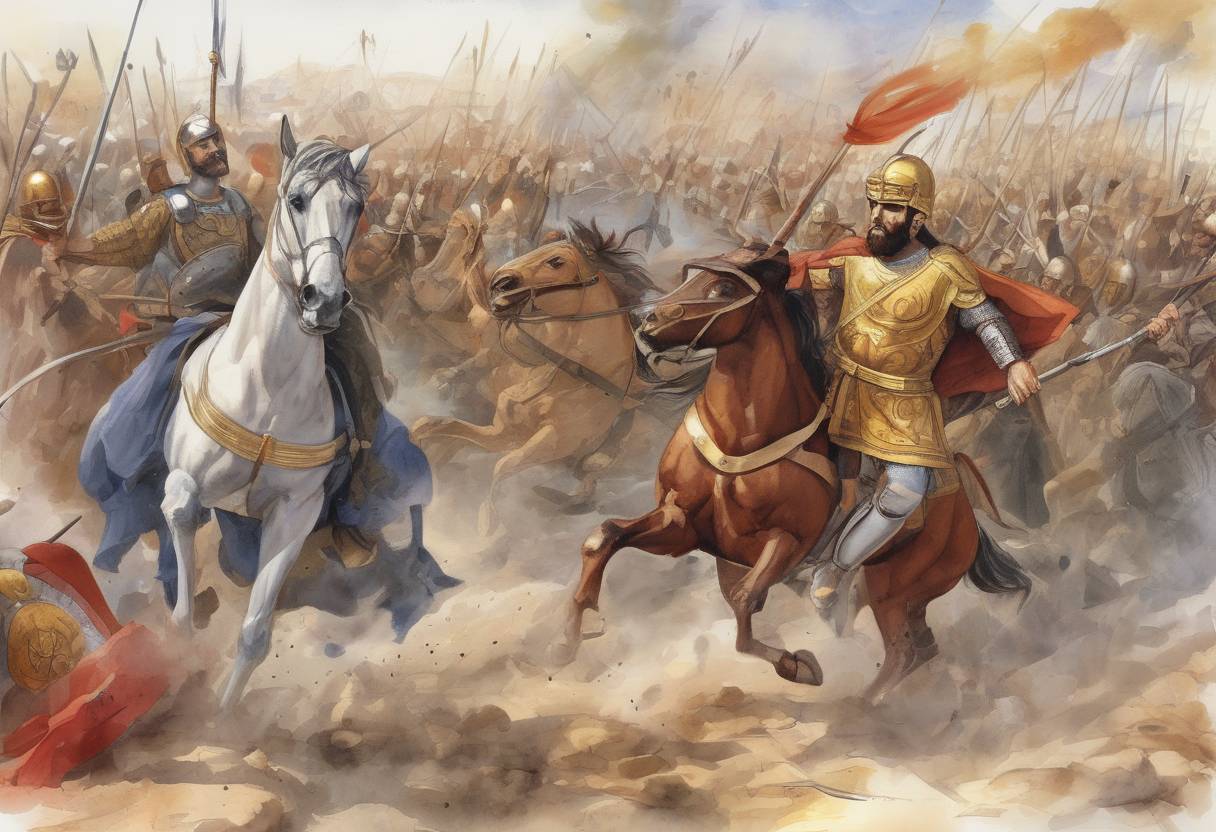
The Battle of Tricamarum: The Defeat of the Vandals
On December 30, 533, the Byzantine general Belisarius achieved a decisive victory over the Vandals, led by King Gelimer, at the Battle of Tricamarum. This battle effectively marked the end of the Vandal Kingdom in North Africa and was a significant milestone in the Byzantine Empire’s efforts to reclaim former Roman territories.
Context and Background
The Vandal Kingdom, established in North Africa after the sack of Rome in 455, had been a thorn in the side of the Eastern Roman Empire (Byzantine Empire) for decades. The Vandals, under King Geiseric, had seized control of the rich provinces of North Africa, including the vital city of Carthage. Their control over these territories allowed them to disrupt Mediterranean trade and threaten Roman interests.
By the early 6th century, Emperor Justinian I of the Byzantine Empire sought to restore the Roman Empire’s former glory, embarking on a series of military campaigns to reclaim lost territories. The Vandal Kingdom was a prime target due to its strategic importance and the wealth of its lands.
The Campaign Against the Vandals
In 533, Justinian appointed Belisarius, one of his most capable generals, to lead an expedition against the Vandals. Belisarius, known for his strategic acumen and leadership, had already proven his capabilities in campaigns against the Persians.
Belisarius landed in North Africa with a relatively small force, estimated at around 15,000 men, including infantry, cavalry, and a contingent of Hunnic mercenaries. Despite being outnumbered, Belisarius’s forces were well-trained and disciplined, contrasting with the Vandal forces, which had become complacent and less cohesive over time.
The Battle of Tricamarum
The Battle of Tricamarum took place near the town of Tricamarum, approximately 30 miles from Carthage. Following an earlier victory at the Battle of Ad Decimum, Belisarius pursued the retreating Vandal forces, determined to deliver a final blow.
The battle commenced with a cavalry engagement, where the Byzantine cavalry, led by Belisarius himself, charged the Vandal lines. The Vandals, under King Gelimer, were unable to withstand the disciplined assault of the Byzantine forces. The Byzantine cavalry’s superior tactics and the effective use of archers played a crucial role in breaking the Vandal lines.
King Gelimer attempted to rally his troops but was ultimately forced to flee the battlefield. The defeat at Tricamarum shattered Vandal resistance, and the remnants of their forces were quickly subdued.
Aftermath and Significance
The victory at Tricamarum effectively ended the Vandal Kingdom. Gelimer was captured shortly afterward and brought to Constantinople, where he was paraded in a triumph before being granted a peaceful retirement by Justinian.
The fall of the Vandal Kingdom allowed the Byzantine Empire to regain control of North Africa, restoring a vital part of the Roman Empire’s former territories. This victory also bolstered Justinian’s ambitions and set the stage for further campaigns to reclaim Italy and other lost provinces.
The Battle of Tricamarum is remembered as a testament to Belisarius’s military genius and the effectiveness of Byzantine military strategy. It marked a significant step in Justinian’s efforts to restore the Roman Empire, influencing the political and cultural landscape of the Mediterranean for years to come.