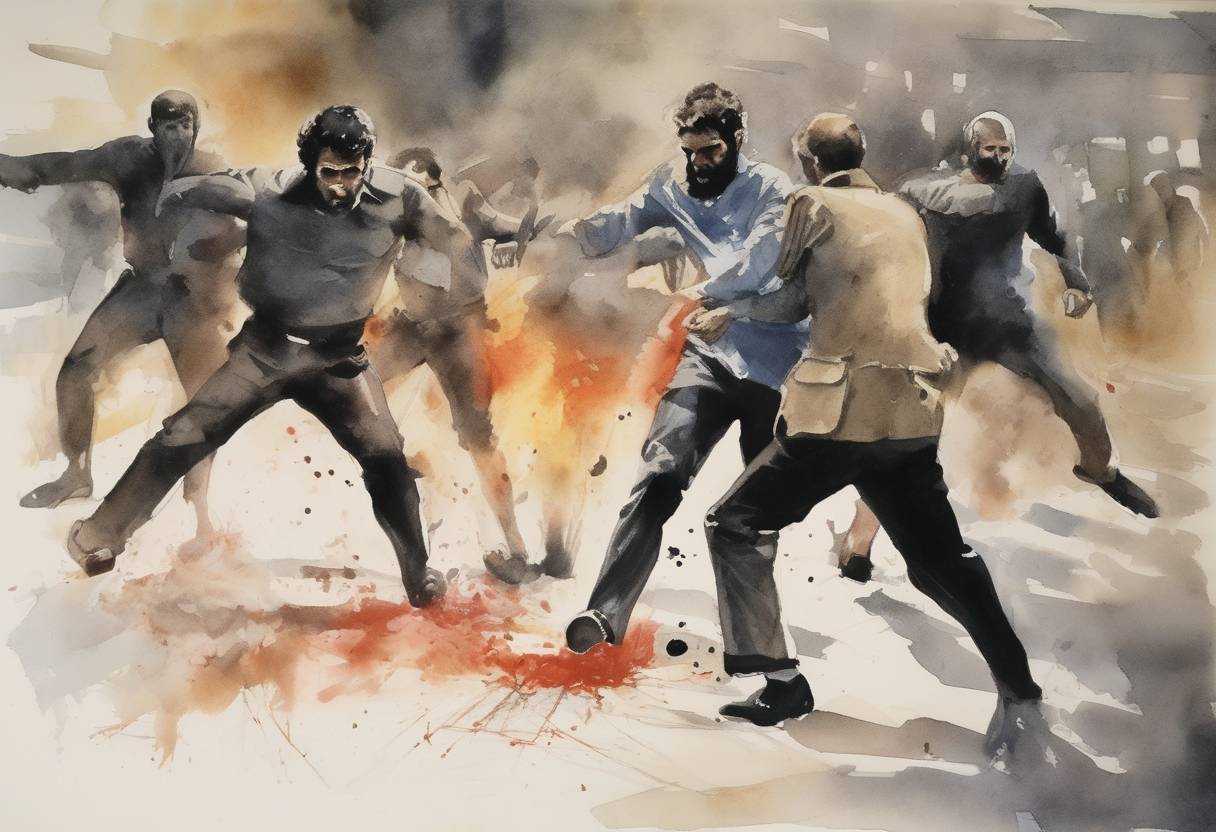
Munich Massacre: September 6, 1972
The Munich Massacre was a tragic event that unfolded during the 1972 Summer Olympics in Munich, West Germany. This incident involved the Palestinian terrorist group known as Black September, which took eleven members of the Israeli Olympic team hostage. The event ended in the deaths of all the hostages, marking a dark moment in Olympic and world history.
Background
The 1972 Munich Olympics were intended to showcase a new, peaceful Germany, contrasting with the 1936 Berlin Olympics held under Nazi rule. However, the geopolitical tensions of the time, particularly the Israeli-Palestinian conflict, cast a shadow over the games.
Black September, a militant faction associated with the Palestinian Liberation Organization (PLO), sought to use the global stage of the Olympics to draw attention to their cause. Their demands included the release of 234 prisoners held in Israeli jails and two German terrorists held in German prisons.
The Hostage Crisis
On the morning of September 5, 1972, eight members of Black September infiltrated the Olympic Village. Disguised as athletes, they entered the Israeli team’s quarters, killing two athletes and taking nine others hostage. The terrorists demanded safe passage out of Germany and the release of the prisoners.
Negotiations ensued throughout the day, but the situation remained tense and unresolved. The German authorities, inexperienced in dealing with such crises, attempted to negotiate while planning a rescue operation.
The Failed Rescue and Aftermath
The crisis culminated in a failed rescue attempt at the Fürstenfeldbruck airbase on the night of September 5-6. German police, ill-prepared and inadequately equipped, attempted to ambush the terrorists. The operation was poorly executed, leading to a chaotic firefight.
In the ensuing violence, all nine hostages were killed, along with five of the eight terrorists and one German police officer. The remaining three terrorists were captured but later released by Germany following the hijacking of a Lufthansa plane by Black September.
Consequences and Historical Significance
The Munich Massacre had profound implications:
Security Overhaul: The event led to significant changes in how security was managed at international events, particularly the Olympics. It highlighted the need for better coordination and preparedness in dealing with terrorist threats.
Israeli Response: In response to the massacre, Israel launched Operation Wrath of God, a covert operation aimed at tracking down and eliminating those responsible for the attack.
International Impact: The massacre brought the Israeli-Palestinian conflict to the forefront of international attention, influencing global perceptions and policies regarding terrorism and Middle Eastern politics.
The Munich Massacre remains a somber reminder of the vulnerabilities of international gatherings and the persistent challenges posed by global terrorism.