The Death of Ulysses S. Grant: July 23, 1885
1885 · Wilton, United States
Ulysses S. Grant, the 18th President of the United States, dies.
January 23, 1897
Elva Zona Heaster is found dead in Greenbrier County, West Virginia, leading to the only known case in the United States where the testimony of a ghost helped to convict a murderer.
Greenbrier County, United States | N/A
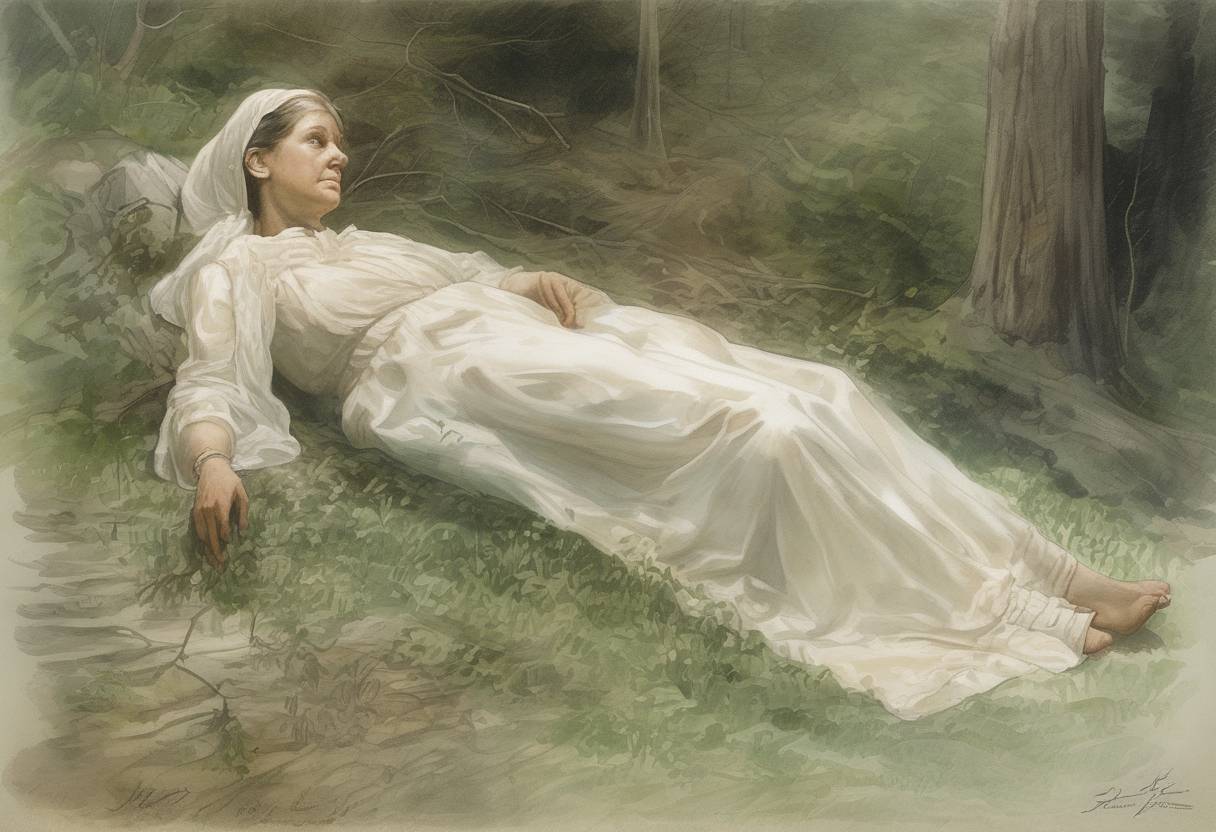
On January 23, 1897, Elva Zona Heaster, often referred to as Zona, was found dead in Greenbrier County, West Virginia. Her death led to one of the most unusual murder trials in American history, where the testimony of a ghost played a pivotal role in securing a conviction.
Elva Zona Heaster was a young woman who had recently married Erasmus Stribbling Trout Shue, commonly known as Edward. The couple lived in the small community of Livesay’s Mill. Zona was discovered lifeless at her home by a neighbor boy sent on an errand by Shue. Her body was found at the foot of the stairs, and the initial cause of death was listed as “everlasting faint,” a term used at the time to describe a heart attack or stroke.
Zona’s mother, Mary Jane Heaster, was suspicious of her daughter’s sudden death and Shue’s behavior. Mary Jane claimed that her daughter’s spirit visited her over four nights, revealing that Shue had murdered her by breaking her neck. Zona’s ghost allegedly described how Shue attacked her in a fit of rage, providing specific details about the crime.
Mary Jane Heaster’s insistence on her daughter’s posthumous testimony prompted authorities to exhume Zona’s body for a more thorough autopsy. The examination revealed that Zona’s neck was indeed broken, and her windpipe was crushed, consistent with the ghost’s account.
Armed with this new evidence, authorities arrested Shue and charged him with murder. During the trial, Mary Jane Heaster’s testimony about her daughter’s ghostly visits was admitted, capturing the public’s imagination. While the defense attempted to discredit her story, the jury was swayed by the physical evidence and Shue’s suspicious behavior.
Edward Shue was found guilty of murder and sentenced to life in prison. He died in 1900, three years into his sentence. The case became known as the “Greenbrier Ghost” case, the only known instance in the United States where a ghost’s testimony was a key factor in a murder conviction.
The Greenbrier Ghost case remains a fascinating example of folklore intersecting with the legal system. It highlights the cultural beliefs of the time and the lengths to which a grieving mother went to seek justice for her daughter. The story continues to be a part of West Virginia folklore, illustrating the enduring power of ghost stories in American culture.
Source: en.wikipedia.org