The Kronstadt Rebellion: March 1, 1921
1921 · Kronstadt, Russia
The Kronstadt Rebellion began as a major unsuccessful uprising against the Bolsheviks in the later years of the Russian Civil War.
November 25, 2018
The Kerch Strait incident occurred when Russian border patrol boats fired upon and captured three Ukrainian Navy vessels attempting to pass through the Kerch Strait, escalating tensions between Russia and Ukraine.
Kerch Strait, Russia/Ukraine | Russian Navy
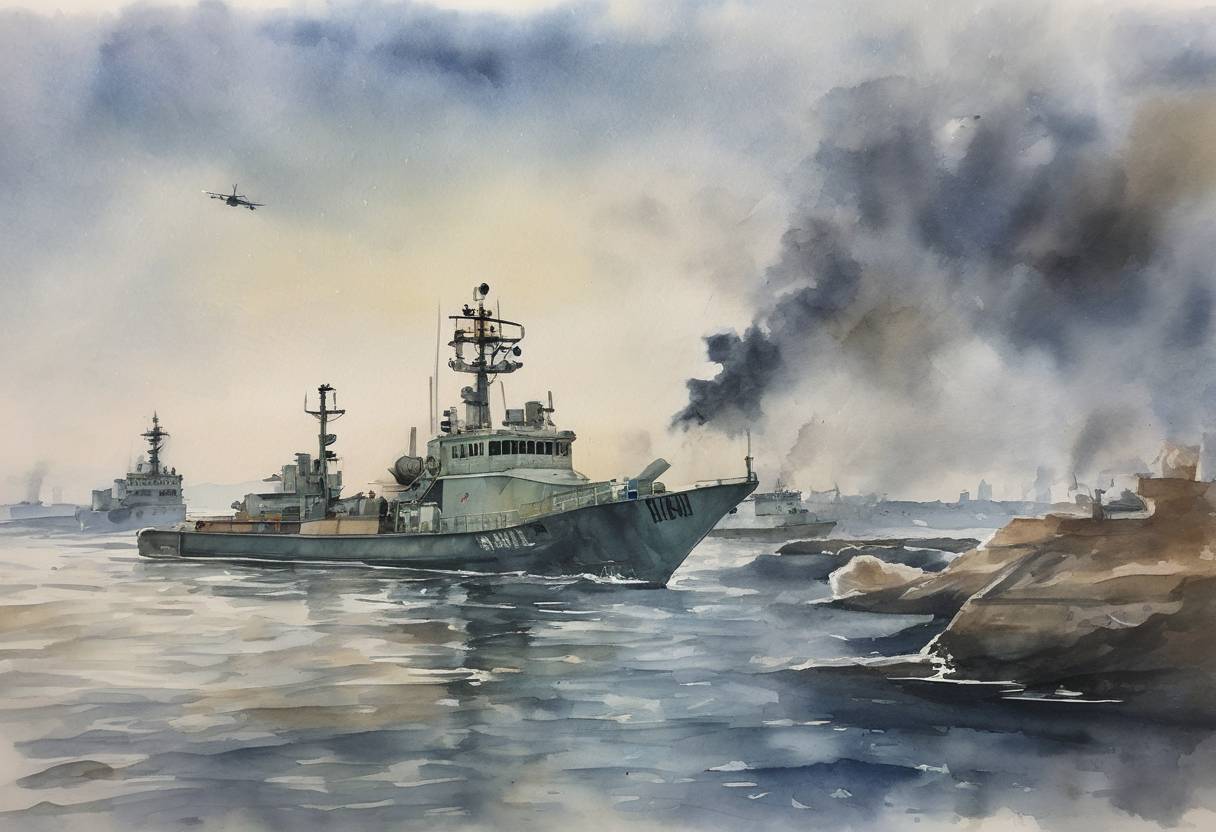
The Kerch Strait incident occurred within the broader context of ongoing tensions between Russia and Ukraine, which had been escalating since Russia’s annexation of Crimea in 2014. The Kerch Strait is a crucial waterway that connects the Black Sea to the Sea of Azov, and it is strategically significant for both countries. Following the annexation, Russia gained control over both sides of the strait, which heightened tensions over navigation rights and territorial waters.
On November 25, 2018, a confrontation took place in the Kerch Strait when Russian border patrol boats fired upon and captured three Ukrainian Navy vessels. The Ukrainian vessels, consisting of two small armored artillery boats, the Berdyansk and the Nikopol, and a tugboat named Yany Kapu, were attempting to pass through the strait from the Black Sea into the Sea of Azov.
Navigation Rights Dispute: Ukraine and Russia had previously agreed on shared navigation rights in the Sea of Azov and the Kerch Strait. However, tensions rose as Russia increased its military presence in the area and began inspecting Ukrainian vessels more frequently.
Bridge Construction: Russia’s construction of the Kerch Bridge, which connects mainland Russia to Crimea, further complicated the situation. The bridge restricted the size of ships that could pass through the strait and symbolized Russia’s control over the region.
Military Movements: In the days leading up to the incident, both countries had increased their naval activities in the region, contributing to a tense atmosphere.
Russian Response: As the Ukrainian vessels approached the strait, Russian forces accused them of illegally entering Russian territorial waters. The Russian coast guard attempted to block their passage, leading to a standoff.
Use of Force: The situation escalated when Russian forces opened fire on the Ukrainian vessels, resulting in damage to the ships and injuries to several Ukrainian sailors.
Capture: Following the exchange, Russian forces boarded and seized the Ukrainian vessels, detaining 24 Ukrainian sailors.
International Reaction: The incident drew widespread international condemnation, with many countries and organizations, including the European Union and NATO, calling for the release of the Ukrainian sailors and vessels.
Martial Law in Ukraine: In response to the incident, Ukraine declared martial law in certain regions for 30 days, citing the threat of further Russian aggression.
Diplomatic Tensions: The incident exacerbated already strained relations between Russia and Ukraine, leading to increased military readiness and diplomatic efforts to resolve the crisis.
Release of Sailors: After prolonged negotiations, the detained Ukrainian sailors were released in September 2019 as part of a prisoner exchange between Russia and Ukraine.
The Kerch Strait incident highlighted the ongoing geopolitical struggle between Russia and Ukraine and underscored the volatility of the region. It also emphasized the strategic importance of the Black Sea and the Sea of Azov, as well as the challenges of navigating international maritime law in contested waters. The incident remains a significant example of the broader conflict between the two nations and the complexities of post-Soviet territorial disputes.
Source: www.bbc.com