Captain Matthew Webb's Historic Swim Across the English Channel
1875 · Dover, England
Captain Matthew Webb became the first person to swim across the English Channel, from Dover to Calais, in less than 22 hours.
August 6, 1926
Gertrude Ederle became the first woman to swim across the English Channel.
Dover, United Kingdom | none
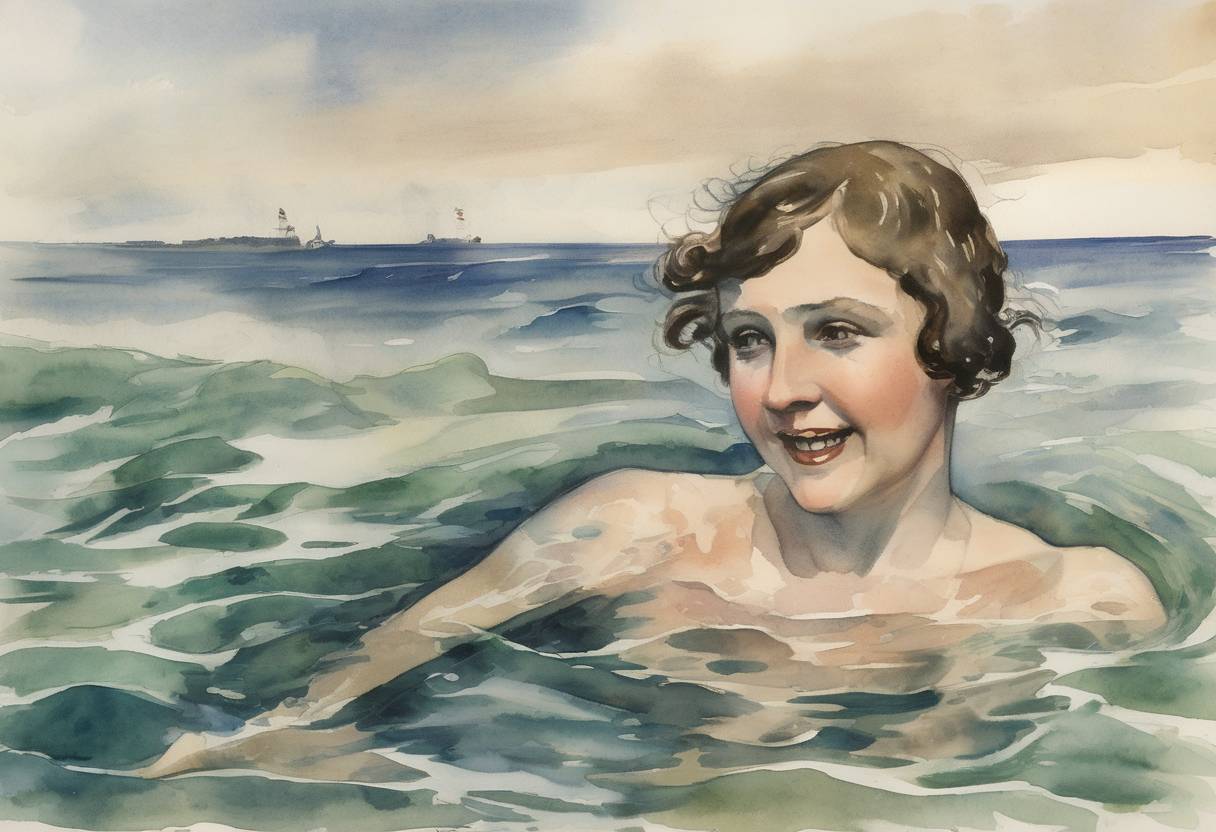
On August 6, 1926, Gertrude Ederle, an American competitive swimmer, made history by becoming the first woman to swim across the English Channel. This remarkable feat not only broke gender barriers in sports but also set a new standard for endurance swimming.
Gertrude Ederle was born on October 23, 1905, in New York City. She was a talented swimmer from a young age, eventually joining the Women’s Swimming Association. Ederle’s prowess in the water was evident as she set numerous world records and won a gold medal in the 4x100 meter freestyle relay at the 1924 Paris Olympics.
The English Channel, a body of water separating Southern England from northern France, is notorious for its cold temperatures, strong currents, and unpredictable weather conditions. Before Ederle’s attempt, the Channel had been successfully swum by only five men, with Matthew Webb being the first in 1875.
Ederle’s swim was supported by a team that included her trainer, T.W. Burgess, and her father. She wore a specially designed swimsuit and goggles to protect her from the cold and saltwater, and she used a stroke she had developed herself, which was a variation of the crawl.
Gertrude Ederle’s successful crossing of the English Channel was a monumental achievement in the history of sports. It challenged prevailing gender norms and demonstrated that women could compete in endurance sports at the highest levels. Her accomplishment was celebrated worldwide, and she received a hero’s welcome upon her return to the United States, including a ticker-tape parade in New York City.
Ederle’s swim inspired future generations of female athletes and contributed to the growing movement for women’s rights in sports and beyond. Her legacy endures as a symbol of perseverance and breaking barriers.
Gertrude Ederle’s historic swim across the English Channel on August 6, 1926, remains a landmark event in the annals of sports history. Her courage and determination not only set a new record but also paved the way for women in competitive athletics, leaving an indelible mark on the world.
Source: en.wikipedia.org