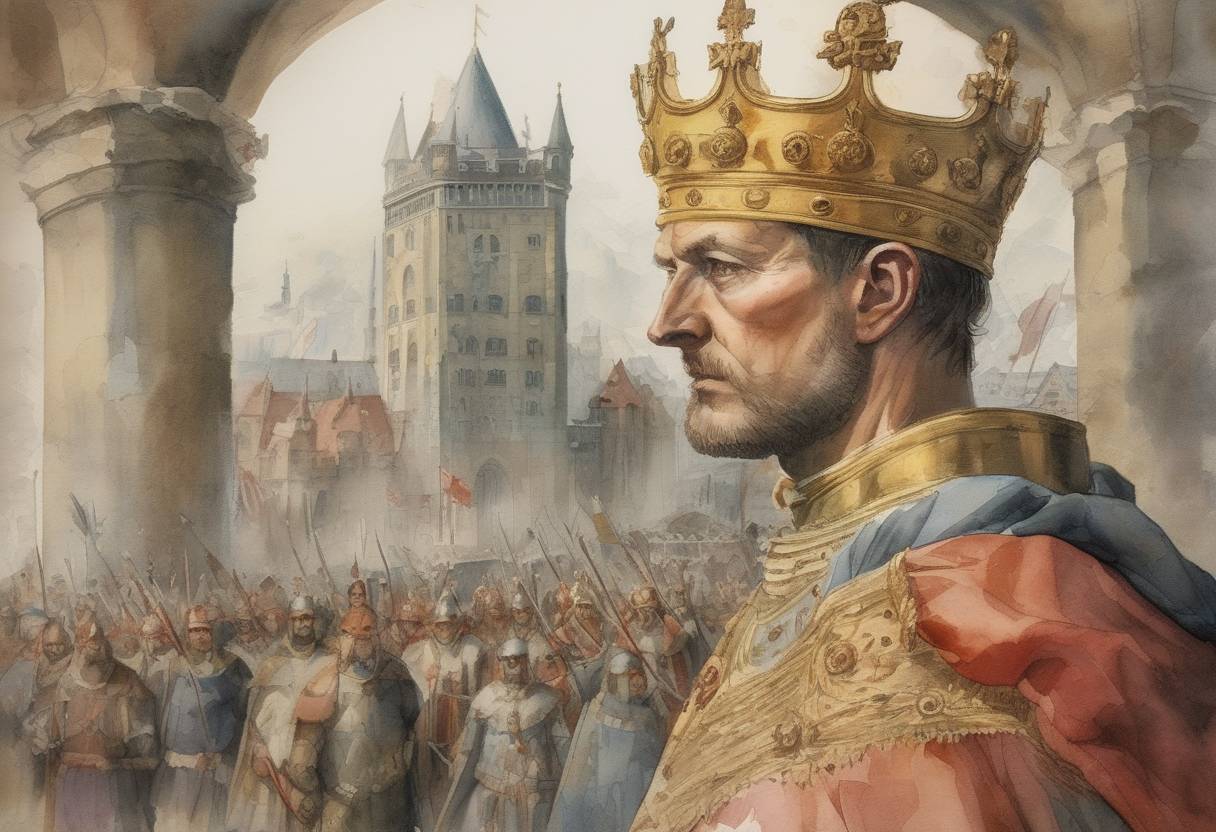
Frederick I Barbarossa Elected King of Germany
On March 4, 1152, Frederick I, known as Frederick Barbarossa, was elected King of Germany. This event marked a significant turning point in the history of the Holy Roman Empire and set the stage for Frederick’s influential reign.
Background
- Dynastic Context: Frederick Barbarossa was a member of the Hohenstaufen dynasty, which had been embroiled in a power struggle with the rival Welf dynasty. His election was a strategic move to unify the factions within the empire.
- Predecessor: The throne had been left vacant after the death of Conrad III, Frederick’s uncle, who had been the first king of the Hohenstaufen dynasty. Conrad III’s reign was marked by internal conflicts and external challenges, including the Second Crusade.
Election
- Location: The election took place in Frankfurt, a traditional site for the election of German kings.
- Support: Frederick’s election was supported by both the Hohenstaufen and Welf factions, a rare moment of consensus aimed at stabilizing the empire.
- Coronation: Following his election, Frederick was crowned in Aachen, the traditional coronation city for German kings, reinforcing his legitimacy.
Reign and Achievements
- Consolidation of Power: Frederick I worked to consolidate imperial authority, often clashing with the papacy and regional princes to assert his control.
- Italian Campaigns: He led several military campaigns into Italy, aiming to reassert imperial influence over the northern Italian city-states and the Papal States.
- Legal Reforms: Barbarossa is noted for his efforts to codify laws and strengthen the administrative structures of the empire, which helped to centralize authority.
- Third Crusade: Later in his reign, Frederick participated in the Third Crusade, although he died en route in 1190.
Historical Significance
- Legacy: Frederick Barbarossa is remembered as one of the most powerful and charismatic Holy Roman Emperors. His reign is often seen as a high point in the medieval history of the empire.
- Symbolism: The nickname “Barbarossa,” meaning “Red Beard,” became a symbol of his enduring legacy and was later used in various cultural and political contexts in Germany.
Frederick I’s election and subsequent reign had a lasting impact on the political landscape of medieval Europe, influencing the balance of power between the empire, the papacy, and the emerging nation-states. His efforts to strengthen the Holy Roman Empire set precedents that would influence European politics for centuries.