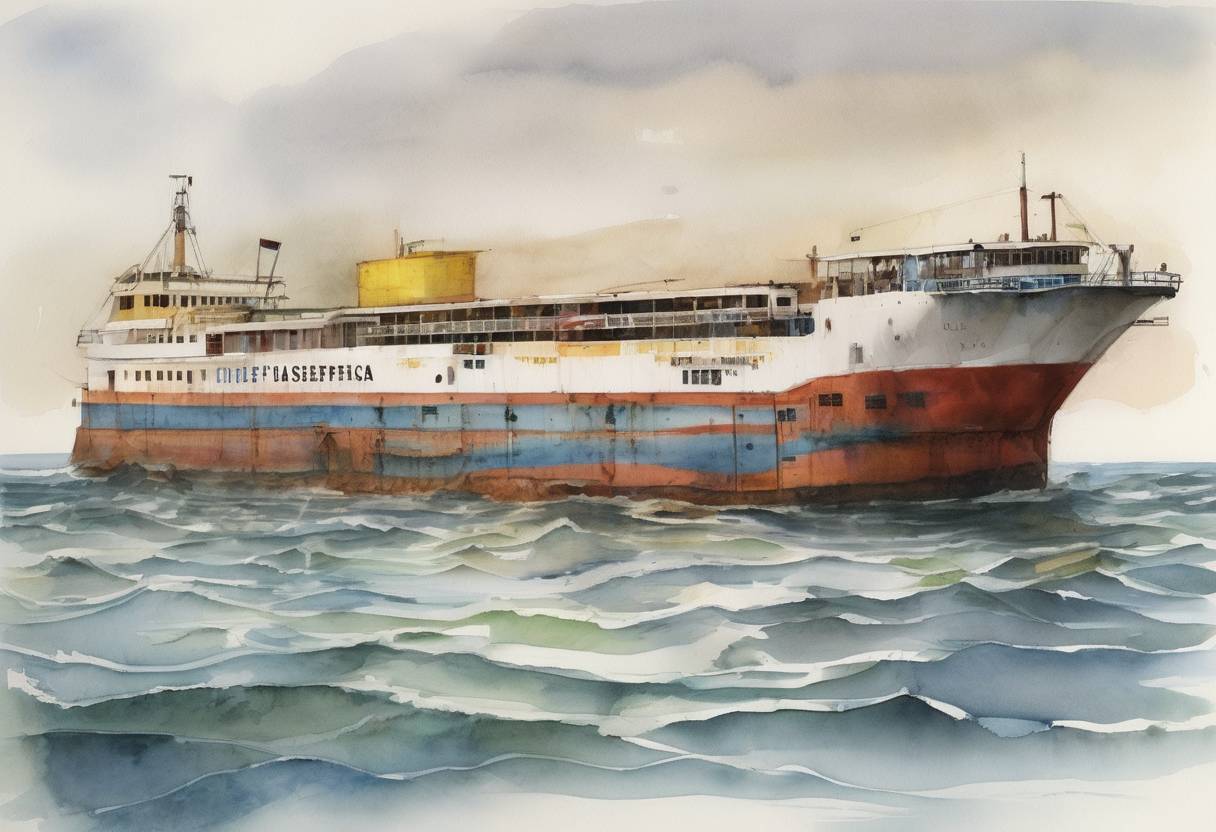
The Capsizing of MV Le Joola: A Maritime Tragedy
On September 26, 2002, the Senegalese passenger ferry MV Le Joola capsized off the coast of The Gambia, resulting in one of the deadliest maritime disasters in history. This tragic event claimed the lives of at least 1,863 people, with only 64 survivors, highlighting severe issues in maritime safety and emergency response.
Background
- MV Le Joola was a government-owned ferry operated by the Senegalese Ministry of Equipment and Transport. It was primarily used to connect the southern region of Casamance with the capital, Dakar.
- The ferry was named after the Jola people, an ethnic group native to the Casamance region.
- Designed to carry approximately 580 passengers, the ferry was often overcrowded due to high demand and insufficient enforcement of capacity regulations.
The Disaster
- On the evening of September 26, 2002, MV Le Joola departed from Ziguinchor, Casamance, heading towards Dakar.
- The ferry encountered rough seas and strong winds off the coast of The Gambia.
- Overloaded with passengers and cargo, the ferry’s stability was severely compromised. It capsized shortly after encountering the adverse weather conditions.
- The capsizing occurred quickly, leaving little time for passengers to escape. Many were trapped inside the vessel as it sank.
Aftermath and Consequences
- The official death toll was reported at 1,863, but the exact number remains uncertain due to the lack of a complete passenger manifest.
- The disaster exposed significant shortcomings in maritime safety regulations, emergency preparedness, and response capabilities in Senegal.
- The Senegalese government faced widespread criticism for its handling of the tragedy and the lack of enforcement of safety standards.
- In the wake of the disaster, there were calls for improved safety measures, better enforcement of passenger limits, and enhanced training for maritime personnel.
Broader Historical Significance
- The MV Le Joola disaster is often compared to the Titanic tragedy due to the scale of the loss of life and the preventable nature of the incident.
- It highlighted the need for international cooperation in improving maritime safety standards, particularly in developing countries.
- The tragedy remains a somber reminder of the importance of adhering to safety regulations and the potential consequences of neglecting them.
The capsizing of MV Le Joola stands as a poignant chapter in maritime history, underscoring the critical need for vigilance and reform in passenger ferry operations worldwide.