The First Recorded Performance of Shakespeare's "The Tempest"
1611 · London, England
Shakespeare's play 'The Tempest' was performed for the first recorded time at Whitehall Palace in London.
November 1, 1604
William Shakespeare's tragedy 'Othello' is performed for the first time, at Whitehall Palace in London.
London, England | The King's Men
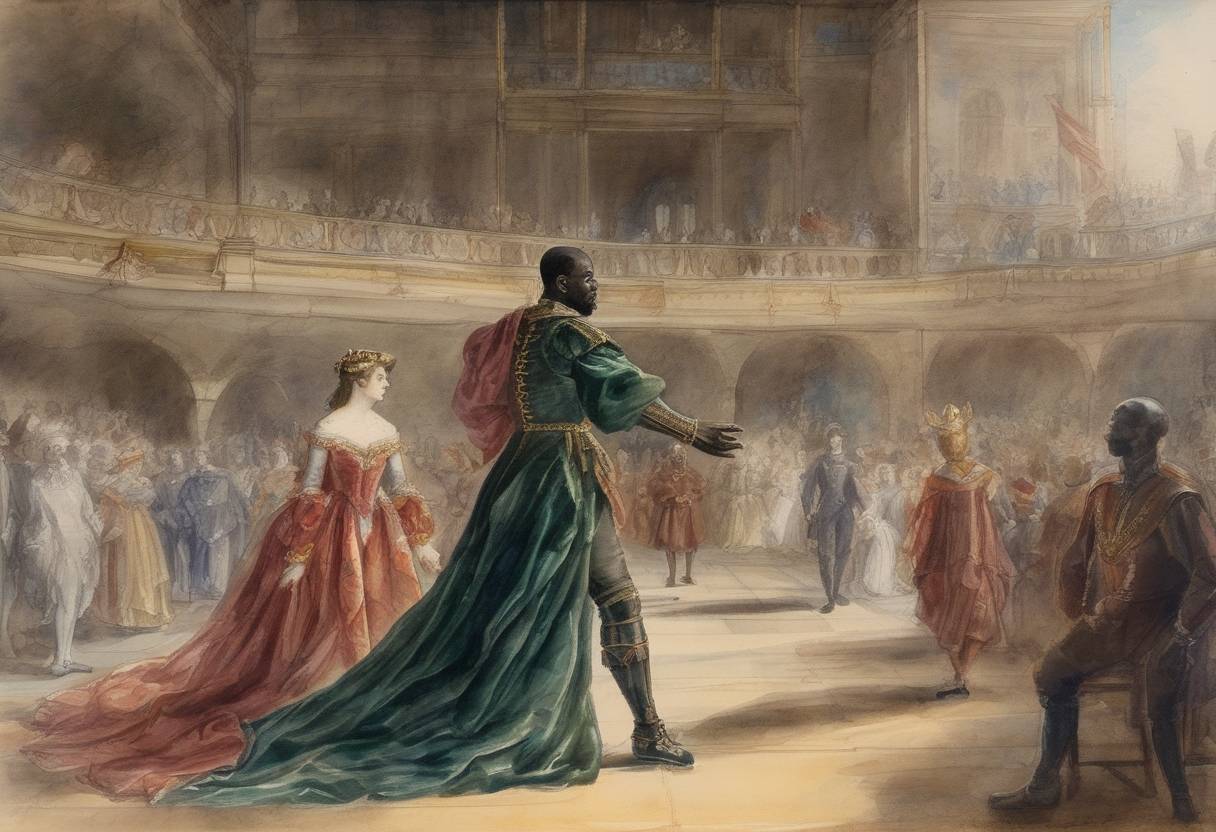
On November 1, 1604, William Shakespeare’s tragedy Othello was performed for the first time at Whitehall Palace in London. This event marked a significant moment in the history of English theatre, showcasing one of Shakespeare’s most powerful and enduring works.
William Shakespeare: By 1604, Shakespeare was already an established playwright, having written several of his most famous works, including Hamlet and Romeo and Juliet. His plays were popular among both the general public and the royal court.
Whitehall Palace: As the main residence of the English monarchs in London, Whitehall Palace was a prestigious venue for theatrical performances. The performance of Othello at this location indicates the play’s importance and the high regard in which Shakespeare’s work was held.
Plot Summary: Othello is a tragedy that explores themes of jealousy, betrayal, and racism. The story follows Othello, a Moorish general in the Venetian army, who is manipulated by his envious ensign, Iago. Iago’s deceit leads Othello to doubt the fidelity of his wife, Desdemona, with tragic consequences.
Characters:
Themes: The play addresses complex issues such as race, identity, and the destructive power of jealousy. These themes have resonated with audiences for centuries, contributing to the play’s lasting relevance.
Cultural Impact: Othello has been adapted into numerous films, operas, and other artistic forms. Its characters, particularly Iago, are studied for their psychological depth and complexity.
Performance History: Since its debut, Othello has been performed countless times around the world. It remains a staple of theatrical repertoires and is frequently included in academic curricula.
Shakespeare’s Influence: The successful debut of Othello further cemented Shakespeare’s reputation as one of the greatest playwrights of his time. His works have had a profound influence on English literature and drama.
Enduring Popularity: The play’s exploration of timeless human emotions and societal issues ensures its continued popularity and relevance in contemporary discussions about race and identity.
The first performance of Othello at Whitehall Palace was not just a theatrical event but a cultural milestone that has left a lasting legacy in the world of literature and beyond.
Source: en.wikipedia.org