The Treaty of The Hague (1701)
1701 · The Hague, Netherlands
The Treaty of The Hague was signed between England, the Holy Roman Empire, and the Dutch Republic to secure a mutual defense against France and Spain.
September 25, 1690
The Treaty of Den Haag was signed, an agreement between England and the Netherlands against France, during the War of the Grand Alliance.
The Hague, Netherlands | England and the Netherlands
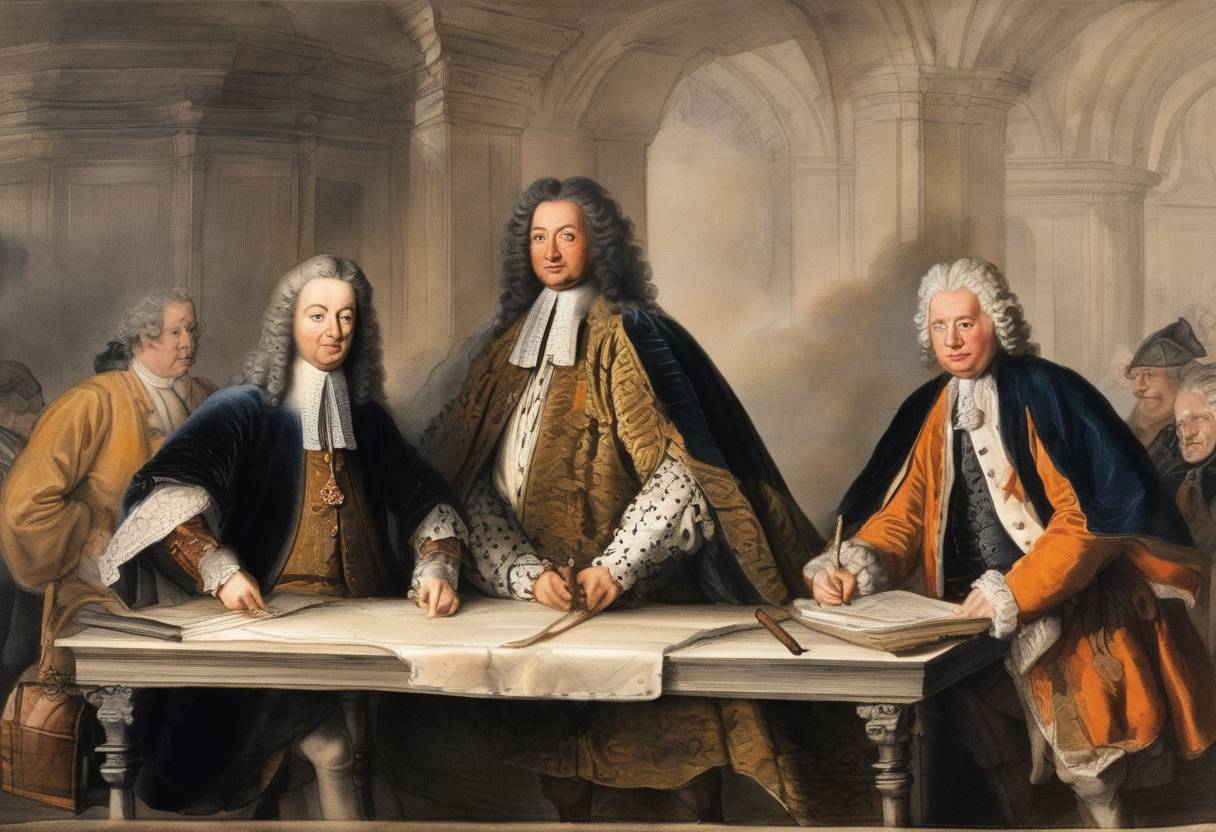
The Treaty of Den Haag, signed on September 25, 1690, was a crucial diplomatic agreement between England and the Netherlands during the War of the Grand Alliance. This war, also known as the Nine Years’ War (1688–1697), saw a coalition of European powers, including the Holy Roman Empire, Spain, England, and the Dutch Republic, opposing France’s expansionist policies under King Louis XIV. Louis XIV’s aggressive maneuvers and territorial ambitions across Europe were met with resistance from neighboring states seeking to maintain the balance of power.
The Treaty of Den Haag was one of many diplomatic efforts undertaken by European powers to counteract France’s dominance during the late 17th century. It exemplifies the era’s complex alliances and the ongoing struggle for power balance in Europe. Such treaties and alliances were pivotal in shaping the political landscape of the continent, underscoring the importance of diplomacy and cooperation in the geopolitical strategies of the time.
The War of the Grand Alliance itself was a precursor to later conflicts, setting precedents in coalition-building and international relations that would influence European politics in the years leading up to the War of Spanish Succession and beyond.
Source: en.wikipedia.org