The Armistice of Compiègne: November 11, 1918
1918 · Compiègne, France
World War I ended with the signing of the Armistice of Compiègne between the Allies and Germany, marking a victory for the Allies and a defeat for Germany.
December 25, 1914
The Christmas Truce occurred during World War I, where soldiers on the Western Front engaged in an unofficial ceasefire, sang carols, and fraternized with enemies.
Western Front, Belgium and France | Various military units
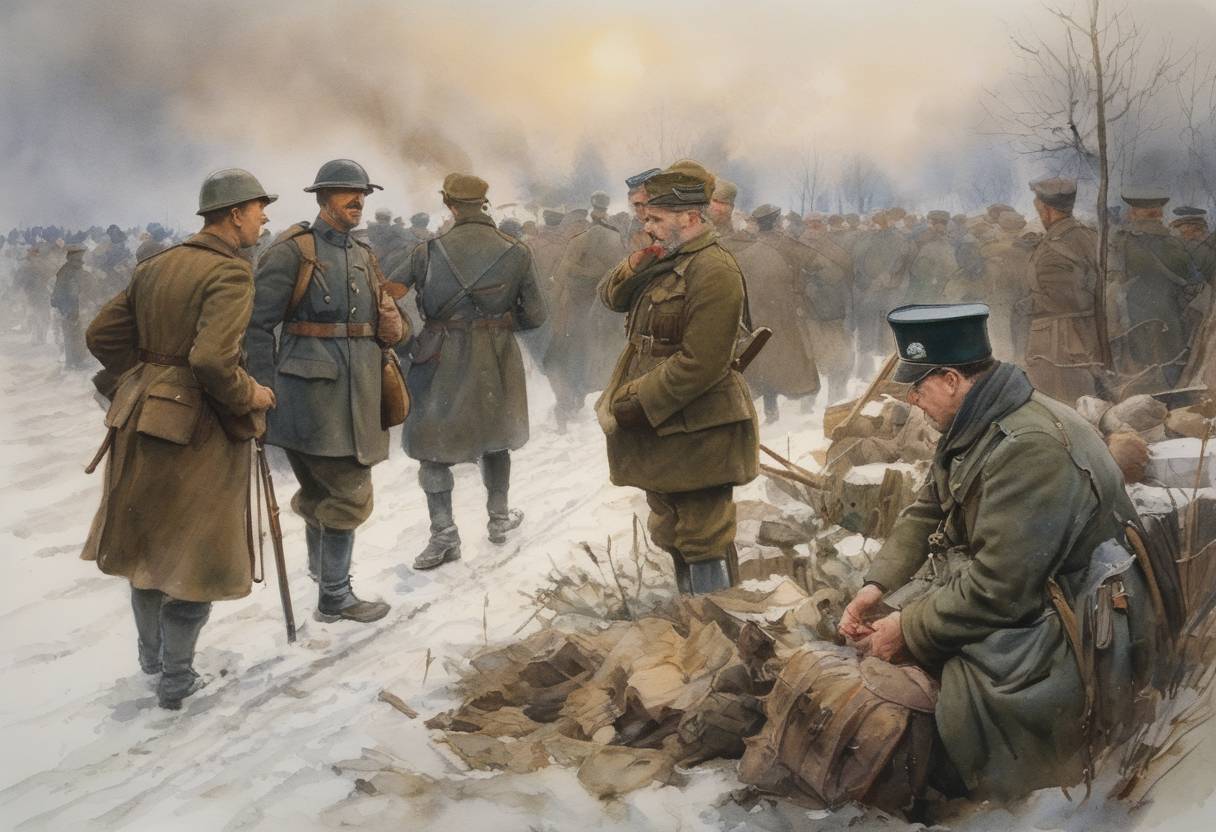
The Christmas Truce of 1914 was a remarkable event that occurred during World War I on December 25th. This unofficial ceasefire took place along various points of the Western Front, primarily between British and German forces. The truce is noted as a rare moment of peace and humanity amid the brutal conflict.
By December 1914, World War I had been raging for several months, with both sides entrenched in a deadly stalemate along the Western Front. The war had rapidly degenerated into a bitter and devastating conflict, with heavy casualties and grim living conditions in the trenches.
As Christmas approached, soldiers from both sides began to exchange seasonal greetings and sing carols from their trenches. On Christmas Eve and Christmas Day, the spirit of goodwill spread, leading to an informal and spontaneous ceasefire at many locations.
Singing and Carols: Soldiers sang Christmas carols, creating a shared sense of culture and humanity. Notably, “Silent Night” was sung, a carol known to both German and Allied forces, bridging the language and cultural divide.
Fraternization: Troops ventured into “No Man’s Land,” the area between opposing trenches, to meet their adversaries face-to-face. They exchanged small gifts such as food, tobacco, and souvenirs.
Football Matches: In some sectors, soldiers organized impromptu football matches, underscoring the camaraderie and normalcy temporarily restored despite the war.
The truce was not universal across the front and varied in duration. In many areas, officers on both sides insisted on the resumption of hostilities shortly after Christmas, fearing the erosion of discipline and the implications of fraternization. Commanding officers issued strict orders prohibiting such truces in the future.
The Christmas Truce exemplifies the profound impact of shared humanity even amidst the horrors of war. It serves as a poignant reminder of the potential for peace and the common bonds that unite people across divided lines. The truce became a symbol of hope and a poignant reflection on the senselessness of war.
Though brief and unofficial, the Christmas Truce of 1914 remains one of the most enduring stories of World War I, highlighting the complex interplay between duty, humanity, and the desire for peace amidst widespread conflict.
Source: www.iwm.org.uk