Signing of the United States Constitution
1787 · Philadelphia, United States
The United States Constitution was signed by delegates at the Constitutional Convention in Philadelphia.
May 25, 1787
The Constitutional Convention opens in Philadelphia, Pennsylvania, with the aim of revising the Articles of Confederation.
Philadelphia, United States | Constitutional Convention
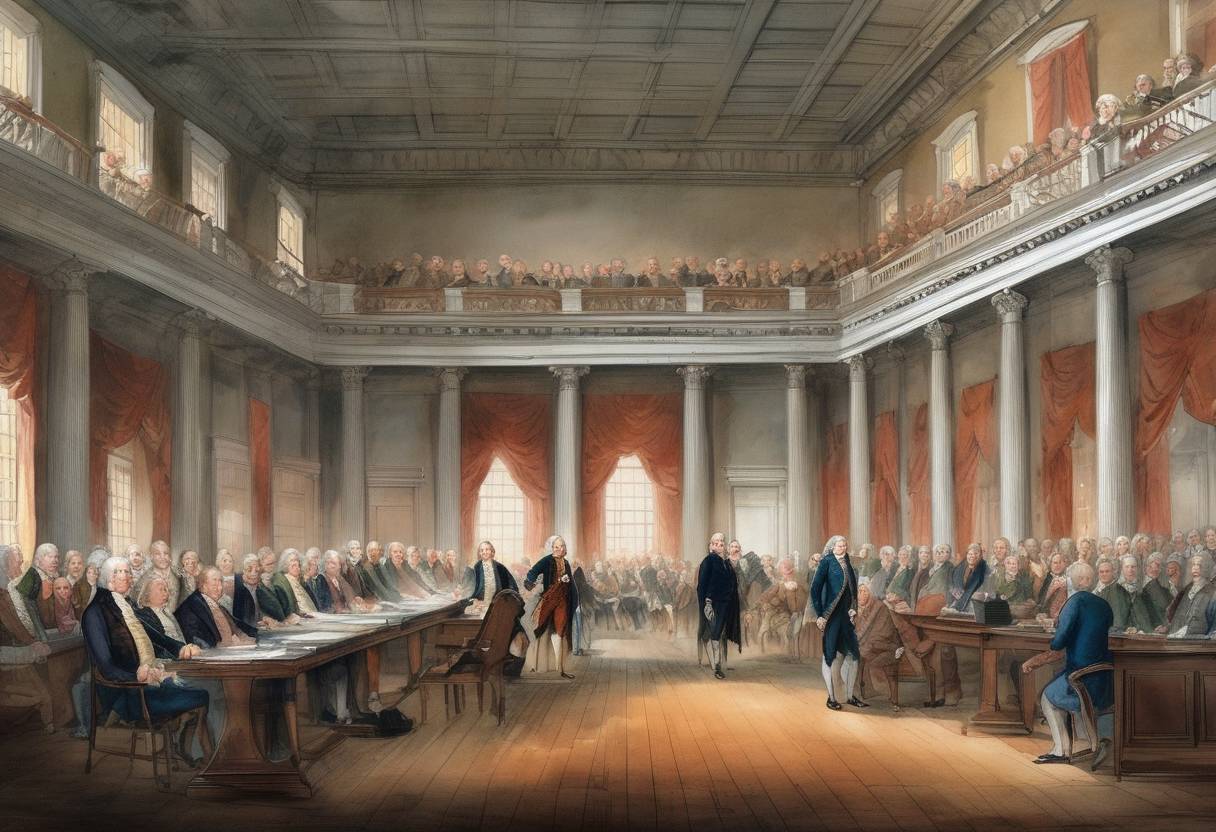
On May 25, 1787, the Constitutional Convention officially commenced in Philadelphia, Pennsylvania. This pivotal gathering was held at the Pennsylvania State House, now known as Independence Hall. The primary aim of the convention was to address the inadequacies of the Articles of Confederation, which had been the governing document of the United States since its ratification in 1781.
The Articles of Confederation had established a loose confederation of sovereign states and a weak central government, which proved ineffective in dealing with various national issues. Key problems included:
These issues highlighted the need for a stronger federal structure, prompting calls for a convention to revise the Articles.
The convention attracted some of the most prominent figures of the time, including:
The convention was attended by 55 delegates from 12 of the 13 states, with Rhode Island being the only state that did not participate. The delegates quickly decided that merely amending the Articles would not suffice. Instead, they embarked on creating an entirely new constitution.
Key debates and compromises included:
The convention concluded on September 17, 1787, with the signing of the United States Constitution. This new document established a federal government with separate executive, legislative, and judicial branches, providing a system of checks and balances.
The Constitution was then sent to the states for ratification, a process that involved intense debate and the eventual addition of the Bill of Rights to address concerns about individual liberties.
The successful drafting and ratification of the Constitution marked a significant turning point in American history, laying the foundation for the United States’ system of government and its evolution into a stable and enduring democracy.
Source: en.wikipedia.org