Colorado's Admission as the 38th State of the United States
1876 · Denver, United States
Colorado was admitted as the 38th state of the United States of America.
April 20, 1914
The Ludlow Massacre occurs in Colorado, where striking coal miners and their families are attacked by the Colorado National Guard and company guards, resulting in numerous deaths.
Ludlow, United States | Colorado National Guard
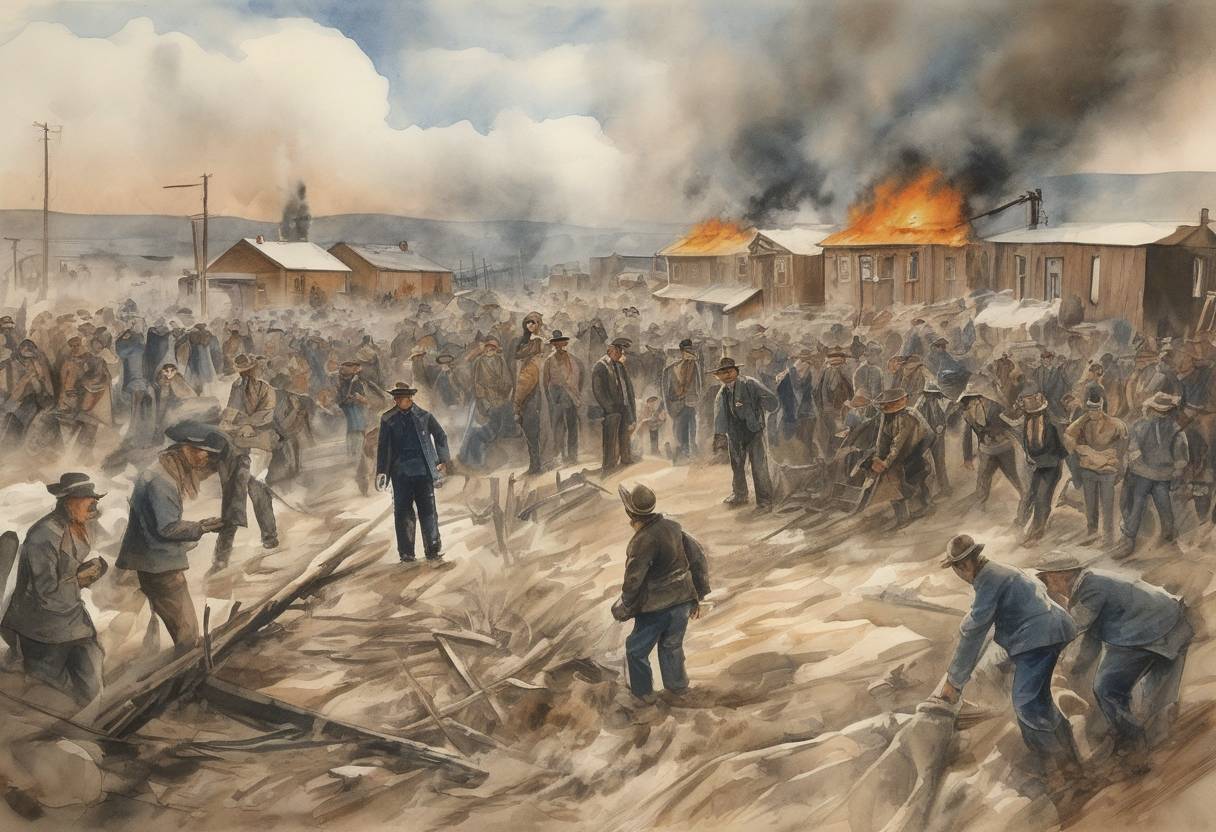
On April 20, 1914, a tragic and violent confrontation known as the Ludlow Massacre occurred in Ludlow, Colorado. This event was a pivotal moment in American labor history, highlighting the intense struggles between coal miners and their employers during the early 20th century.
The Ludlow Massacre was the culmination of a prolonged labor strike by coal miners in southern Colorado. The miners, many of whom were immigrants, were employed by the Colorado Fuel and Iron Company, owned by the Rockefeller family. They were striking for better working conditions, fair wages, and the right to unionize under the United Mine Workers of America (UMWA).
The strike began in September 1913 and was marked by tensions between the miners and the company. The miners and their families were evicted from company-owned housing and set up a tent colony near Ludlow. The situation was tense, with frequent skirmishes between strikers and company guards, who were often supported by the Colorado National Guard.
On the morning of April 20, 1914, the conflict escalated dramatically. The Colorado National Guard, along with company guards, attacked the tent colony. The confrontation involved gunfire, and the guards set fire to the tents. In the chaos, numerous people were killed, including women and children who were hiding in pits dug beneath the tents for protection.
The exact number of casualties is disputed, but it is estimated that around 21 people died in the massacre, including two women and eleven children. The violence at Ludlow shocked the nation and drew widespread condemnation.
The Ludlow Massacre had significant repercussions. It drew national attention to the plight of coal miners and the harsh conditions they faced. Public outrage over the massacre led to increased support for labor reforms and unionization efforts.
In the aftermath, President Woodrow Wilson sent federal troops to restore order in the region. The event also contributed to the eventual passage of labor-friendly legislation, including laws that improved working conditions and recognized workers’ rights to organize.
The massacre remains a symbol of the struggle for workers’ rights and is commemorated by labor organizations as a reminder of the sacrifices made in the pursuit of fair labor practices. The site of the Ludlow Massacre is now a National Historic Landmark, serving as a testament to this pivotal moment in American labor history.
Source: www.history.com