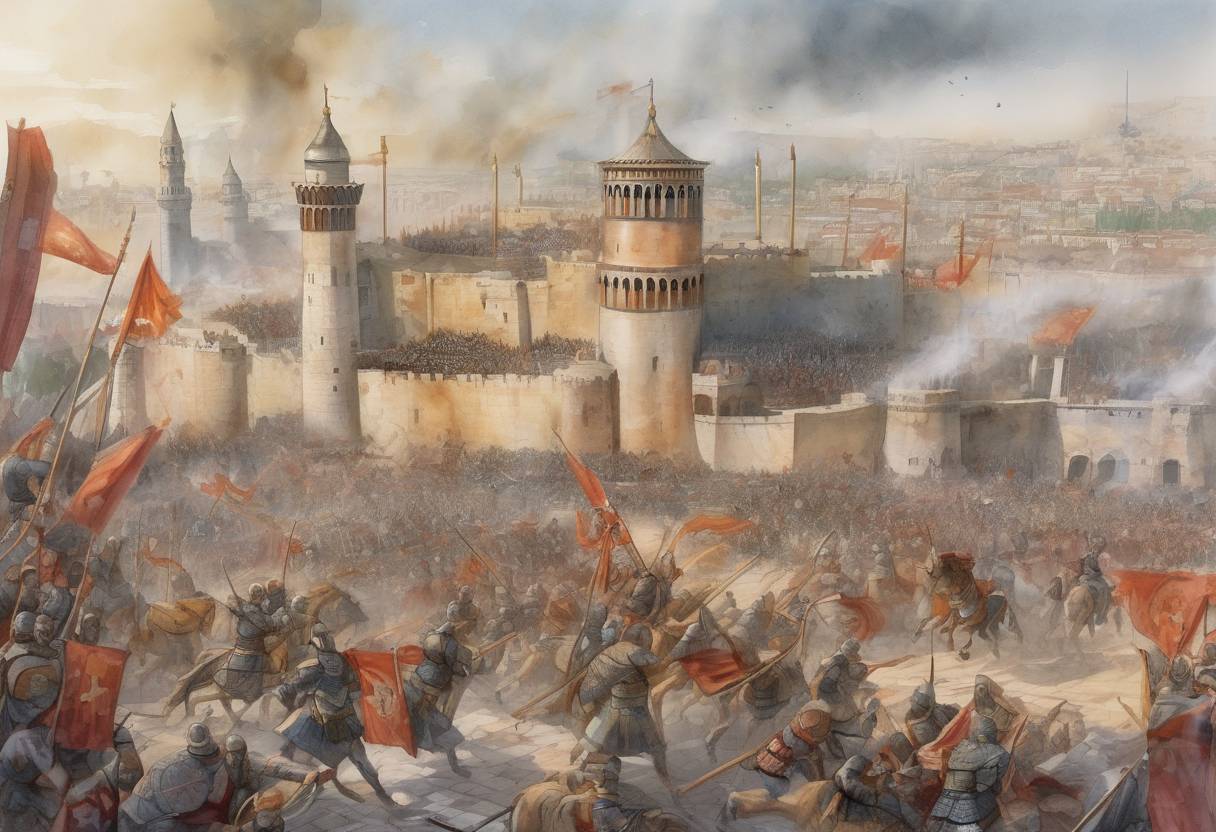
The Siege of Constantinople (626)
Background
The Siege of Constantinople in 626 was a pivotal moment during the Byzantine-Sassanid Wars, a series of conflicts between the Byzantine Empire and the Sassanid Empire of Persia. By the early 7th century, the Byzantine Empire was under significant pressure from multiple fronts. The Sassanid Empire, under King Khosrow II, had been expanding aggressively, capturing key Byzantine territories in the Middle East, including Jerusalem and Egypt. Concurrently, the Avars, a nomadic group from the Eurasian steppes, were threatening the Byzantine Empire from the north.
The Siege
The siege began in the summer of 626 when the Avar-Sassanid alliance, comprising Avar, Slavic, and Sassanid forces, attempted to capture Constantinople, the Byzantine capital. The Avars and their Slavic allies attacked from the European side, while the Sassanids, led by General Shahrbaraz, positioned themselves on the Asian side of the Bosporus, unable to cross due to the Byzantine navy’s control of the strait.
Key Events
Defense of Constantinople: The Byzantine defense was orchestrated by Emperor Heraclius, who was away on a campaign against the Persians. The defense was left to Patriarch Sergius and the patrician Bonus, who rallied the city’s inhabitants and utilized the formidable Theodosian Walls to repel the attackers.
Naval Superiority: The Byzantine navy played a crucial role in preventing the Sassanids from crossing the Bosporus, maintaining control of the sea routes and ensuring the city was resupplied.
Religious and Moral Support: Patriarch Sergius bolstered the morale of the defenders by parading religious icons around the city walls, invoking divine protection and support.
Failed Assaults: The Avars launched several assaults on the city, including attempts to breach the walls and a coordinated attack with the Sassanids. However, these efforts were thwarted by the city’s defenses and the Byzantine navy.
Conclusion of the Siege
On August 4, 626, the siege ended in failure for the Avar-Sassanid alliance. The Avars, unable to breach the walls and suffering from logistical difficulties, withdrew their forces. The Sassanids, isolated and unable to support the Avars, also retreated.
Aftermath and Significance
Byzantine Resurgence: The successful defense of Constantinople marked a turning point in the Byzantine-Sassanid Wars. It allowed Emperor Heraclius to continue his campaigns against the Sassanids, eventually leading to a decisive Byzantine victory in 628.
Decline of the Avars: The failure of the siege weakened the Avar Khaganate, diminishing their influence in the region.
Religious Impact: The defense of Constantinople was attributed to divine intervention, strengthening the role of the Orthodox Church in Byzantine society.
Strategic Importance: The siege underscored the strategic importance of Constantinople’s location and its formidable defenses, which would continue to protect the city for centuries.
The Siege of Constantinople in 626 was a testament to the resilience of the Byzantine Empire and its ability to withstand formidable adversaries through strategic defense and naval superiority.