The Fall of Vitellius: December 22, 69 AD
69 · Rome, Roman Empire
Vitellius, the Roman emperor, was captured and killed in Rome by Vespasian's forces, effectively ending his rule and the Year of the Four Emperors.
June 9, 0068
Roman Emperor Nero committed suicide, marking the end of the Julio-Claudian dynasty.
Rome, Roman Empire | Roman Empire
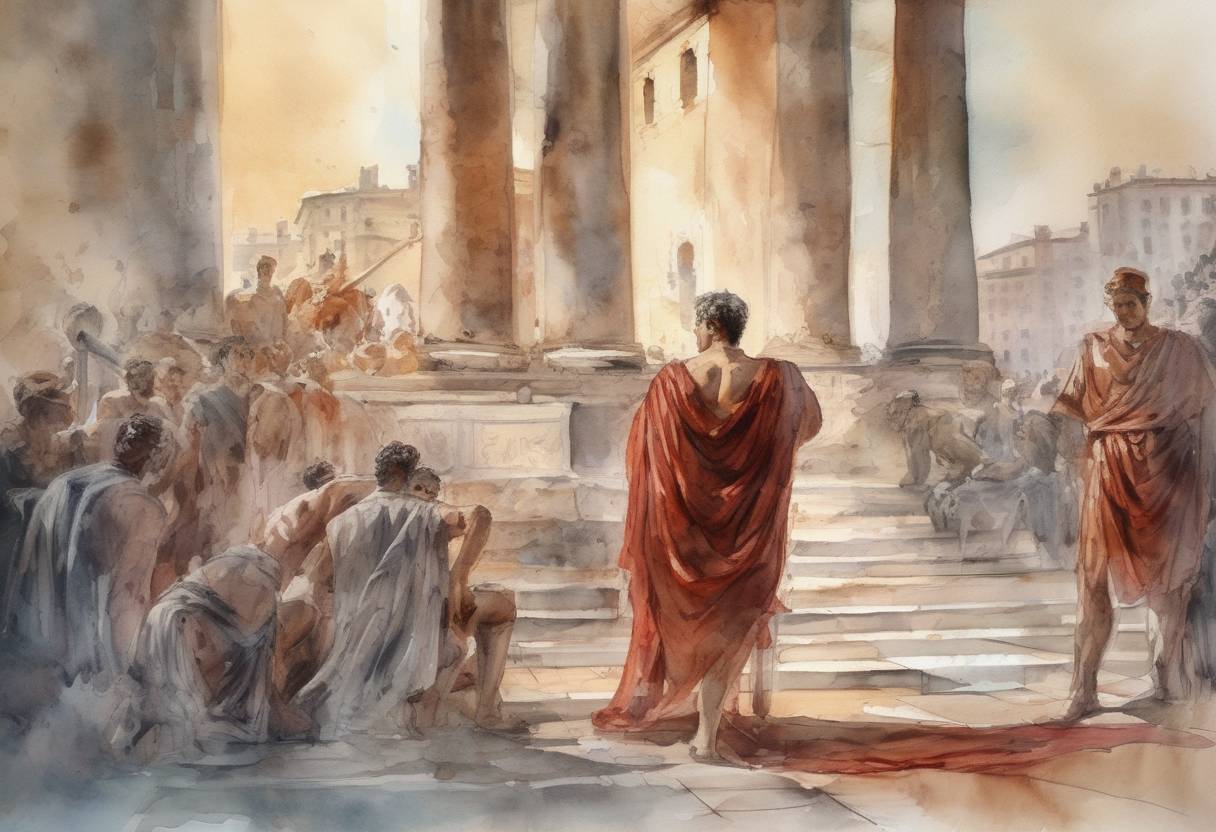
On June 9, 68 AD, the Roman Emperor Nero, the last ruler of the Julio-Claudian dynasty, committed suicide, marking a significant turning point in Roman history. Nero’s death ended a dynasty that had begun with Augustus, the first Roman emperor, and ushered in a period of civil strife known as the Year of the Four Emperors.
Nero Claudius Caesar Augustus Germanicus, commonly known as Nero, became emperor in 54 AD at the age of 16, following the death of his adoptive father, Emperor Claudius. His early reign was marked by competent governance, largely due to the influence of his mother, Agrippina the Younger, and his advisors, Seneca and Burrus. However, as Nero matured, he increasingly indulged in artistic pursuits and extravagant projects, which strained the empire’s finances.
The Great Fire of Rome (64 AD): A devastating fire ravaged Rome for six days, destroying much of the city. Rumors circulated that Nero had started the fire to clear land for his grandiose palace, the Domus Aurea. Although these claims are debated by historians, Nero’s response to the disaster, including his persecution of Christians as scapegoats, damaged his reputation.
Revolts and Rebellions: Nero’s rule faced numerous challenges, including the revolt of Boudica in Britain and unrest in Judea. His military campaigns were costly and often unsuccessful, further eroding his support.
Senatorial Opposition: Nero’s increasingly autocratic rule alienated the Roman Senate. His execution of prominent senators and his perceived neglect of traditional Roman values led to growing discontent among the elite.
The Pisonian Conspiracy (65 AD): A failed plot to assassinate Nero, led by Gaius Calpurnius Piso, highlighted the widespread dissatisfaction with his rule. Although the conspiracy was thwarted, it intensified Nero’s paranoia and led to further purges.
The Revolt of Vindex (68 AD): Gaius Julius Vindex, the governor of Gallia Lugdunensis, rebelled against Nero’s rule. Although Vindex was defeated, the revolt inspired Galba, the governor of Hispania Tarraconensis, to declare himself emperor.
As support for Galba grew, Nero found himself increasingly isolated. The Praetorian Guard, his personal bodyguard, abandoned him, and the Senate declared him a public enemy. Facing capture and execution, Nero fled Rome. On June 9, 68 AD, with the assistance of a loyal freedman, he took his own life, reportedly uttering the words, “Qualis artifex pereo” (“What an artist dies in me”).
Nero’s death marked the end of the Julio-Claudian dynasty, which had ruled Rome since 27 BC. His demise plunged the Roman Empire into a chaotic period known as the Year of the Four Emperors, during which Galba, Otho, Vitellius, and Vespasian vied for control. Ultimately, Vespasian emerged victorious, founding the Flavian dynasty.
Nero’s reign is often remembered for its excesses and the emperor’s eccentricities, but it also serves as a cautionary tale about the dangers of autocratic rule and the volatility of imperial succession. His death underscored the fragility of the Roman political system and set the stage for future reforms in imperial governance.
Source: en.wikipedia.org