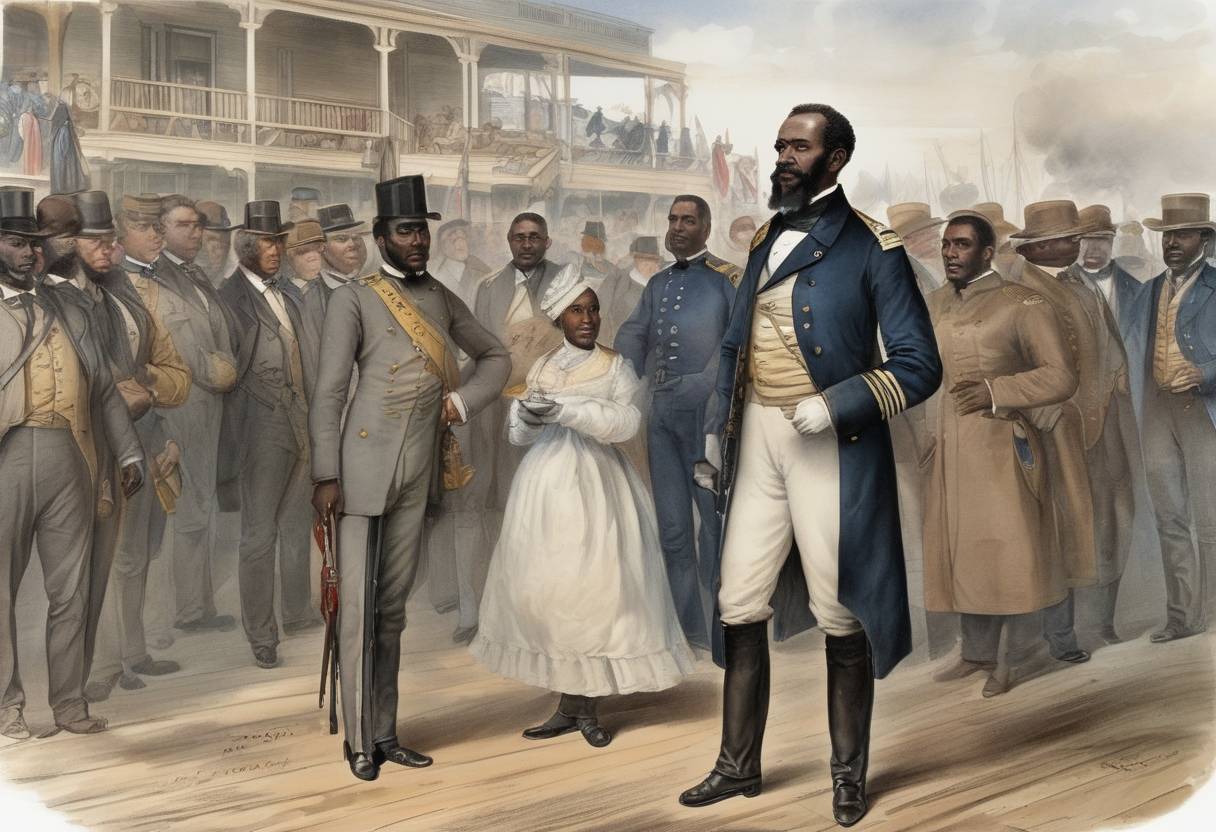
Juneteenth: The Arrival of General Gordon Granger in Galveston, Texas
On June 19, 1865, a pivotal moment in American history unfolded when Union General Gordon Granger arrived in Galveston, Texas. This day is now commemorated as Juneteenth, marking the effective end of slavery in the United States.
Context and Background
The Emancipation Proclamation, issued by President Abraham Lincoln on January 1, 1863, declared that all enslaved people in Confederate-held territory were to be set free. However, enforcement of the proclamation depended heavily on the advance of Union troops. As a result, many enslaved individuals in remote areas, particularly in Texas, remained in bondage long after the proclamation.
Key Events Leading to Juneteenth
Civil War Conclusion: The American Civil War officially ended in April 1865 with the surrender of Confederate General Robert E. Lee at Appomattox Court House. However, Texas, being geographically isolated and with a minimal Union military presence, had not yet seen the enforcement of emancipation.
Union Troops in Texas: In June 1865, Union forces, led by General Gordon Granger, arrived in Galveston, Texas. Their mission was to assert federal authority and ensure the liberation of enslaved people in the region.
General Order No. 3
Upon his arrival, General Granger issued General Order No. 3, which stated:
“The people of Texas are informed that, in accordance with a proclamation from the Executive of the United States, all slaves are free. This involves an absolute equality of personal rights and rights of property between former masters and slaves, and the connection heretofore existing between them becomes that between employer and hired labor.”
This announcement marked the liberation of the last remaining enslaved African Americans in the United States, as Texas was the final Confederate state to comply with the Emancipation Proclamation.
Aftermath and Significance
Immediate Impact: The announcement led to celebrations among the newly freed African Americans, who rejoiced in their newfound freedom. However, the transition was not without challenges, as many faced economic hardship and systemic racism.
Cultural Legacy: Juneteenth has since evolved into a day of celebration and reflection, symbolizing the end of slavery in the United States. It is observed with festivities, educational events, and community gatherings, emphasizing African American culture and achievements.
Recognition: Over the years, Juneteenth has gained recognition as a significant cultural and historical event. In 1980, Texas became the first state to declare it an official holiday. In June 2021, Juneteenth was designated a federal holiday in the United States, further acknowledging its importance in American history.
Juneteenth serves as a reminder of the enduring struggle for freedom and equality, highlighting the resilience and contributions of African Americans throughout history.