Spain Recognizes United States Independence: February 3, 1783
1783 · Madrid, Spain
Spain recognized United States independence.
June 16, 1779
Spain declares war on Great Britain, joining France and the American colonies in the American Revolutionary War.
Madrid, Spain | Spanish Crown
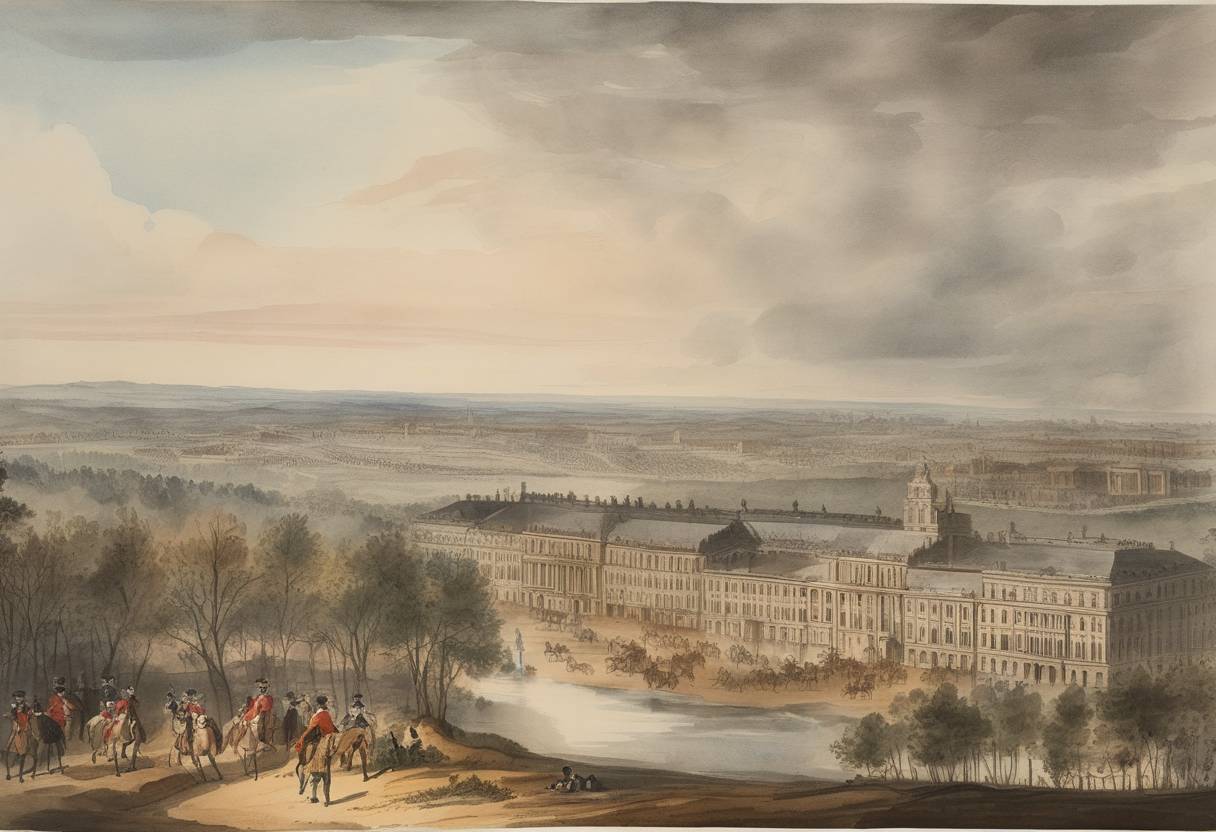
On June 16, 1779, Spain officially declared war on Great Britain, entering the conflict on the side of France and the American colonies in the ongoing American Revolutionary War. This move was motivated by several strategic and geopolitical interests, and it played a significant role in the dynamics of the conflict.
The American Revolutionary War: By 1779, the war, which started in 1775, saw the American colonies struggling for independence from British rule. France had already allied with the colonies in 1778, seeing an opportunity to weaken their historical rival, Britain.
Spain’s Position: Though initially reluctant to engage directly in the conflict, Spain was a significant world power with interests in limiting British expansion and influence. Spain was also keen on regaining territories lost to Britain, such as Gibraltar and the island of Minorca in the Mediterranean.
The Treaty of Aranjuez: Spain entered the war under the terms settled in this treaty with France. The agreement provided that Spain would aid France in exchange for support in recovering lost territories.
Strategic Interests: Spain’s participation aimed to divert British resources across multiple fronts, thus weakening their hold in the Americas and undermining their colonial supremacy.
Military Campaigns: Spain’s entry widened the war, bringing it into areas such as the Mississippi Valley and Florida. Notably, Spanish forces under Bernardo de Gálvez captured British forts along the Mississippi River, which disrupted British supply lines and diverted attention from the main theater of war in the Thirteen Colonies.
Gibraltar Siege: A notable campaign was the Great Siege of Gibraltar (1779–1783), which, despite repeated attempts, remained unsuccessful until the eventual peace agreements.
Alliance Strengthening: Spain’s involvement strengthened the Franco-American alliance, providing additional supplies and military support to the colonial cause without directly recognizing American independence to maintain its colonial interests.
Territorial Adjustments: The Treaty of Paris in 1783, which ended the war, resulted in several territorial changes. Spain regained Minorca and Florida but failed to recapture Gibraltar.
Geopolitical Shifts: The declaration and Spain’s involvement highlighted the colonial powers’ shifting alliances and the broader context of European geopolitics in the 18th century.
Spain’s declaration of war on Great Britain on June 16, 1779, thus represents a critical juncture in the American Revolutionary War, demonstrating the interconnected nature of 18th-century geopolitics and the global dimension of the American struggle for independence.
Source: www.britannica.com