Nelson Mandela's Inauguration: May 9, 1994
1994 · Pretoria, South Africa
Nelson Mandela was inaugurated as South Africa's first black president, marking the end of apartheid.
April 14, 1994
In a referendum, South Africans approved a new, non-racial constitution, paving the way for the first democratic elections in the nation's history.
Pretoria, South Africa | South African government
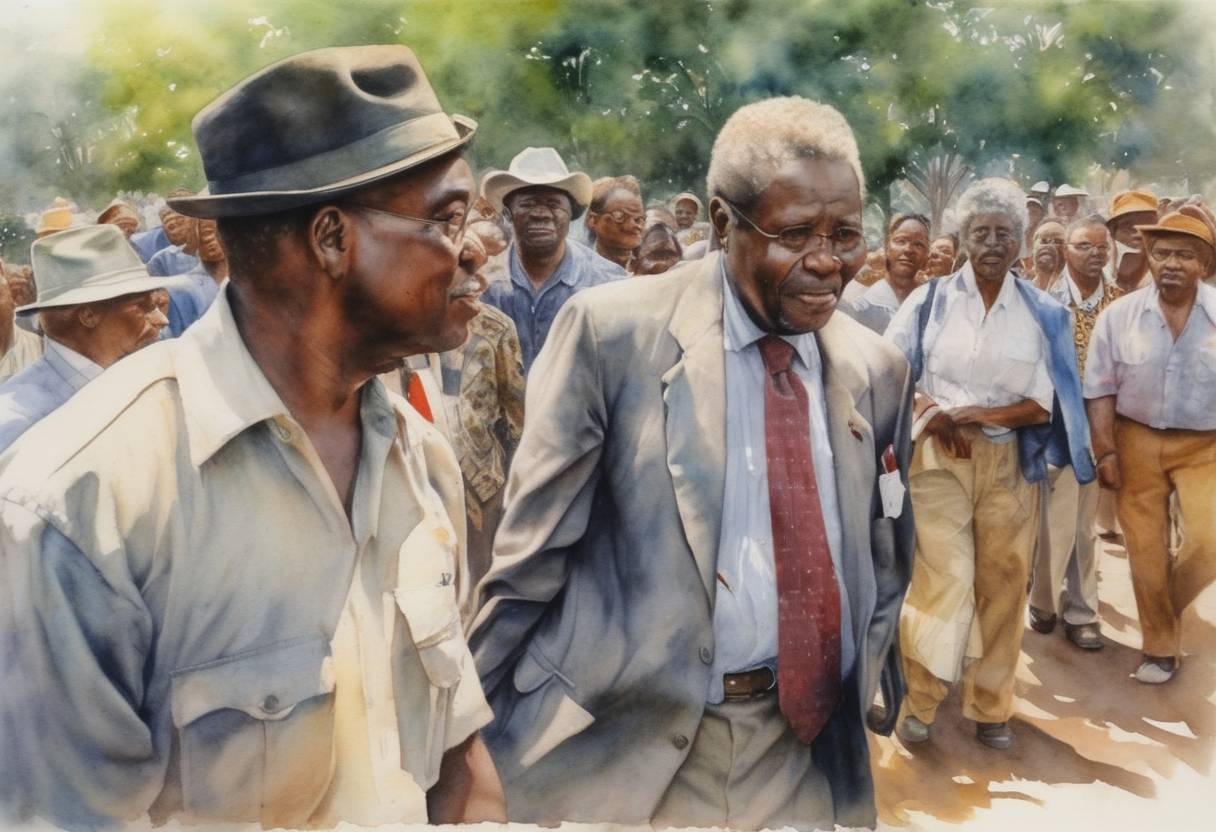
On March 17, 1992, a significant milestone was reached in South Africa’s journey toward democracy and equality with the approval of a new, non-racial constitution through a referendum. This event set a precedent for the country’s transition from apartheid, a system of institutionalized racial segregation and discrimination, towards a non-racial, democratic society.
The apartheid system in South Africa, established in 1948, created profound racial disparities, systematizing oppression against non-white populations. Over the decades, internal resistance and international condemnation grew. A combination of economic sanctions, diplomatic isolation, and persistent internal dissent increased pressure on the apartheid regime to initiate reform.
Negotiations and Political Reform: Throughout the late 1980s and early 1990s, under the presidency of F.W. de Klerk, the South African government engaged in negotiations with anti-apartheid leaders, notably Nelson Mandela, who was released from prison in 1990 after 27 years. These discussions aimed at dismantling apartheid laws and establishing a new political framework.
CODESA (Convention for a Democratic South Africa): The gathering was crucial in crafting groundwork negotiations to transition towards democracy, although it faced numerous challenges, including boycotts and disagreements from various political factions.
On March 17, 1992, the South African government held a referendum exclusively for the white electorate, asking them to vote on whether they supported the reform process begun by de Klerk’s government, a controversial move as it excluded the Black majority from direct participation. Despite this, the referendum was overwhelmingly approved, with nearly 69% of voters supporting the transition to democratic governance.
The success of the referendum catalyzed the negotiations, eventually leading to the adoption of an interim constitution in 1993. This laid the groundwork for South Africa’s first multiracial elections held from April 26 to April 29, 1994. These elections marked a historic moment, leading to Nelson Mandela’s election as the nation’s first Black president.
This referendum was a pivotal moment in South Africa’s history, signifying the collective willingness of the white electorate to relinquish entrenched privileges and embrace a more equitable system. It helped dismantle institutionalized racial divisions and laid the foundation for national reconciliation and rebuilding of a unified South African identity.
Source: www.sahistory.org.za