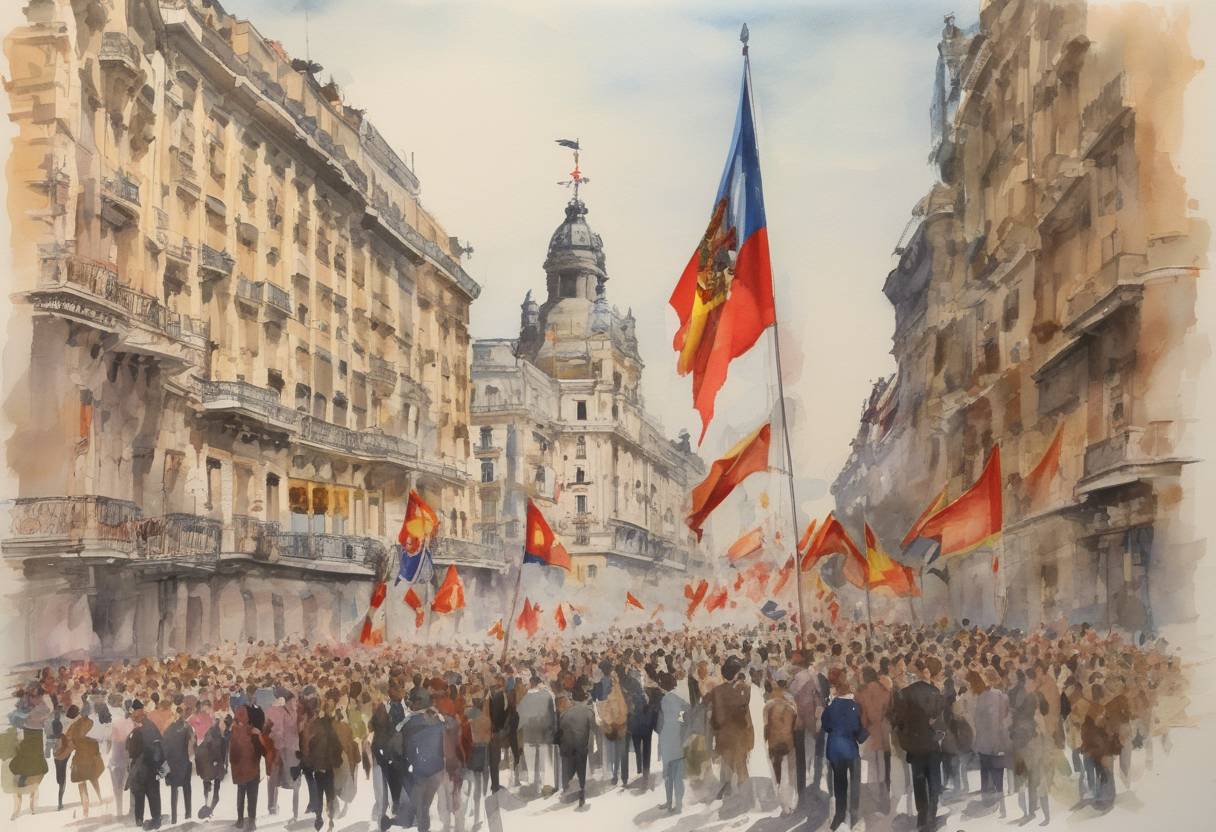
On December 27, 1978, a pivotal moment in Spanish history occurred when King Juan Carlos I formally approved Spain’s new democratic constitution. This event marked the definitive end of Francoist rule and the establishment of a constitutional monarchy, setting Spain on a path toward democracy and modern governance.
Historical Context
- Francoist Spain: General Francisco Franco ruled Spain as a dictator from 1939 until his death in 1975. His regime was characterized by authoritarianism, nationalism, and suppression of political dissent.
- Transition to Democracy: Following Franco’s death, Spain embarked on a delicate transition from dictatorship to democracy. King Juan Carlos I, who had been designated by Franco as his successor, played a crucial role in this transition by supporting democratic reforms.
Key Events Leading to the Constitution
- 1976 Political Reforms: Adolfo Suárez, appointed as Prime Minister by King Juan Carlos I, initiated political reforms, including the legalization of political parties and the release of political prisoners.
- 1977 General Elections: Spain held its first democratic elections in over four decades in June 1977, leading to the formation of a constituent assembly tasked with drafting a new constitution.
The 1978 Constitution
- Drafting Process: The drafting of the constitution was a collaborative effort involving representatives from various political parties, reflecting a broad consensus across the political spectrum.
- Key Features: The constitution established Spain as a parliamentary monarchy, guaranteeing fundamental rights and freedoms, and providing for the separation of powers among the executive, legislative, and judicial branches.
Significance and Aftermath
- End of Francoist Rule: The approval of the constitution symbolized the official end of Francoist rule and the beginning of a new democratic era in Spain.
- Consolidation of Democracy: The constitution laid the foundation for Spain’s democratic institutions and processes, contributing to political stability and economic growth in the subsequent decades.
- European Integration: Spain’s transition to democracy paved the way for its integration into the European Community (now the European Union), which it joined in 1986.
The approval of the 1978 constitution was a landmark achievement in Spain’s history, representing a successful transition from authoritarianism to democracy and setting a precedent for peaceful political change.