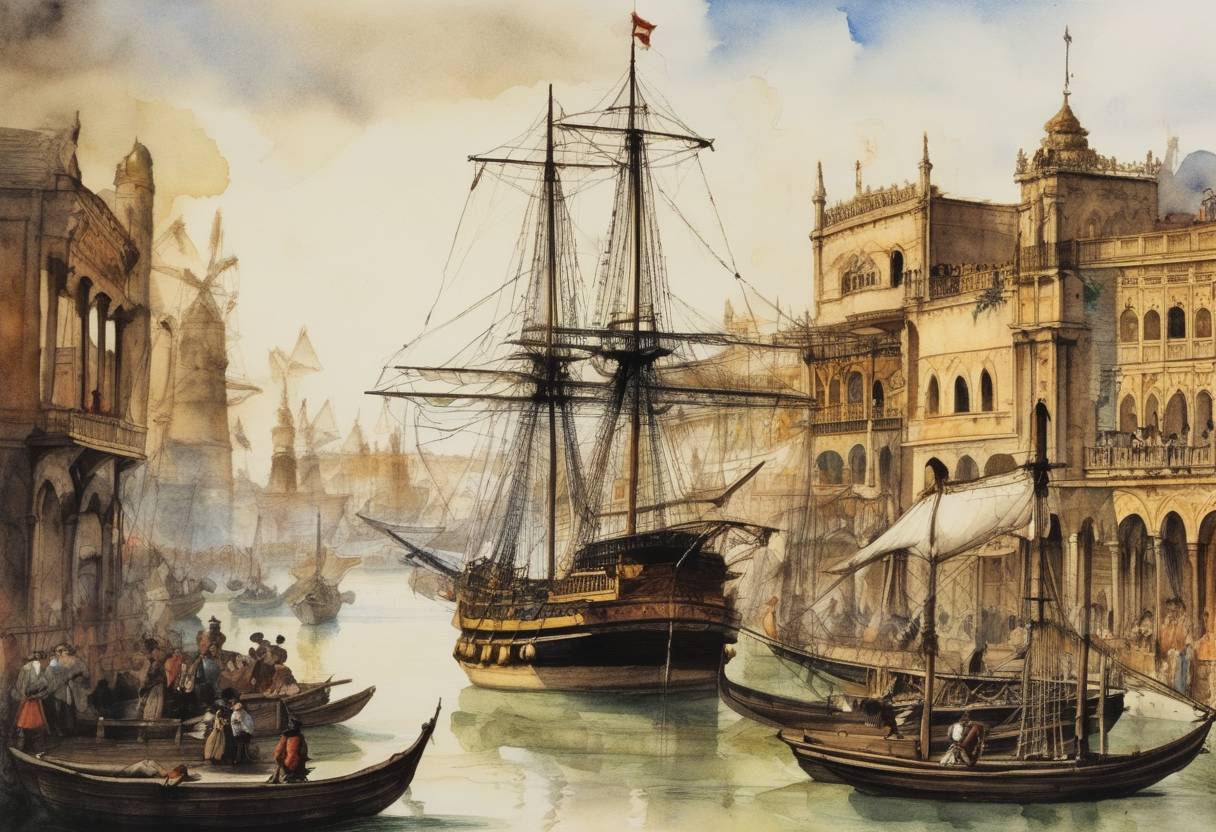
Ferdinand Magellan’s Departure: August 10, 1519
On August 10, 1519, the Portuguese navigator Ferdinand Magellan embarked on an ambitious and unprecedented journey from Seville, Spain. Commanding a fleet of five ships known as the Armada de Molucca—Trinidad, San Antonio, Concepción, Victoria, and Santiago—Magellan’s expedition aimed to find a westward route to the Spice Islands (modern-day Maluku Islands in Indonesia), which promised lucrative opportunities for trade in spices highly coveted in Europe.
Context and Preparation
The early 16th century was a period of intense maritime exploration as European powers vied for new territories and trade routes. Following Christopher Columbus’s discovery of the New World and Vasco da Gama’s successful route around Africa to India, Spain sought alternative paths to Asia’s rich spice markets that were not under Portuguese control. This desire led King Charles I of Spain to back Magellan’s expedition after he proposed reaching the East by sailing west, circumnavigating the globe.
The Expedition
- Fleet Composition: The fleet initially consisted of five ships—Trinidad (the flagship), San Antonio, Concepción, Victoria, and Santiago—and approximately 270 crew members.
- Journeys’s Start: Magellan’s squadron departed from Seville, making its way down the Guadalquivir River to Sanlúcar de Barrameda at the mouth of the river, the true starting point of the circumnavigation, on September 20, 1519.
Voyage and Challenges
The expedition faced numerous obstacles. Initially traveling along the South American coast, they spent several months, from December 1519 through early 1520, searching for a passage through the continent. They faced treacherous conditions, including rough seas, the mutiny of some crew members, and the eventual loss of Santiago, dashed upon the Patagonian coast.
After enduring a harsh winter at Port Saint Julian in Patagonia, Magellan navigated what would be named the Strait of Magellan in November 1520, becoming the first European to reach the Pacific Ocean from the Atlantic. However, the challenges continued; the fleet dwindled as further mutiny took hold, and San Antonio deserted the mission, returning to Spain.
Magellan’s Demise and Legacy
On April 27, 1521, Magellan met his demise during the Battle of Mactan in the Philippines, where he was killed while intervening in a local conflict. Leadership of the expedition then passed to Juan Sebastián Elcano.
The Expedition’s Conclusion
The remaining ships, reduced to just Victoria and Trinidad after continued hardship and battles, pressed onwards. Elcano took command of the Victoria and managed to navigate back to Spain. On September 6, 1522, Victoria, the sole vessel to complete the journey, returned to Seville with only 18 survivors of the original 270-man crew, completing the first circumnavigation of the Earth.
Historical Significance
Magellan’s expedition was a monumental achievement that irrevocably altered the European understanding of global geography. It not only proved beyond doubt that the Earth could be circumnavigated by sea but also provided valuable insights into the vastness of the globe and the diversity of its peoples and cultures. The journey laid the groundwork for future global exploration, while the shared wealth of knowledge reshaped trade routes and cultural connections worldwide.