The Battle of Cedar Creek: October 19, 1864
1864 · Middletown, United States
The Battle of Cedar Creek takes place during the American Civil War, resulting in a Union victory that helps secure the Shenandoah Valley.
August 5, 1864
During the American Civil War, the Battle of Mobile Bay took place, where Union forces under Admiral David Farragut won a decisive victory over Confederate forces.
Mobile Bay, United States | Union Navy
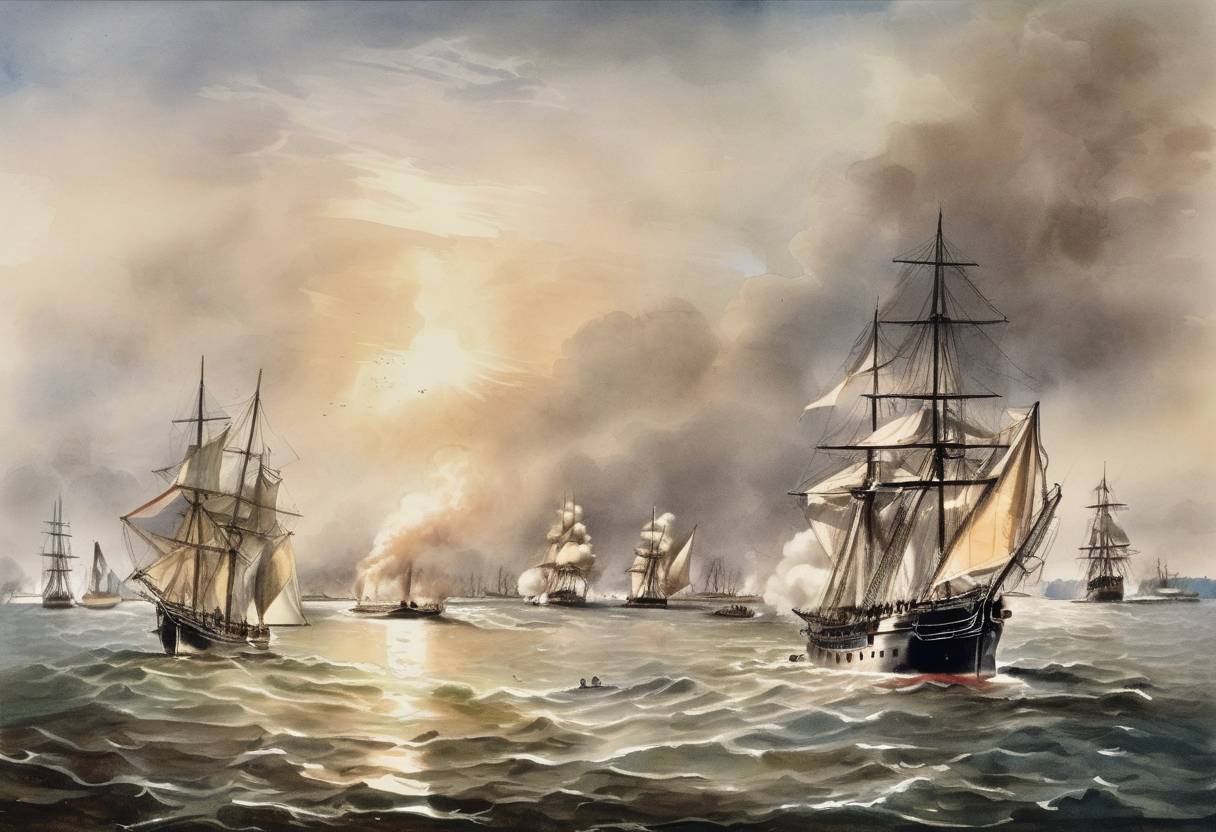
The Battle of Mobile Bay was a significant naval engagement during the American Civil War, marking a pivotal victory for the Union forces. This battle took place on August 5, 1864, and was a crucial part of the Union’s efforts to blockade the Confederate states and gain control over the Gulf of Mexico.
Strategic Importance: Mobile Bay, located in Alabama, was one of the last major Confederate ports on the Gulf Coast. Its capture was vital for the Union’s Anaconda Plan, which aimed to suffocate the Confederacy by blockading its ports and controlling the Mississippi River.
Union Leadership: The Union forces were led by Admiral David Farragut, a seasoned naval officer known for his aggressive tactics and leadership skills. Farragut had previously secured victories at New Orleans and Vicksburg, making him a key figure in the Union’s naval strategy.
Confederate Defenses: The Confederates, under the command of Admiral Franklin Buchanan, fortified Mobile Bay with a series of defenses, including Fort Morgan and Fort Gaines, as well as a line of underwater mines (then called torpedoes) to deter Union ships.
Farragut’s Fleet: On the morning of August 5, Farragut led a fleet of 18 ships, including four ironclad monitors, into the bay. The fleet faced heavy fire from Fort Morgan and the Confederate ironclad CSS Tennessee.
Famous Command: As the Union fleet encountered the minefield, Farragut famously ordered, “Damn the torpedoes, full speed ahead!” This bold command became legendary, symbolizing his determination and audacity.
Engagement: The Union fleet successfully navigated the minefield, though the USS Tecumseh was sunk by a mine. The remaining ships engaged the Confederate fleet, with the ironclad USS Hartford leading the charge.
Capture of CSS Tennessee: After a fierce battle, the Union forces managed to disable and capture the CSS Tennessee, effectively neutralizing the Confederate naval presence in the bay.
Union Victory: The victory at Mobile Bay was a significant blow to the Confederacy, closing one of its last major ports and tightening the Union blockade.
Impact on the War: This victory bolstered Northern morale and contributed to the re-election of President Abraham Lincoln later that year. It also demonstrated the effectiveness of ironclad ships and modern naval warfare.
Legacy: Admiral Farragut’s leadership and the phrase “Damn the torpedoes” have become enduring symbols of courage and determination in military history.
The Battle of Mobile Bay was a turning point in the naval aspect of the Civil War, showcasing the strategic importance of naval power and the Union’s ability to execute complex operations successfully.
Source: en.wikipedia.org