Ascension of King Edward III of England
1327 · London, England
King Edward III of England was declared King of England, following the abdication of his father, Edward II.
November 20, 1272
Edward I becomes King of England, although he is not crowned until August 19, 1274.
London, England | English Monarchy
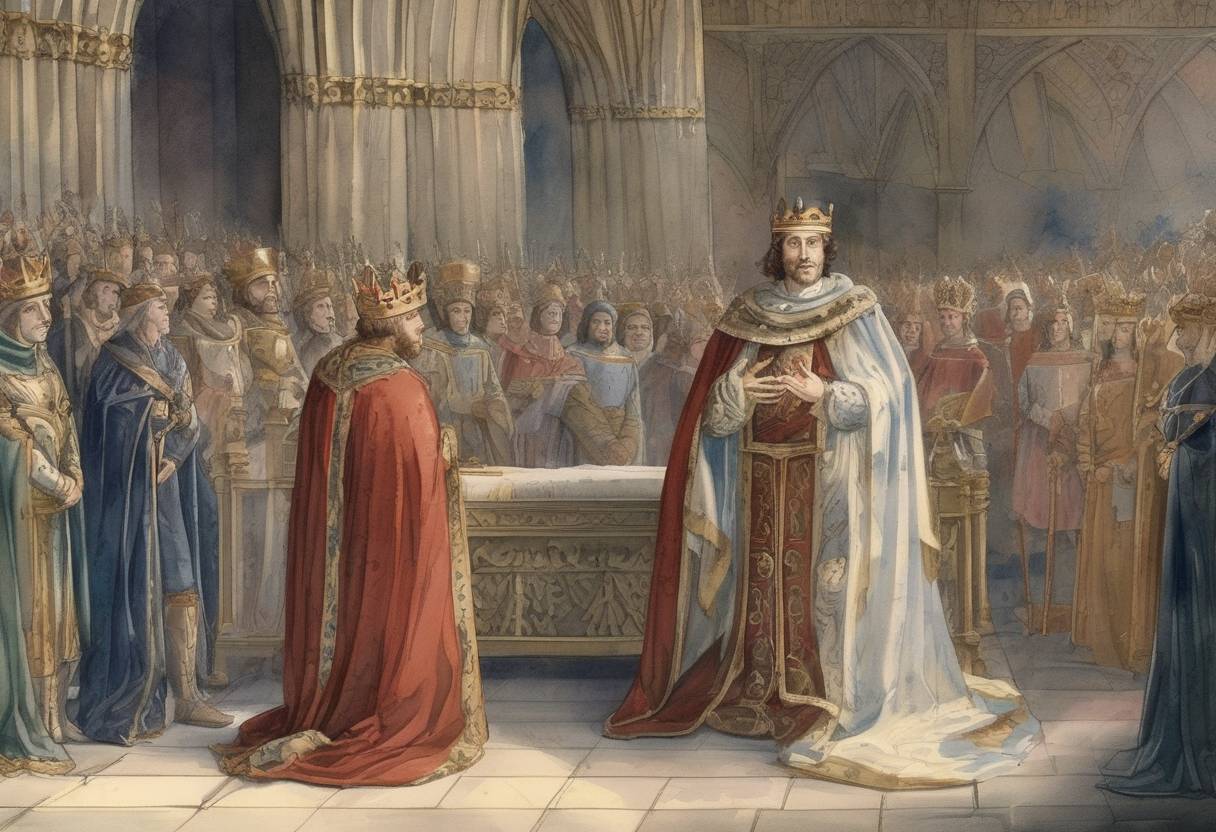
On November 20, 1272, Edward I ascended to the throne of England, marking the beginning of a significant reign that would last until 1307. Although he was not crowned until August 19, 1274, his accession marked a pivotal moment in English history.
Edward I, also known as Edward Longshanks and the Hammer of the Scots, was the son of King Henry III of England and Eleanor of Provence. His early life was marked by the turbulent reign of his father, which included the Second Barons’ War (1264–1267), a conflict between the king and rebellious barons led by Simon de Montfort. Edward played a crucial role in his father’s eventual victory, showcasing his military prowess and leadership skills.
Edward was in the Holy Land participating in the Ninth Crusade when his father, Henry III, died on November 16, 1272. Despite being abroad, Edward was proclaimed king on November 20, 1272. The transition of power was smooth, largely due to the stability established by the end of the baronial conflicts and the loyalty of the English nobility.
Edward’s coronation was delayed until August 19, 1274, as he continued his journey back from the Crusades. During this period, the kingdom was effectively managed by a regency council, ensuring continuity and stability. The delay did not affect his authority, as he was recognized as king from the moment of his father’s death.
Edward I’s reign is noted for several key developments:
Legal Reforms: Edward implemented significant legal reforms, including the establishment of the Statutes of Westminster, which helped to codify and clarify English law.
Military Campaigns: He is perhaps best known for his military campaigns in Wales and Scotland. His conquest of Wales resulted in the construction of a series of castles and the integration of Wales into the English kingdom.
Parliamentary Evolution: Edward’s reign saw the evolution of the English Parliament, with the Model Parliament of 1295 setting a precedent for future parliamentary structure and representation.
Conflict with Scotland: His efforts to assert dominance over Scotland led to the Wars of Scottish Independence, which would continue beyond his reign.
Edward I’s reign laid the groundwork for many aspects of English governance and territorial expansion, and his legacy is a complex blend of legal innovation and military ambition. His rule significantly shaped the medieval English state and its future trajectory.
Source: en.wikipedia.org