The Great Bhola Cyclone of November 9, 1970
1970 · Bhola, Bangladesh
The Great Bhola Cyclone ravages the area of the Bay of Bengal, killing an estimated 300,000 to 500,000 people in modern-day Bangladesh and West Bengal, India.
November 25, 1839
A cyclone caused the Coringa cyclone disaster in India, killing an estimated 300,000 people and destroying the port city of Coringa.
Coringa, India | none
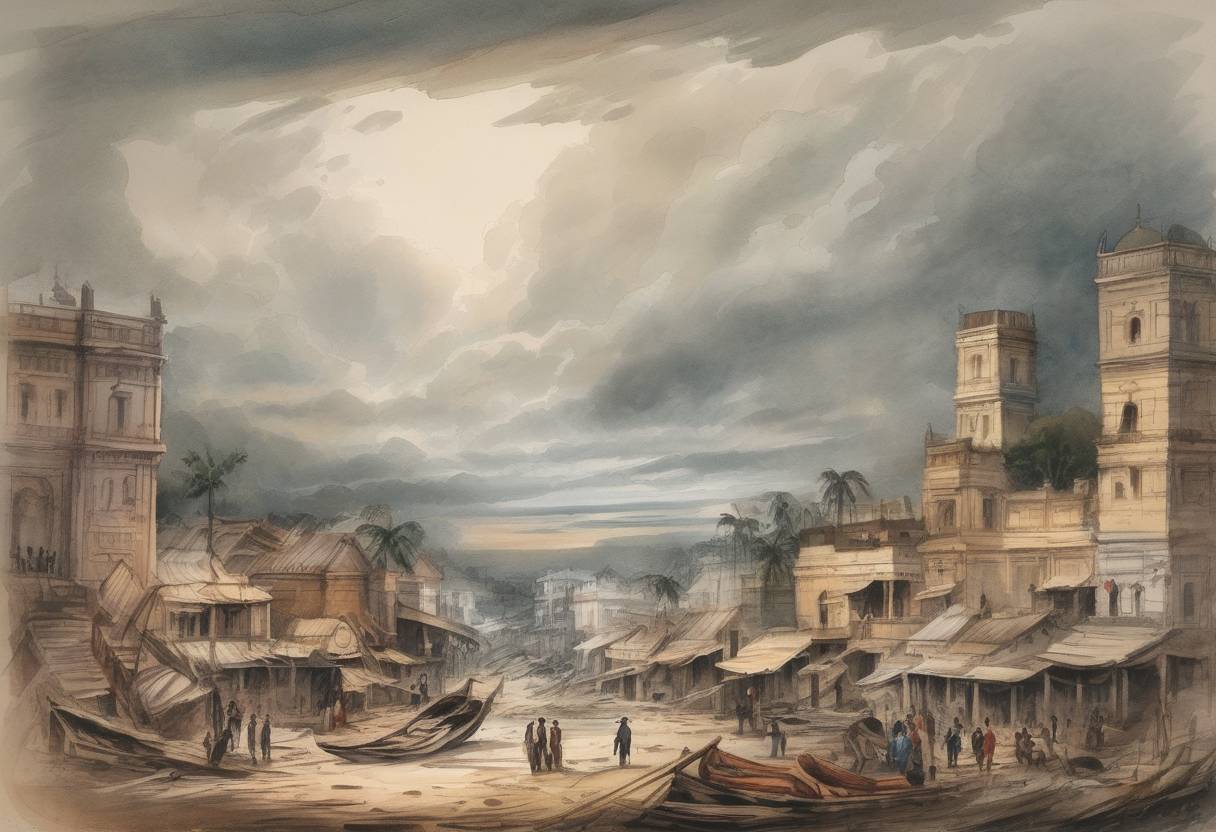
On November 25, 1839, one of the deadliest cyclones in recorded history struck the eastern coast of India, devastating the port city of Coringa in the Madras Presidency, which is present-day Andhra Pradesh. This catastrophic event resulted in an estimated 300,000 fatalities and marked a significant moment in the history of natural disasters in the region.
Coringa was a bustling port city located near the mouth of the Godavari River. During the early 19th century, it was an important hub for trade and commerce, with a thriving economy based on its strategic location. However, the region was also prone to cyclonic activity due to its geographical position along the Bay of Bengal, which is notorious for severe tropical storms.
The cyclone that struck on November 25, 1839, was characterized by its immense power and destructive force. It brought with it a massive storm surge that inundated the city, causing widespread devastation. The cyclone’s winds and the accompanying tidal wave obliterated the infrastructure of Coringa, including homes, warehouses, and ships anchored in the harbor.
The aftermath of the cyclone was catastrophic. The sheer scale of the disaster overwhelmed local resources and left the region in ruins. The port city of Coringa, once a thriving center of trade, was never fully rebuilt to its former glory. The loss of life and property had long-lasting effects on the local population and economy.
The disaster highlighted the vulnerability of coastal regions to cyclonic storms and underscored the need for better preparedness and response mechanisms. However, during the 19th century, meteorological science and disaster management were not as advanced as they are today, limiting the ability to predict and mitigate such disasters effectively.
The Coringa cyclone of 1839 remains one of the deadliest cyclones in history. It serves as a somber reminder of the destructive power of natural disasters and the importance of disaster preparedness and resilience, especially in vulnerable coastal regions. The event is often cited in discussions about the historical impact of cyclones in the Indian subcontinent and the ongoing challenges posed by such natural phenomena.
In summary, the Coringa cyclone disaster of 1839 was a tragic event that left an indelible mark on the history of India, illustrating the devastating impact of cyclonic storms on human settlements and the enduring need for effective disaster management strategies.
Source: en.wikipedia.org